• Home
  • Training
  • Photos
  • Learn
  • Shop
  • Contact
  • Search
PHO PAWS
  • Home
  • Training
  • Photos
  • Learn
  • Shop
  • Contact
  • Search

Body Language And Energy IS "Dog Speak"

Have you ever wondered how dogs seem to read minds? They appear to know what we're thinking and how we feel, and they communicate with one another using non-verbal cues.

That's because their "language" is body language and energy! They project what they intend and can get across what they mean based on what they project. This is not only true for dog to human and dog to dog communication, though. When we use our energy to communicate with our dogs, they understand us, and I believe that other people feel our energy, too.

Dogs are born with a natural energy level, be it high or low or anywhere in between. They are also born with a natural dominance level, be it dominant or submissive or anywhere in between.

The combination of their unique natural level of both their energy and dominance will determine how and when that dog communicates with everything around it.

Why is this so important?

I'm glad you asked! When we understand what they are saying to us and other dogs with their body language, we can use both our body language and energy to communicate clearly back with them. THIS IS THE NUMBER ONE MISUNDERSTOOD THING ABOUT DOGS. When we don't learn what their posture means, we don't learn how to set rules for them, and they will therefore make their own rules and enforce them.

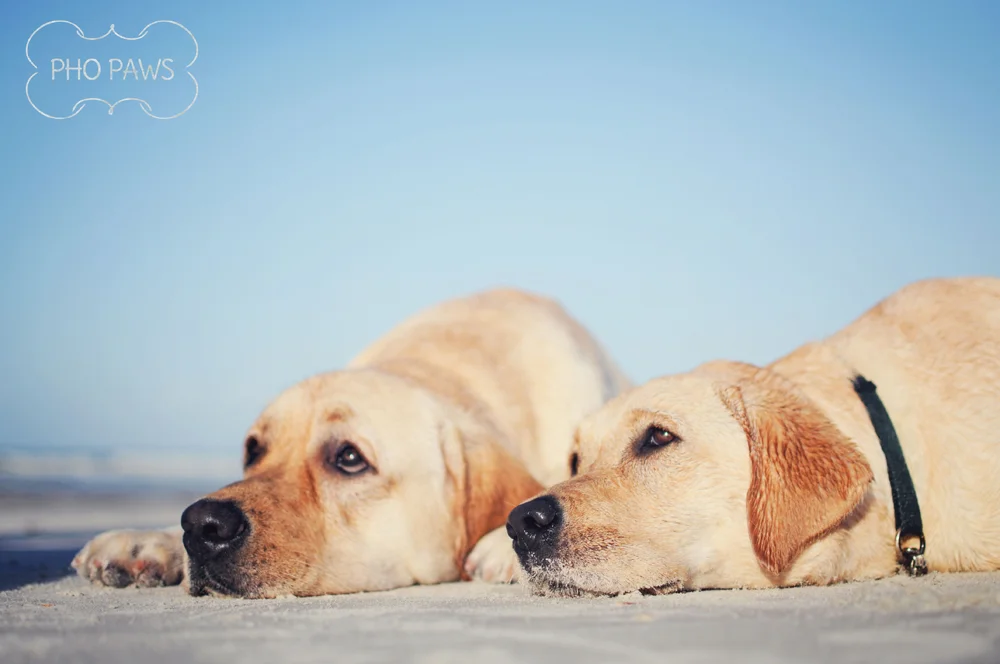
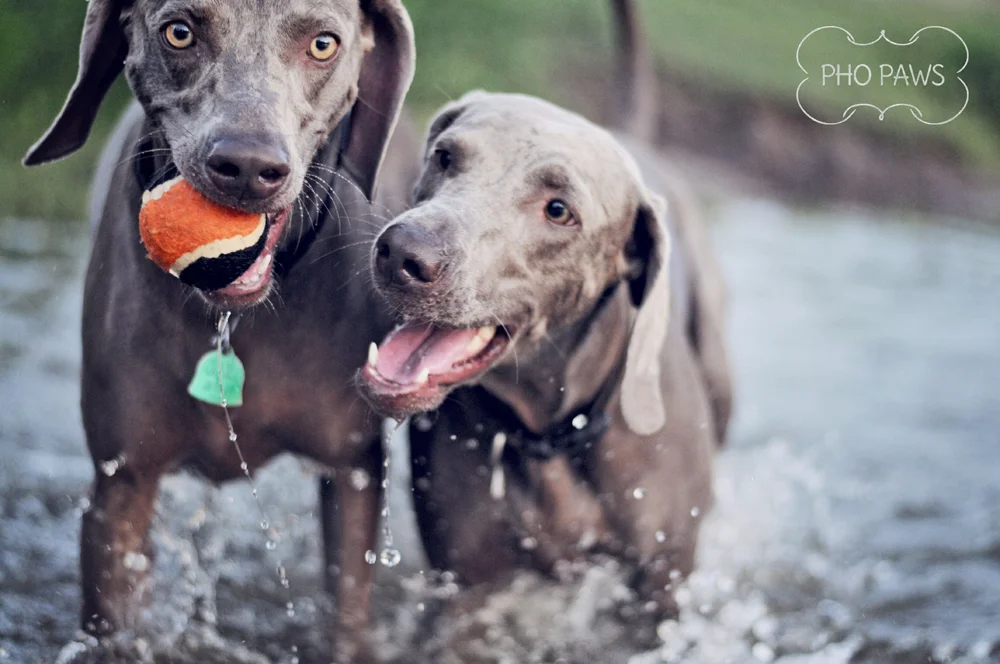
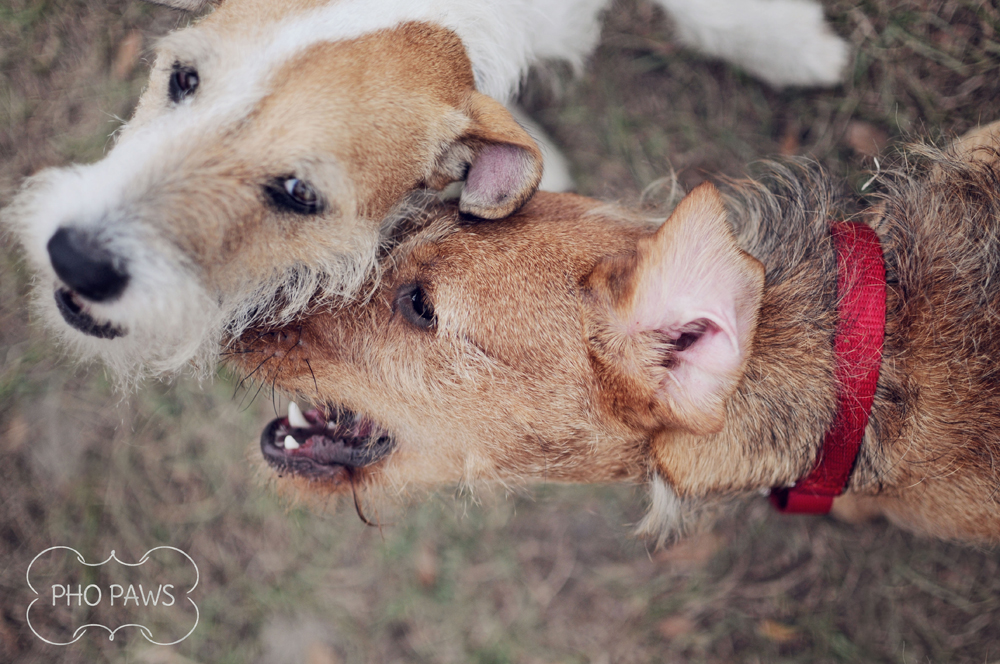
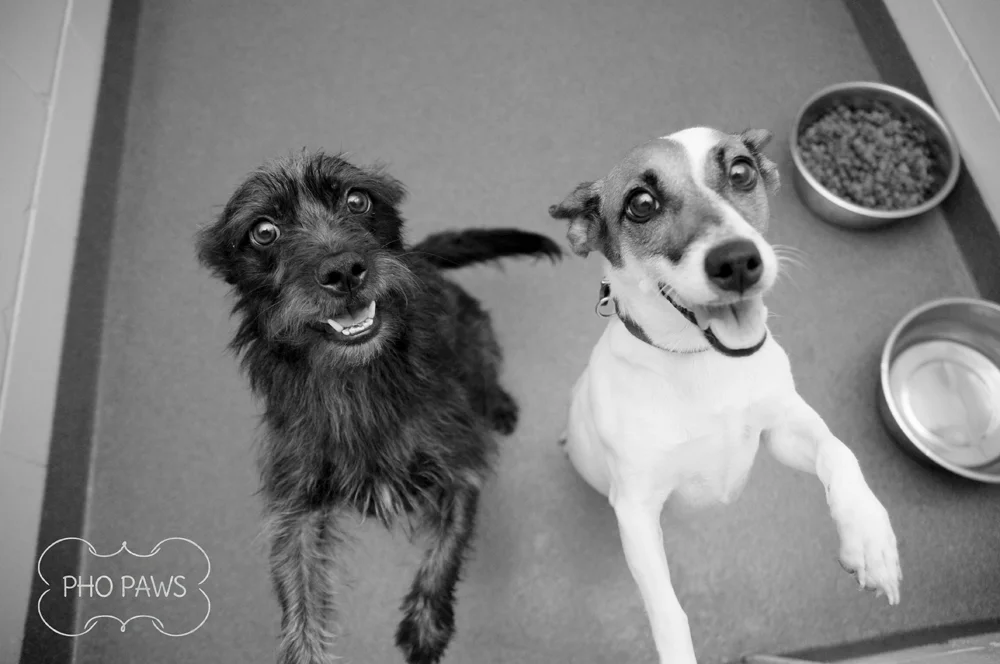
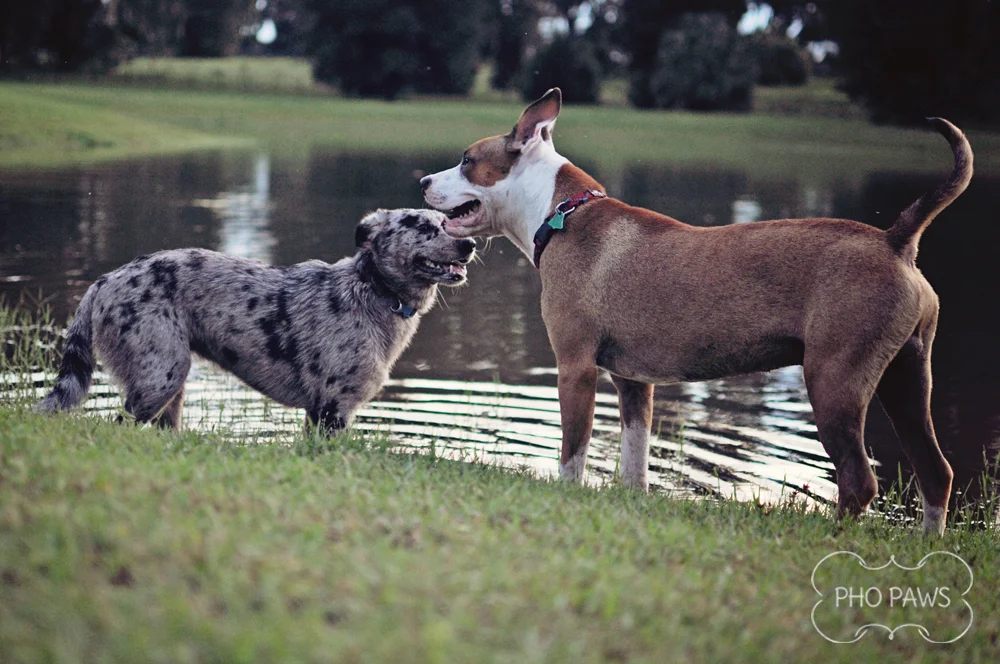
Can you tell which dog in the photograph above is more dominant based solely on their body language? Next week, I'm going to be directing the specifics of dominant vs submissive posture, and this week I wanted to stress why it's important to learn "dog speak" in the first place.
Friday 05.13.16
Posted by Kelsey R
 

Breed Dictates The Job Your Dog Needs

Every dog breed that we have curated through the years has become a stunning masterpiece.

I am continually fascinated when learning about a new dog breed because we are all using our innovative nature and harnessing the knowledge we have been given. Each grouping of dog breed in and of itself tells of their unique purpose.

Sporting dogs, working dogs, non-sporting dogs, toy dogs, etc. I am very passionate about educating people as to their dogs' needs according to their breed.

However, this is not the place from where the education starts. We need to first keep in mind that our dogs are animals. Then we approach them from the standpoint of them being dogs, derived from the wolf. After this we can assess what they need according to their breed.

So what is the best job for your dogs breed?

In my 15+ years of experience in working with dogs, I have found that sporting dogs, working dogs, herding dogs and hound dogs need the most intense jobs of all the breed groups.  I have also found that ALL dogs need at least one solid hour of focused exercise per day entirely apart from their daily job. The only exception here would be elderly dogs, dogs with debilitating illnesses or dogs whose energy level is unfit for this kind of daily activity.

The job you choose to give your dog could be backpacking through the trails, running along side a bike or a jogging owner, pulling kids in a cart, water sports, pointing, tracking, the list goes on. I would highly encourage you to do some research on each of these job ideas, especially if you have a sporting, working, herding or hound dog.

Friday 04.22.16
Posted by Kelsey R
 

Your Dog Needs A Job

From therapy dogs to search and rescue, we acknowledge the need for working dogs in professional industries. Why are we ignoring this concept within the four walls of our homes?

Dogs are truly incredible creations.We have curated their genetic coding for generations and still they amaze us with what they are capable of. Most dogs were bred with a specific job in mind. So why are we wondering where these pesky boredom related behavior issues are coming from? Your dog is not bad, they are simply bored.

So what job does your dog need, anyway?

For most sporting and working breeds, a long harty walk while carrying a backpack with weights will do the trick. Consult a professional dog trainer like myself about how to adjust your dog to this. But maybe you own a toy breed or a non-sporting breed dog. I find that many of these breeds are simply looking for daily household boundaries, and a clear companion to keep company with.

The dogs who do the best work do so because their stomachs depend on it. Yep, the best working dogs are fed ON THE JOB! If they don't work, they don't get fed. Keep this in mind for your high-energy sporting dog, because after a long walk and some fun water cool down time, you can always make them perform tasks and commands to earn every last bite of their lunch.

Friday 04.08.16
Posted by Kelsey R
 

Is Your Dog Afraid Of Thunderstorms? This Is For You!

Dogs have every reason to freak out in a thunderstorm. But how we handle them freaking out will inform them of whether or not this behavior is productive.

No matter what your dog is doing at any given moment, affection or consolation reinforces their current state of mind. So if your dog has a panic attack during a thunderstorm and you comfort them by petting them and saying, "it's okay, baby" and feeling bad, this actually reinforces their panicked state of mind.

Here's my best advice for calming your dog during a thunderstorm: stay calm and assertive.

Your dog will look to you and any other members in the family for how they should react, and if you don't make a big deal, it will help them process the event. If at all possible, walk your dog long before the storm comes so that they don't have as much energy to panic with. If that's not possible, simply encourage them to pick one spot to calm themselves down in. Preferably not on top of your lap, because this also reinforces their panicked energy.

Ignoring their anxiety works to a degree, but if their state of mind escalates into them not being able to control the anxiety, you must physically and audibly calm them. The way I do this is by placing a hand on their shoulder or back as if to massage them, pressing, and saying, "sssshhhhhhhh." Remember, calm and assertive energy.

Friday 04.01.16
Posted by Kelsey R
 

How To Handle Your Dog At A House Party

It's Super Bowl time! Are you hosting a party? Here are a few tips of what to do with your dog before, during and after the party.

First, I would recommend that you walk your dog(s) and give them their dinner before the party. This ensures that you have met their exercise and food needs before you have people over (who will probably carry around food on plates). It may not bother you if your dog begs fro your guests or snoops around looking for food. If that's the case, stop after step one and enjoy the party!

If you don't want your dog to beg and snoop, however, I would recommend informing your guests that your dog(s) are not allowed to have people food, so please don't intentionally feed them. No matter how well trained your dog is, the very fact that there is food around them will taunt them and they will be inclined to snoop at the very least. When I have people over and my dogs get snoopy, I send them out of the space and reward them for leaving the space.

If you are planning to have elderly people over, or you have elderly dogs, I would recommend crating them no matter what. 

Your dog could be the best trained one on the block, but people still trip over dogs on accident, and elderly dogs still go unnoticed until they get stepped on. 

Give your dog a specific job during the party! Tell them to "go to their spot" and lay down, or have guests play frisbee with them outside during commercials. Guests LOVE helping you out by playing with or helping you train your dog (the dog loving guests, anyway).

Don'g be afraid to crate your dog after they've been exercised and fed if they are simply getting too annoying for any reason. The mere exposure of guests in your house while they're in or out of the crate is very good for them. If you choose to crate them, don't make it a punishment. Instead, give your dog a treat in the crate and don't put them in the crate on the heels of reprimanding them.

Friday 02.05.16
Posted by Kelsey R
 

Is Your Dog Getting Enough Exercise? Here's How To Tell!

Happy 2016! The fresh start of a new year is a wonderful feeling, and this year will be whatever you make it!

If you've been following along with my newsletters, you may have noticed that I had to miss a few weeks in late December and January as I was fighting a virus over Christmas and New Years. I will make sure to send you the blogs and videos that got created before I got sick, and thank you for your patience!

Here's my best advice for big results with your K-9 companion throughout the year:

Exercise your dog everyday. That's it! A happy and healthy relationship with your dog starts with daily exercise. If you're already doing this, then introduce and be 100% consistent on ONE new rule this year. It could be: no dogs in the kitchen, no dogs on the couch, or no free food. All of these rules help your dog have clarity on who is in charge and what is expected of them.

As simple as this sounds, these two basic things are the foundation of everything I teach dog owners everywhere.

Friday 01.01.16
Posted by Kelsey R
 

Here's What A Healthy Schedule For Your Dog Looks Like

Are you frustrated trying to balance work and home life and also figure out a schedule for your dog?

I have great news for you! Dogs need a simple regimen. Exercise, discipline, affection. In that order. Your dog needs to start out the day by getting the majority of his energy out through challenging physical and mental exercise, so a long walk is key. 

After a long walk in the morning, let your dog recover for 30-45 minutes and then feed them their breakfast. Dogs receive rest, food, water, shelter and petting time as affection, and so it is most ideal to give them these things once they've earned it by a long and challenging walk. 

Your dog receives the enforcement and reinforcement of household boundaries as discipline. The moment they make the wrong decision, there is a consequence, and then the moment they make the right one, there is a reward. This helps your dog sort out what is and is not allowed in terms of their behavior. 

Play time and rest time are equally important throughout the day, and the most important thing to keep in mind here is that your dog knows you're the one who starts and ends both the play and rest activities. 

If After your dog has been exercised physically and mentally, disciplined on the boundaries, and given affection for following along with your rules, it's a great time to go for another walk! Many times, dogs simply need more walking than we give them. When you don't know what to do next for your dog, walk them again. 

Let them rest and give them their dinner. Most people skip the second walk and find that their dog has more energy around noontime the next day. This is because the morning walk only shed off the outer layer of excess energy, and they really need more than that.

Try this schedule and see if you don't experience a calmer, more eager to listen and eager to please dog than before implementing this schedule.

Friday 12.18.15
Posted by Kelsey R
 

What If Your Dog Is Simply A Bad Fit?

Are you trying to decide whether or not your dog even fits with your household?

Unfortunately, not every dog and owner combination is a fabulous fit, and sometimes we simply need to find a different home for the dog. I've realized that there are three ways you can tell whether or not you're prepared to make it work with the dog you have, or if you need to pursue finding a new home for them.

1) Are you more frustrated in trying to get your dog to listen to you after working with a professional trainer than you were before working with the professional trainer?

2) Is the dog causing a substantial amount of destruction to the environment around it? 

3) Is your family on different pages about having the dog to begin with, and having the dog is causing tension in the family? 

If your answer is yes to all three of these questions, it's probably time to find another home for the dog. Many times, owners work through amazing behavior issues with their dogs and are committed to keeping the dog no matter what. If you are willing and able to work through bumps in the road to a healthy relationship with your dog, keep at it and seek professional help if necessary.

If you want a second opinion and are simply unsure about your dog(s), consult a professional who can give you their perspective.

Friday 12.11.15
Posted by Kelsey R
 

How To Get Your Dog To Listen To You

Are you frustrated trying to get your dog to listen to you?

This is a very common experience amongst dog owners. You end up chasing your dog in order to get them to come, asking them to sit 8 times before they actually sit, and their manners seem to go out the window whenever you have a guest over. Why does this happen? Either your dog doesn't view you as his leader or he has no real incentive to listen to you.

A few ways to tell if your dog doesn't view you as his leader are if he is inviting himself into your personal space, if he is fed treats or meals without earning them first and if he goes wherever he pleases; on the bed, couch, outside, inside, and back to the couch again.

Or they may not have much incentive to listen to you. They may not believe that if they don't do what you ask, there will be a consequence that matter to them, or if they do listen, it will be worth while. Every dog and owner pair is unique, but it's your job as the owner to learn what your dog is communicating by their body language. By only giving them food when they earn it, and only allowing them into certain rooms or into our personal space on our terms, they begin to change their behavior and see us as their leader. When dogs have access to everything they want at any given moment, they begin to expect everything they want at any given moment.

By removing these privileges from them until they earn them, you are actually helping the dog appreciate what they earn, which is their natural bent. 

Friday 12.04.15
Posted by Kelsey R
 

Is Your Dog Excessively Chewing? Here's What To Do!

Dogs chew excessively for one of two reasons.

Either they have an over abundance of energy and are channeling it by excessive chewing, or they are a teething puppy trying to alleviate pain. Either way, a prescription of (you guessed it) MORE daily exercise can't hurt the situation. Most dogs simply aren't getting enough exercise and they turn to channeling their excess energy in ways like excess chewing.

Maybe you have a puppy who seems to chew on whatever he sees. If that's the case, certainly monitor him at all times, and make sure he only has access to items he should be chewing on.

If you're concerned that your dogs behavior is turning into obsession with chewing, consult a professional dog trainer (a certified one like myself) immediately. Obsessive chewing doesn't occur overnight, and fixing it isn't an overnight process. Dogs shouldn't be allowed to chew nonstop for any longer than two hours per day.

They also shouldn't have the desire or need to chew for longer than two hours per day if they are being sufficiently exercised. Check out KONG products for dogs that are heavier chewers, or seem to destroy plush toys very quickly.

Friday 11.27.15
Posted by Kelsey R
 

Taking Your Dog To The Dog Park Is Not Enough

The dog park is a great place. But it shouldn't be your entire exercise regimen for your dog.

I really love taking my dogs to the dog park. They can run around, play with other dogs, chase squirrels up trees, splash around in water and roll around in the dirt. However, I have learned that this is simply not enough to exercise or socialize them fully. Since the dog park is packed with very rewarding experiences, it is much more natural for dogs to have access to it as a reward at the end of their walk rather than taking the place of their walk.

The dog park is filled with a variety of energy levels and dominance levels, and this is multiplied by the number of dogs who are there. Many times the dogs who are at the dog park were not walked before being taken there, and this can increase the tension between the dogs.

So if your dogs need to get their energy out from a focused activity like walking isn't enough incentive to take them to the dog park after their walk, remember that most dogs at the dog park will have a hyper and tense energy because their owners probably didn't walk them either. This will rub off on your dog if he hasn't had his needs met before going to the park. Excitement mixed with an over abundance of energy usually doesn't end well for everyone at the dog park.

I recommend that my clients take their dog for a good long bike ride or walk before going to the dog park, using the dog park as a reward, and intentionally socializing their dog in many settings so their dog doesn't get used to only meeting new dogs at one location.

Friday 11.20.15
Posted by Kelsey R
 

Dogs And Cats Can Live Together In Harmony


Do your dogs and cats get along?

If the answer is no, you are probably frustrated with keeping them separated and making sure no one terrorizes anyone else. When I got my first cat, she absolutely hated one of my dogs, and that same dog tried to eat her every day. 

With many sessions of confining them in the same room and correcting the dog every time she would try to go after the cat, I was able to help them get along. But the dog wasn't the only one who needed correcting. Many people who own cats and dogs think that the dog is the only trouble causer. Whoever started the problem needs to be corrected. 

I would highly recommend having a professional come in if you are having serious dog and cat issues, because they should know how to handle each. If your dog and cat problems are related to either animal having medical issues and simply being grouchy, the other animal can be taught to give the other space. A lack of spatial awareness and respect is usually the root of dog and cat issues.

Cats and dogs have some similarities in their body language, but many differences. Simply because the dog's instinct tells it to chase or play with small non-dog animals, it generally wants to play or catch the cat. And simply because cats send off a vibe and body language cues to other cats that say "go away", it assumes that the dog will pick up on this vibe. 

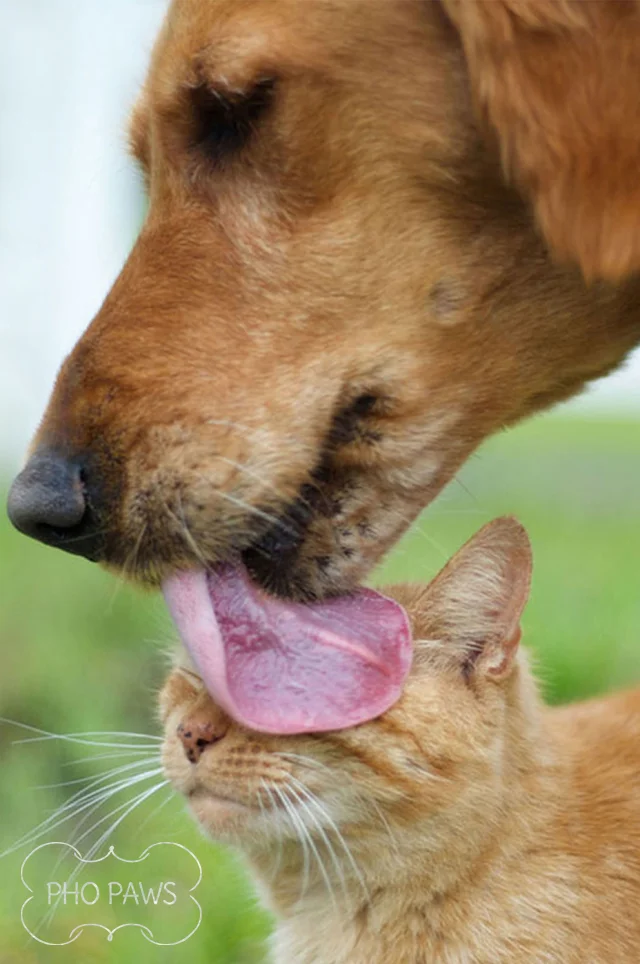
So the dog needs to be taught to interact with the cat very gently and mostly avoid the cat, and the cat needs to be taught that anger towards the dog is unacceptable. Harmony is absolutely possible! My dog and cat are now best friends. My cat rubs herself against my dog, and my dog licks my cat's face.

Friday 11.06.15
Posted by Kelsey R
 

What Happens If You Don't Exercise Your Dog

Have you ever wondered what would happen if you just never exercised your dog?

I preach the benefits of daily, exhausting physical and mental exercise for your dogs, but I haven't talked much about what happens if you don't exercise them. What I can say with 100% authenticity is that the root of the behavior problem for every dog and owner pair I've worked with has been a lack of exercise.

Behavior aside, your dog's health will go out the window. If you go back to dog's origin, the wolf, and look at their lifestyle, you'll see how important their stamina is. If they don't walk, they don't eat. Simple as that. Your dog's nature says: walk, then eat.

I Maybe you have a hard time setting time aside to walk your dog, and you don't fully see the benefits of walking them everyday if you have a big yard. This is a normal thought process, but it doesn't diminish your dogs need to travel on all fours.

The bottom line is that your dog has physical, psychological and emotional needs just like you do. Just as you need to move your body in order to stay healthy, it's so important to meet these needs for your dog. You'll find that a dog who doesn't get walked ends up channeling their energy in a destructive way.

I have a big yard and a treadmill. It would be easy for me to avoid walking my dogs, but I can't argue with the results of providing for their basic needs. I would encourage you to meet your dogs' basic needs, too, and experience the happiest and healthiest life with them possible!

Friday 10.30.15
Posted by Kelsey R
 

Does Your Dog Have More Energy Than You Do? Here's What To Do

Do you get home and find yourself exhausted with your furry pal waiting to do something fun?

This is the position that many people find themselves in. Maybe you have an especially exhausting job and you feel like you have zero time to take care of many other things. If you own a dog who seems to have more energy than you do, you're not alone. I want to help you understand some practical things you can begin to implement so you can wear your dog out faster than you wear out.

One of the biggest pointers I would have for you is to come up with a physically exhausting regimen for your dog that doesn't exhaust you as much. For me and many of my clients, this is riding a bike with our dog(s). Biking is a great alternative to walking, especially for dogs with more energy, because you can drain their energy faster than this activity drains your energy.

I would recommend having a professional come in and show you how to set up your particular bike so that you and the dog experience the most success and are the most comfortable, but this is not a hard thing to start doing, especially if you already trust your dog on the leash. Taking your dog to the dog park is a great extra curricular type activity for them, but it should not be your whole exercise regimen.

Walking them on foot to the nearest public park or dog park is a great alternative to having the dog park be their whole exercise regimen. Or, at the very least, once you arrive at the dog park, walk them around the park on a leash for a solid 15 minutes before you let them off leash. Keep in mind, no matter how exhausted you are when you come home from work, it's really important that your dog still gets their exercise needs met.

I have found that using a treadmill for days that I'm sick or can't walk works to at least take the edge off of my dogs' excessive energy. That being said, the best thing would be to walk them for as long as you can, and then play a game of fetch or tug or wrestle with them so when you do rest, they earn that rest as well.

Friday 10.23.15
Posted by Kelsey R
 

Stop Your Dog From Begging & Eat Your Food In Peace

Did you know that begging is a learned behavior?

That's right. Dogs don't beg until they learn that it gets them what they want. Does your dog get food when he begs? Attention? A walk? Dogs learn by trial and error, so when they try a specific behavior and it earns them a specific result, they will repeat that behavior. So how do we stop a dog from begging if they've already learned how to beg? Teach them that it no longer gets them what they want.

We can teach the dog that begging only gets them sent out of your space, and being calm and patient is what actually earns them what they want. Do yourself the favor of teaching your dog these two words: get out. By setting a boundary at the edge of the dining room or family room, you can actually teach your dog that staying outside that boundary will get them what they want. 

Your dog wants a boundary. They want to be told by you where the line is. The reason why they beg or pester you while you are eating is because you have not set a boundary for them. So how do you enforce this boundary? You have to be willing to get up and down and move the dog back to their place until they get the picture. This may take five minutes, and it may take five days. But once they know the boundary, you will only have to tell them "go to your spot" or "get out" once.

Teaching your dog the command "get out" is simple: send them out of your space, and reward them for giving you space. You can throw them a toy, toss them a treat, or simply say, "good job". You can either start with teaching them how to back up, and build on that from an obedience standpoint, or you can simply make it less convenient for them to be under foot by sending them out with your body language and rewarding them for doing so.

Why is this information a repeat from last weeks newsletter? Because teaching your dog to stay out of the kitchen, out from under foot and THEN out of your eating space is the order in which I have found to be most effective. Keep in mind, your plan is to supply for your dogs needs rather than give him what he demands from you by begging or being pushy.

Friday 10.16.15
Posted by Kelsey R
 

Keeping Your Dog Out From Under Foot Will Make Your Life Easier

What if I told you that your dog would be happier if they weren't accidentally tripping you everyday?

And you would be happier, too. Over the last three weeks, I have focused my newsletters on spatial respect and boundaries. Why? Because this is what I am hearing back from clients about most frequently. "Okay, we've got a good structure of exercising and socializing our dog. But how do we help them learn boundaries in the house?" Boundaries are to a dog what schedules are to a person. 

They need the structure of rules and limitations, and you need the sanity of knowing they will respect those rules when you enforce and reinforce them. Do yourself the favor of teaching your dog these two words: get out. The thing about dogs understanding of body language is: the most dominant dog is the one who the other dogs move around.

Why am I so passionate about this topic? Because by tripping over your dog as they lie or walk in your path, you are basically telling them in their own language, "I want you to tell me where I'm allowed to go. This is your space, after all." The problem with this is that your dog will begin to enforce their own spatial rules if you don't enforce yours. Sooner or later, someone will set the rules. I want you to be as happy as you can be with your dogs behavior, which is why I recommend that it be 1) sooner, and 2) your rules.

Teaching your dog the command "get out" is simple: send them out of your space, and reward them for giving you space. You can throw them a toy, toss them a treat, or simply say, "good job". You can either start with teaching them how to back up, and build on that from an obedience standpoint, or you can simply make it less convenient for them to be under foot by sending them out with your body language and then rewarding them for doing so.

Friday 10.09.15
Posted by Kelsey R
 

The Kitchen Is For Food And People, Not For Dogs

Kitchen activities are centered around food, and food is an instinctual reward for dogs.

Over the years, I have observed that dogs who are given a boundary line at the entrance of the kitchen, and are not allowed in the kitchen, have better behavior both in and outside the household. Why am I bringing this to your attention? Because I can't argue with the results.

Dogs are absolutely driven by food. Even a dog that seems to be disinterested in his food dish that he has full access to will do anything for a chicken breast if he is exhausted and hungry enough. If food is a reward for your dog, they should only receive it once they've worked for it.

I am a firm believer in the "no free lunch policy" when it comes to working with dogs. They appreciate what they earn, so if they get something for nothing, they don't appreciate it. Beyond the fact that when dogs are allowed into the kitchen space, they have access to food that falls on the floor, there are many other parts that play into their psychological health when there is a kitchen boundary set. Dogs who respect boundaries set by you will also respect boundaries set by acquaintances.

Does your dog get in your way while you're cooking / cleaning in the kitchen? If the answer is yes, you are actually catering to their boundaries by moving around them and dealing with the inconvenience rather than expecting that they move around you and respect your boundary. The main idea I'm attempting to communicate to you here is that your dog is looking to you for a clear understanding of your boundaries, so being clear with them and setting your boundaries is the best thing you can do for them.

Friday 10.02.15
Posted by Kelsey R
 

Your Dog Is Happy To Have Their Own Furniture Rather Than Yours

KRP_8549 copysmall.jpg

Does your dog invite him or herself onto your furniture ?

If the answer is yes, my follow up question is: why can't they have their own furniture? If the answer is no, my follow up question is: why not their own furniture? While our dogs want to be near us, they don't have to be sitting on top of us, so I recommend getting them their own bed for the room(s) that they most commonly relax in.

They can quickly learn that their bed is a target location which will make training them easier, too. You can teach them the command, "go to your bed", or "go lay down". Teaching your dog to calm themselves down and relax is one of the best things you can teach them.

Whenever I work with dogs who are especially "in people's faces", I can tell that they learned somewhere along the lines that it's very rewarding to be in people's faces. Solving this is not very hard, we just have to help the dog understand that it's more rewarding to not be in people's faces. Simply teaching a dog that it's rewarding to be calm and spatially respectful can be the difference between a well behaved dog or a poorly behaved dog.

Who owns the furniture in your household? Does your dog think that they own it and are they showing that to you by jumping on it (or you) whenever they please? This can be solved and your dog can learn that you have your own space and they can have their own space as well.

Friday 09.25.15
Posted by Kelsey R
 

Why Your Dog's Breed Is Or Is Not A Fit For Your Lifestyle

Are certain breeds a better fit for certain lifestyles?

Yes! Different breeds and breed groups have general tendencies that are more fitting for certain people who prefer certain lifestyles. There is no breed of dog or age of dog that is a good fit for a couch potato. And any breed could be a good fit for someone who walks daily!

If you enjoy being outside and exploring, awesome! You may have a happier time if you own a sporting dog, working dog, or a shepherd or hound. If you enjoy being outside and exploring much less than others, no problem! You may find that a toy dog or a non sporting dog is a better fit for you. Whatever breed of dog you have, make an environment that facilitates for their success and your success.

In my experience, the only "bad fit" is a bad timing fit, or someone who decides to get a dog with behavior problems who is unwilling to work through those issues. Not every dog in any one breed grouping will be predictably active or inactive by nature. Every dog is individually its own being.

What job was your dog bred to do? One of the most important aspects of developing a great relationship with your dog (no matter what breed they are) is learning about their breeds tendencies, and helping your dog channel those tendencies in a productive way.

Friday 09.18.15
Posted by Kelsey R
 

Why Today Matters For Your Dog

What you do with your dog today sets up how your dog views you tomorrow.

Dogs live in the present. They aren't concerned with what happened yesterday or what might happen tomorrow. However, when you invest the time to build a healthy relationship with them for today, it informs their relational tendency towards viewing you as their leader and friend for tomorrow.

What are you doing today with your dog that deposits positive experiences so that tomorrow you are even closer? Go for a walk with your dog today. In my experience, walking is one of the best relationship builders between dogs and their owners. It is completely natural for them to travel with their pack, and this is a huge part of how the pack bonds.

Doing something that your dog loves to do as a fun extra activity is extremely healthy, too! Do they like to play fetch? Do they like to run around the dog park with other dogs? Do they like to swim? These are all great things that you can do to reward your dog for being good on a walk. At the end of these two activities (walking and something for extra fun), does your dog seem tired out? If not, maybe the level of activity that you are doing with your dog isn't challenging enough for them.

Dogs love to be challenged both physically and mentally. They are healthiest when they are being stretched and asked to do engaging tasks. Engage their mind by challenging them daily. Sometimes these challenges are breed specific. For example, if you own a hound dog, giving them a search and rescue game to play could be more engaging than simply playing fetch.

Friday 09.11.15
Posted by Kelsey R
 
Newer / Older

 Stay in the loop. I'll send you immediate access to this free guide!  

You will also receive my best advice for raising a healthy dog, along with updates on new collectible items in my shop.  

Check your inbox!

Come. Sit. Stay. Follow Me.


@PHOPAWS