• Home
  • Training
  • Photos
  • Learn
  • Shop
  • Contact
  • Search
PHO PAWS
  • Home
  • Training
  • Photos
  • Learn
  • Shop
  • Contact
  • Search

Photography: Creating The Studio Feel Outdoors

Nature has an interesting way of arranging some beautiful situations in which we can soak up and be astonished at what is in front of us. I have always loved what natural light provides in terms of image quality, and while I have learned how to photograph in a studio setting and enjoy it, there's something about allowing the animal I'm photographing to be outdoors in order to catch their character that I love even more.

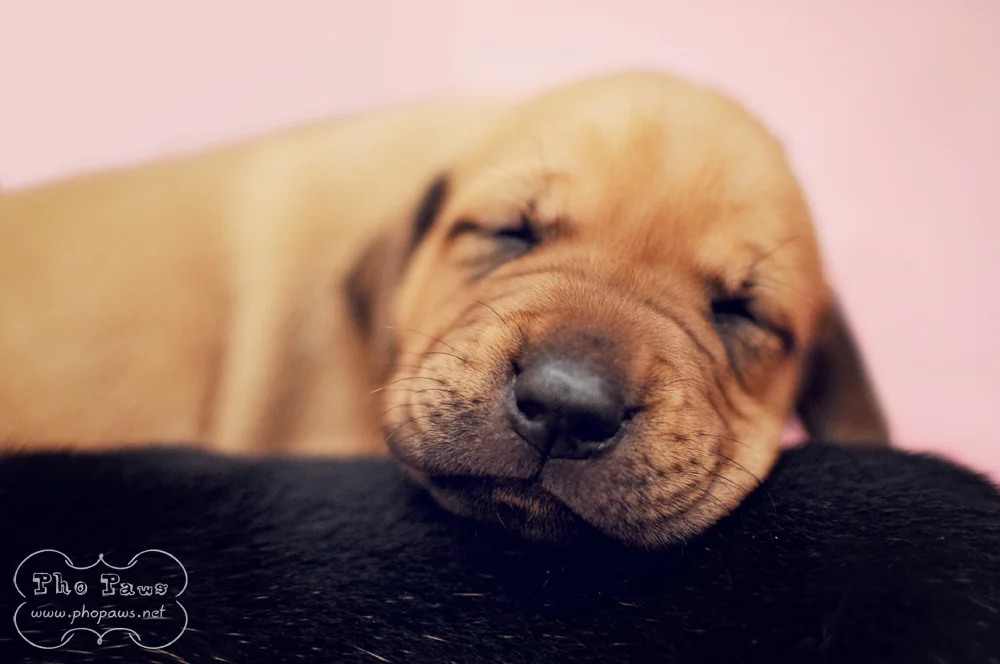
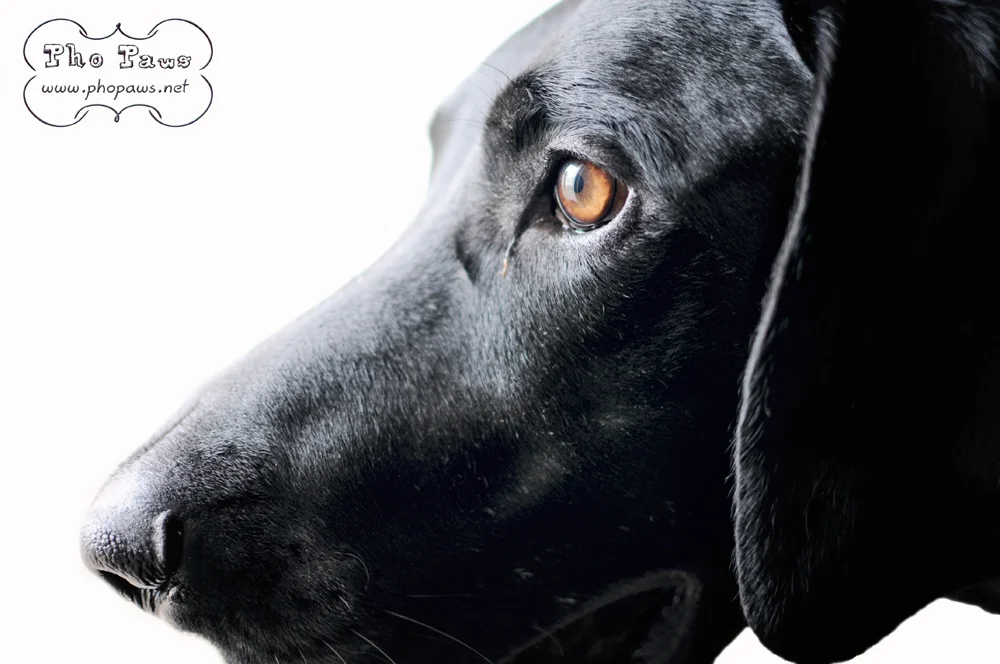
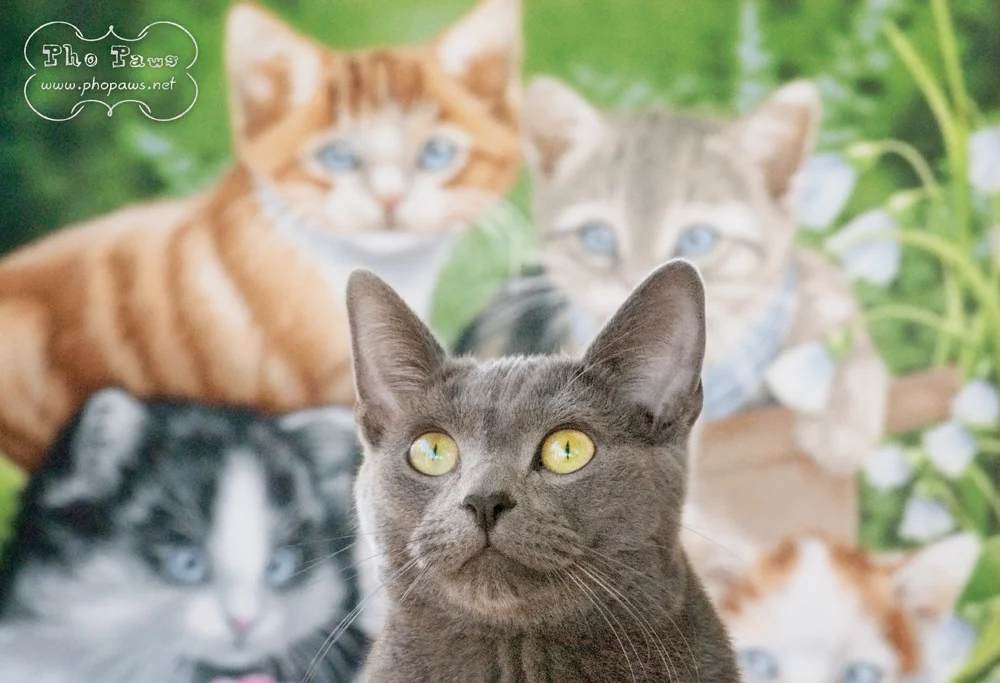
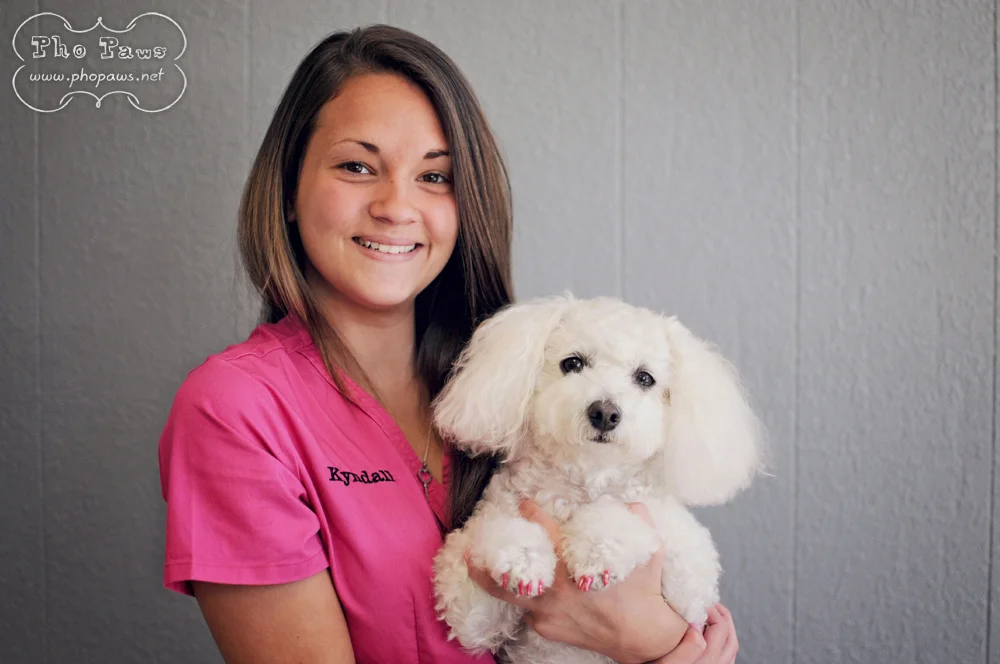
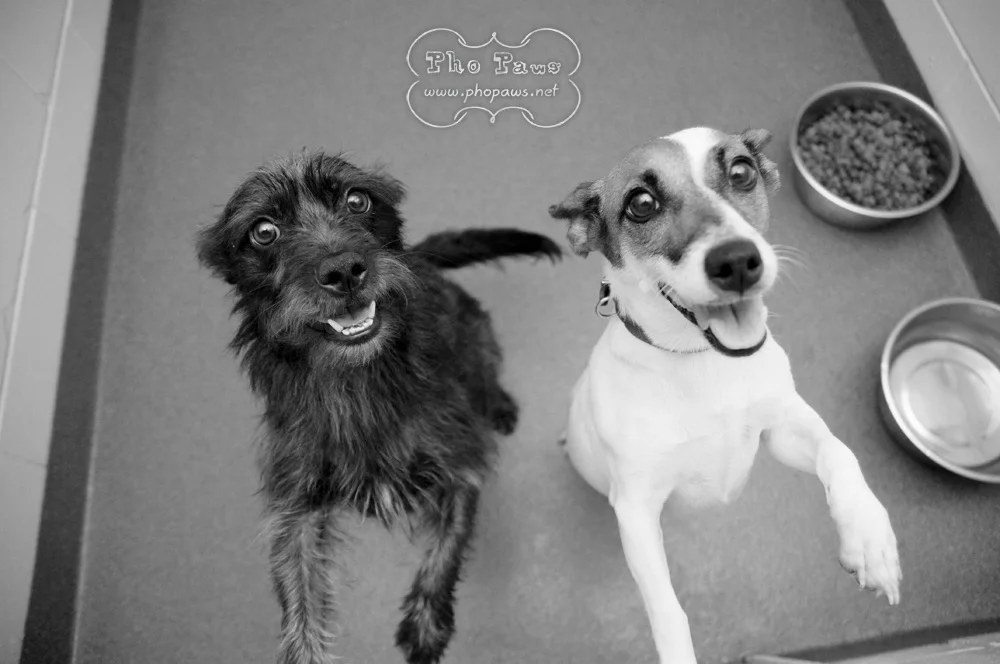
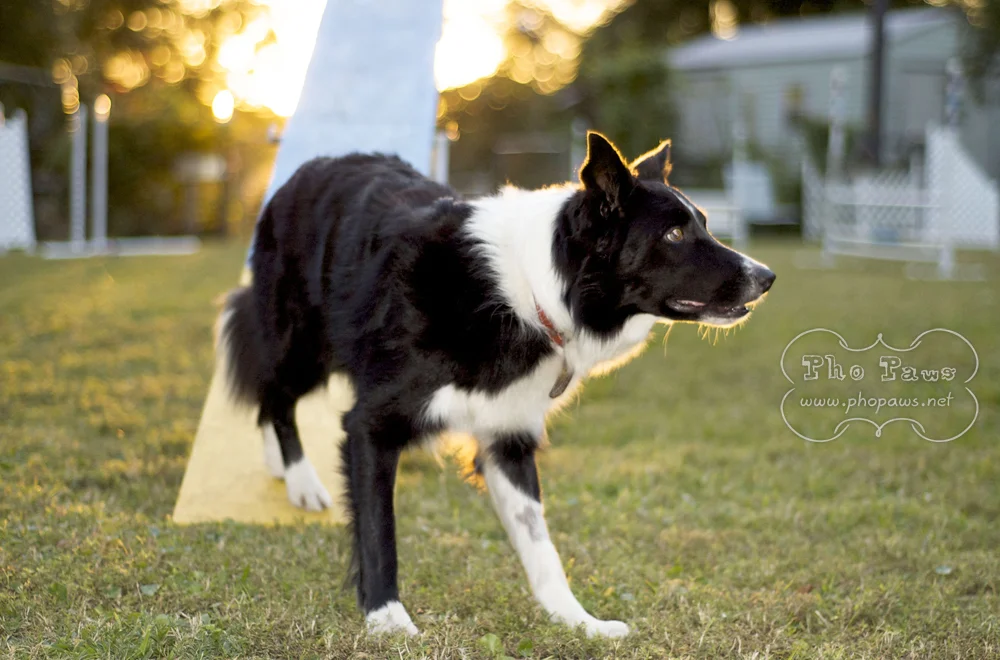
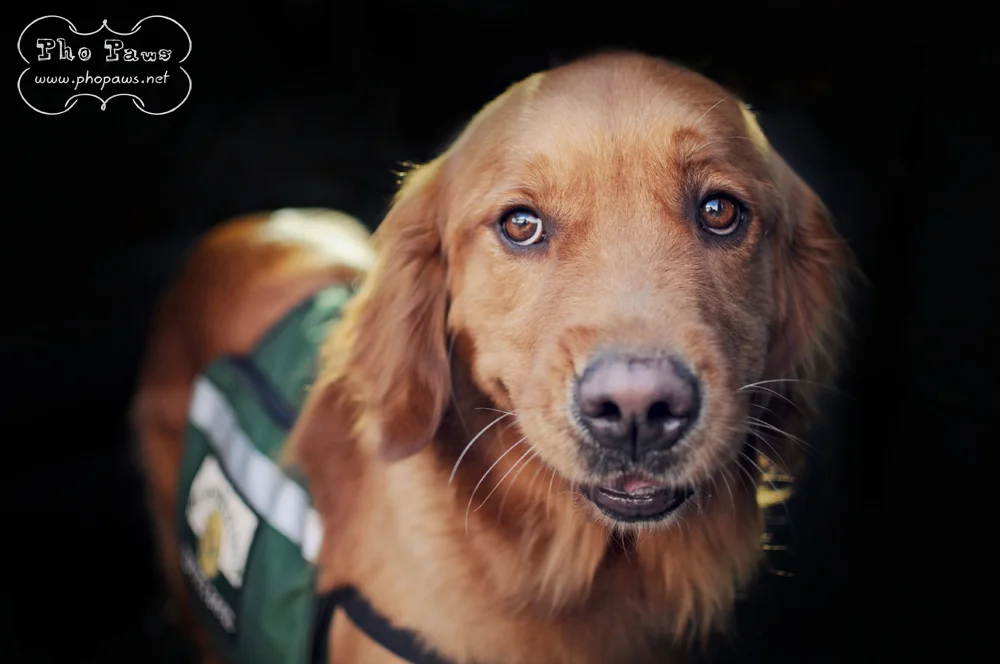
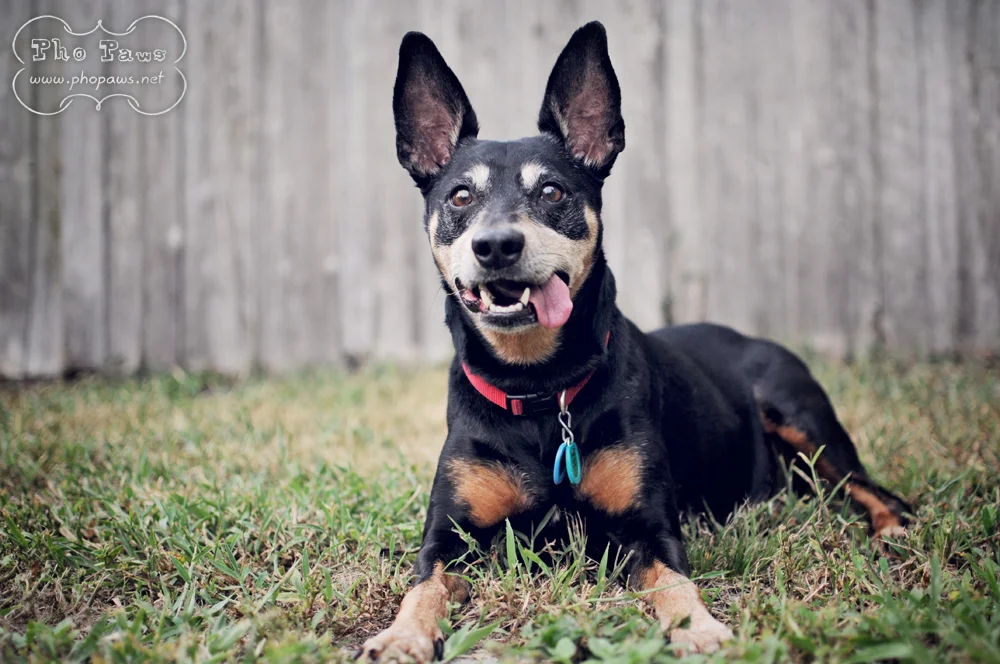
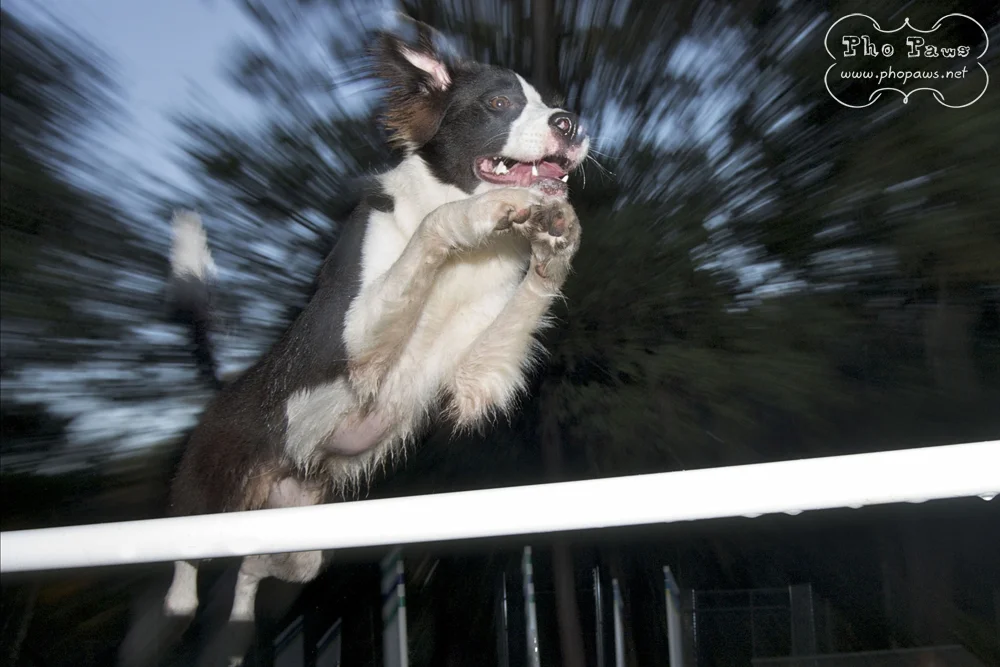
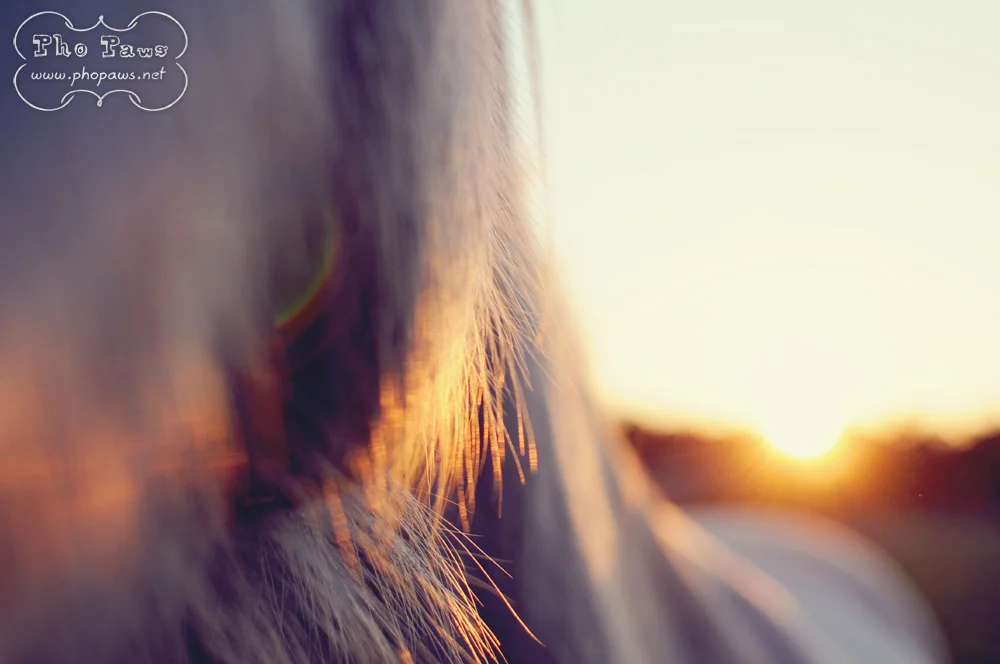
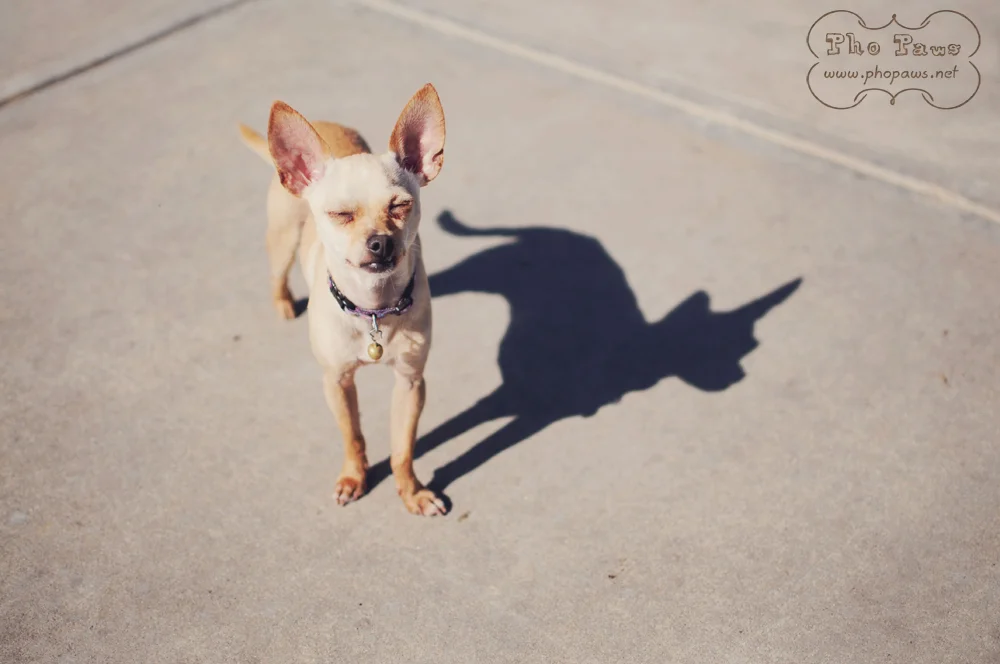
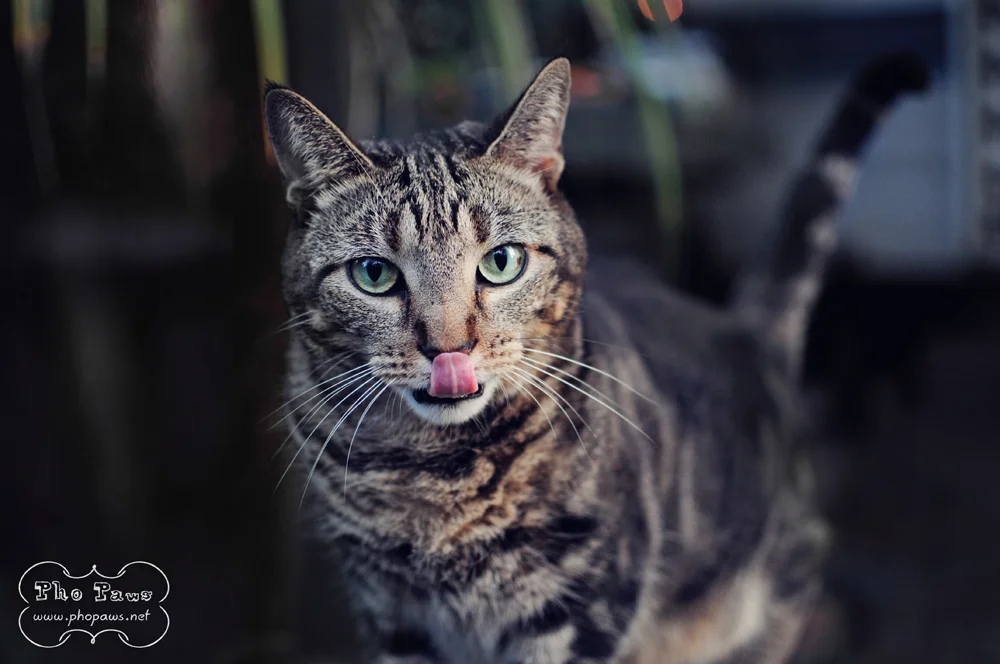
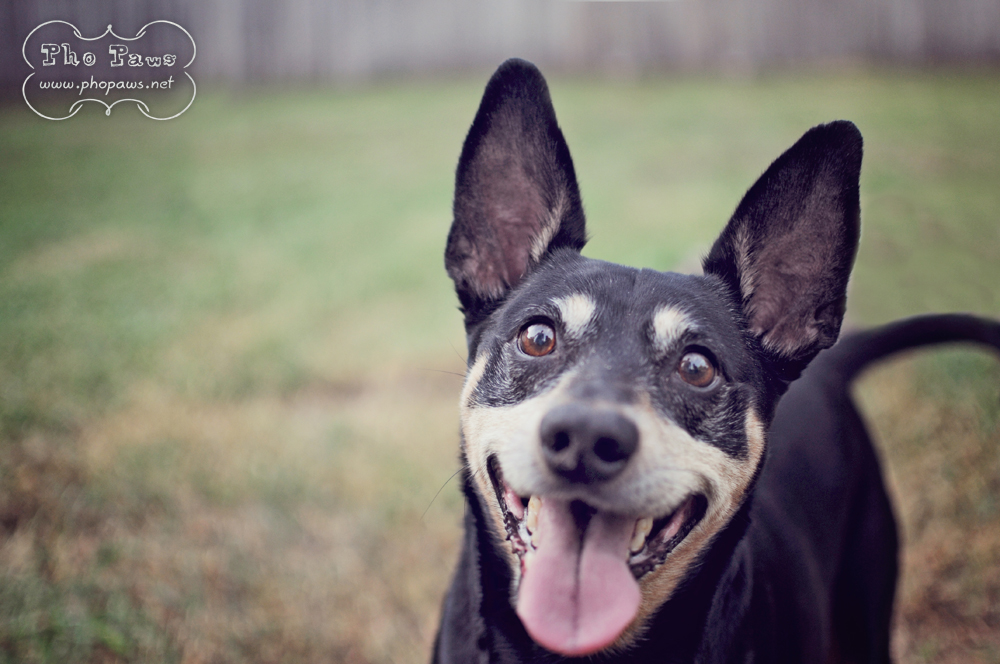
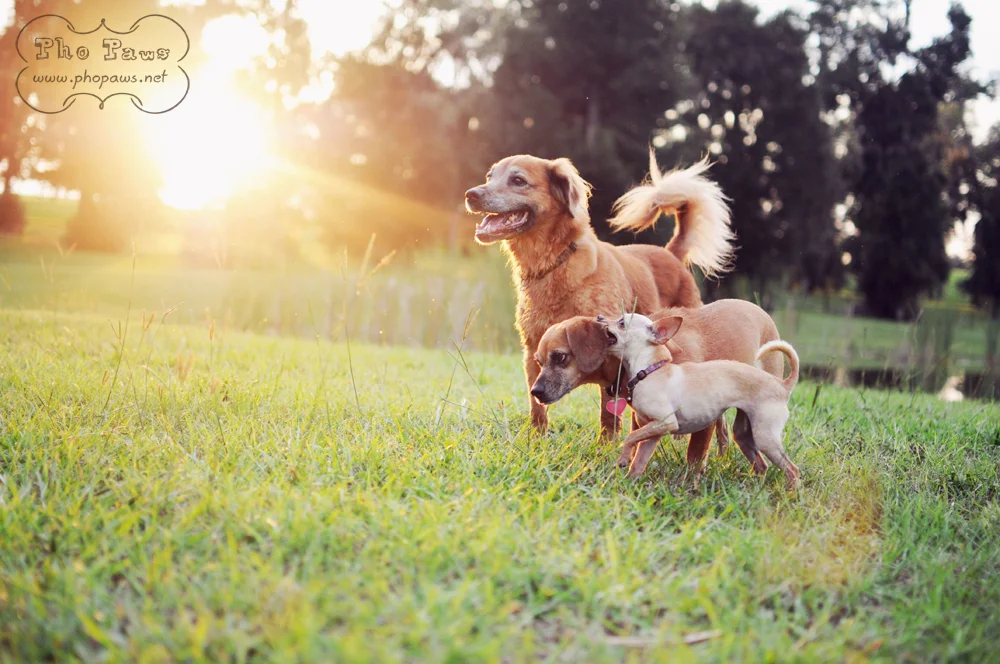
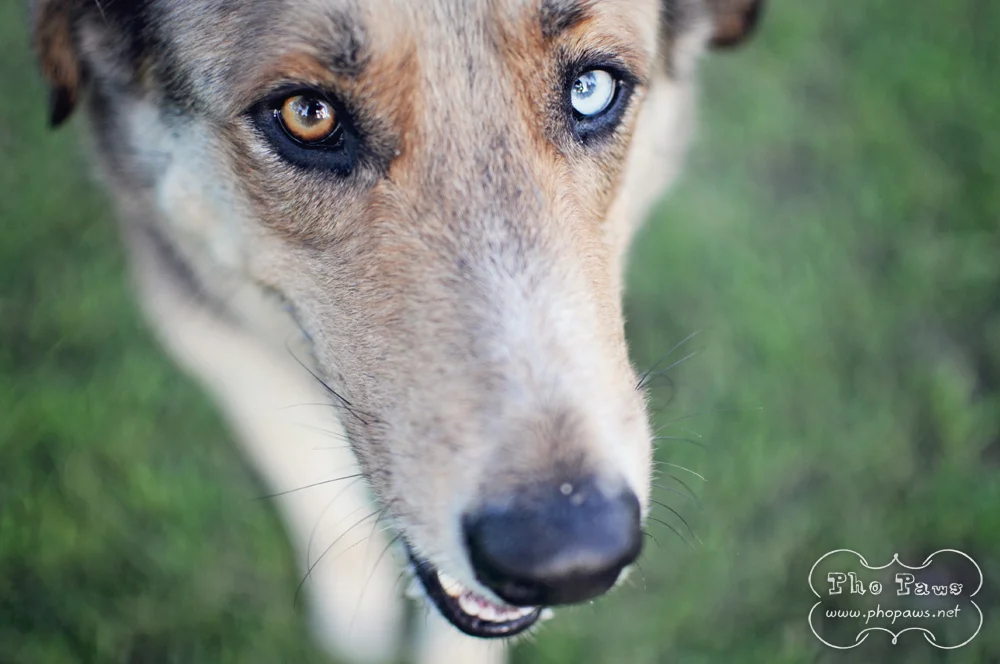
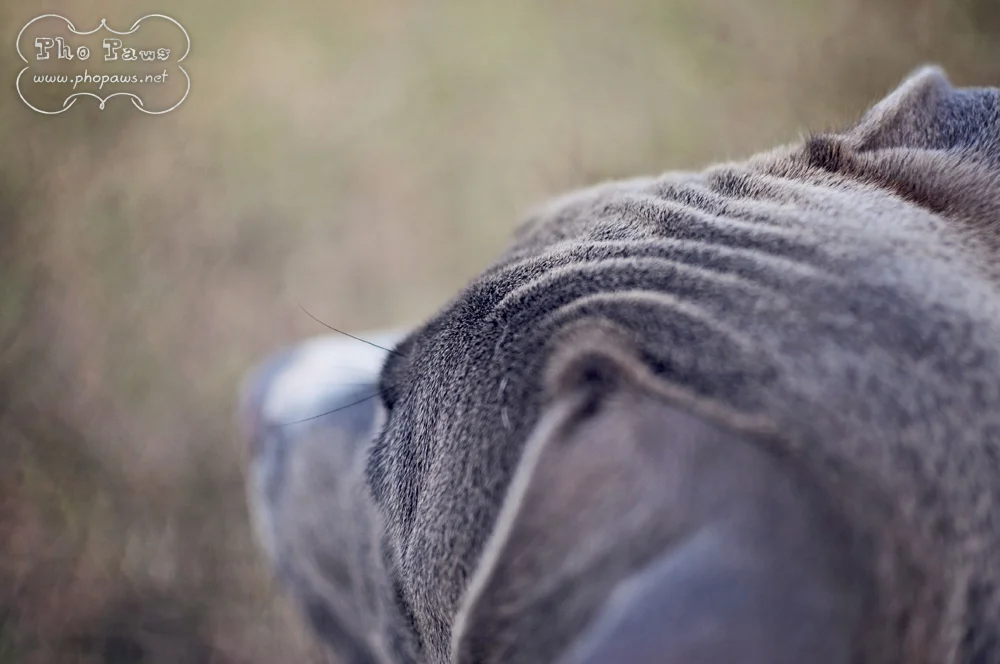
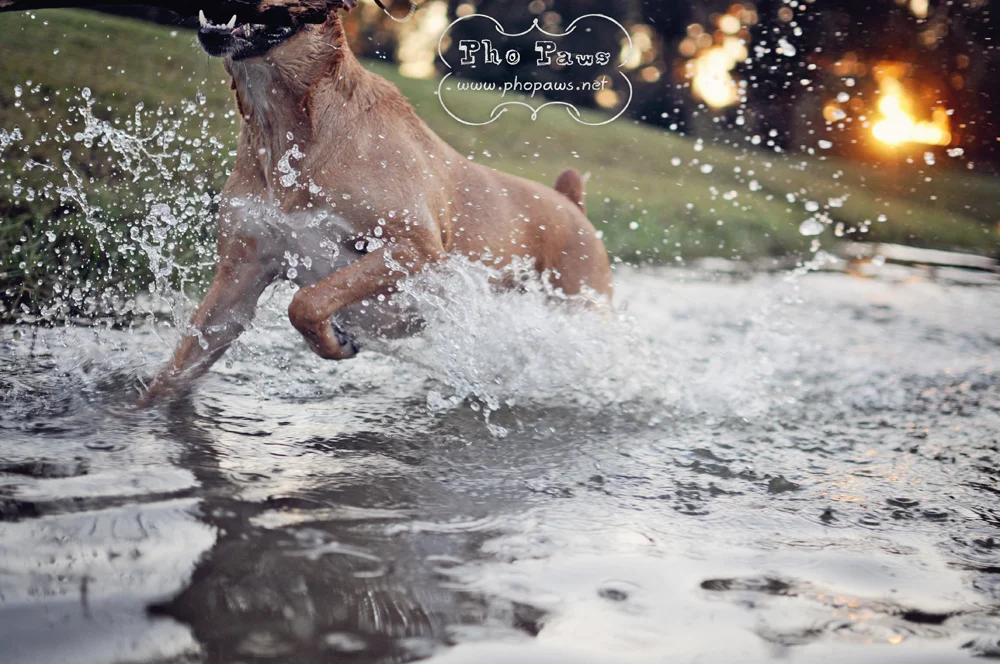
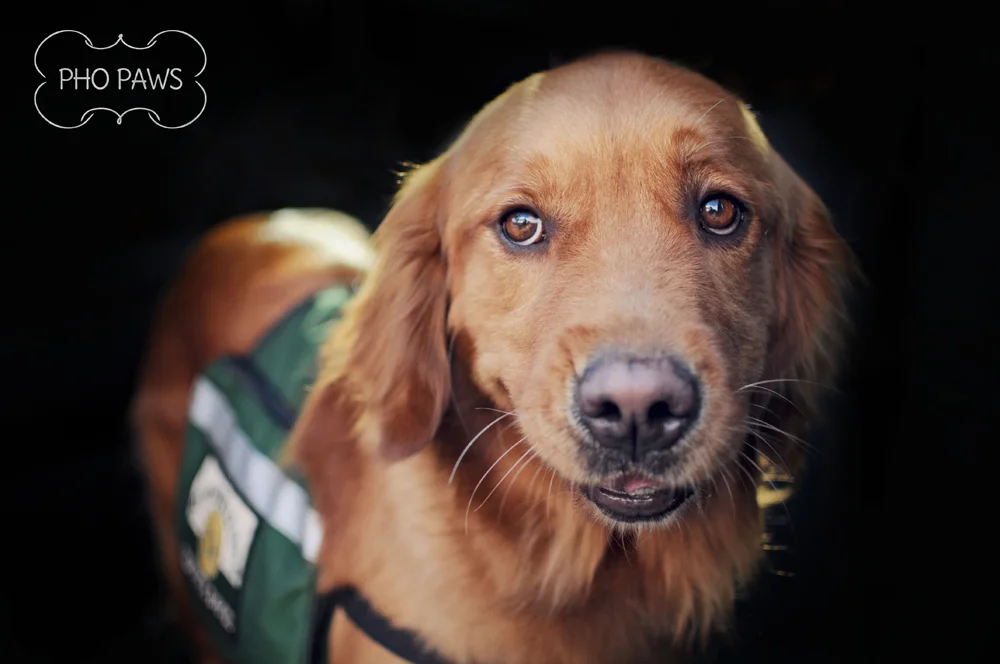
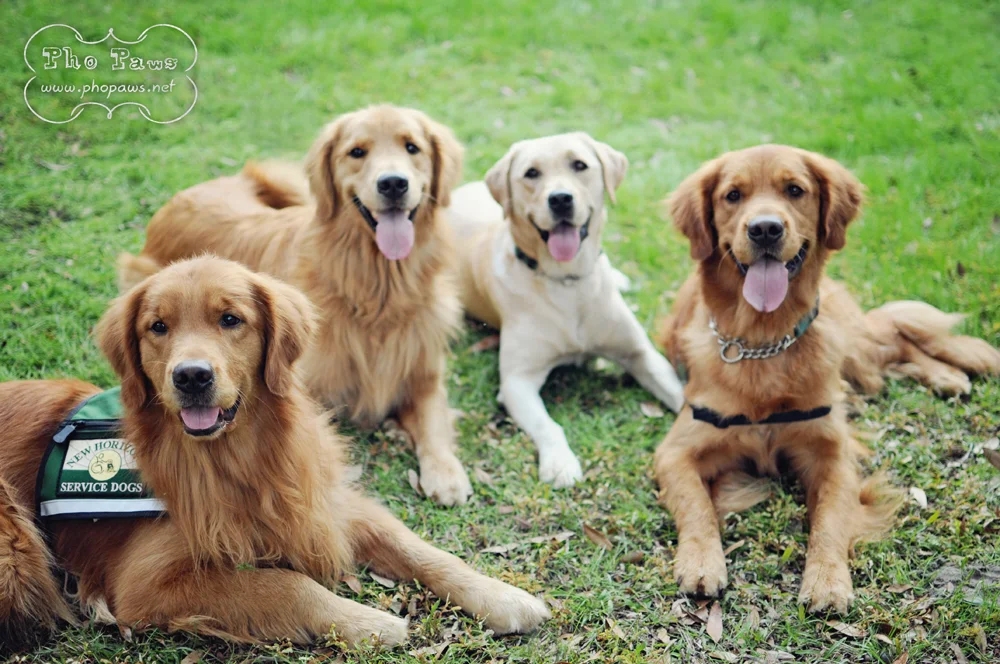
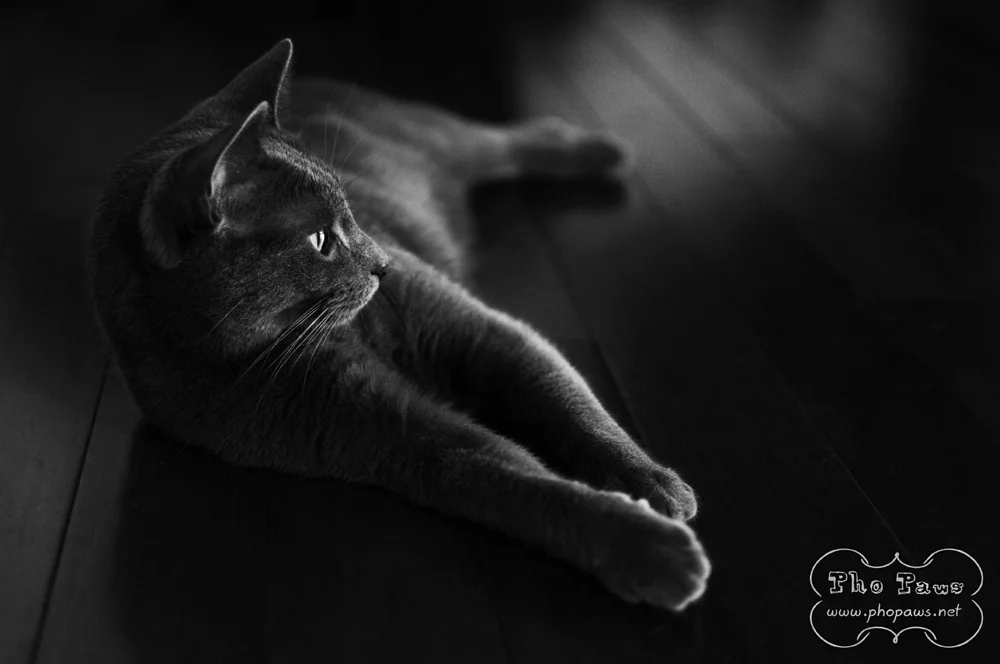
I want to discuss a few tricks and tips for shooting outdoors and simultaneously creating a studio feel. In the four images below, I used different techniques including cropping with my feet and overpowering the background light with the light on the subject, but each one has it's own unique story.
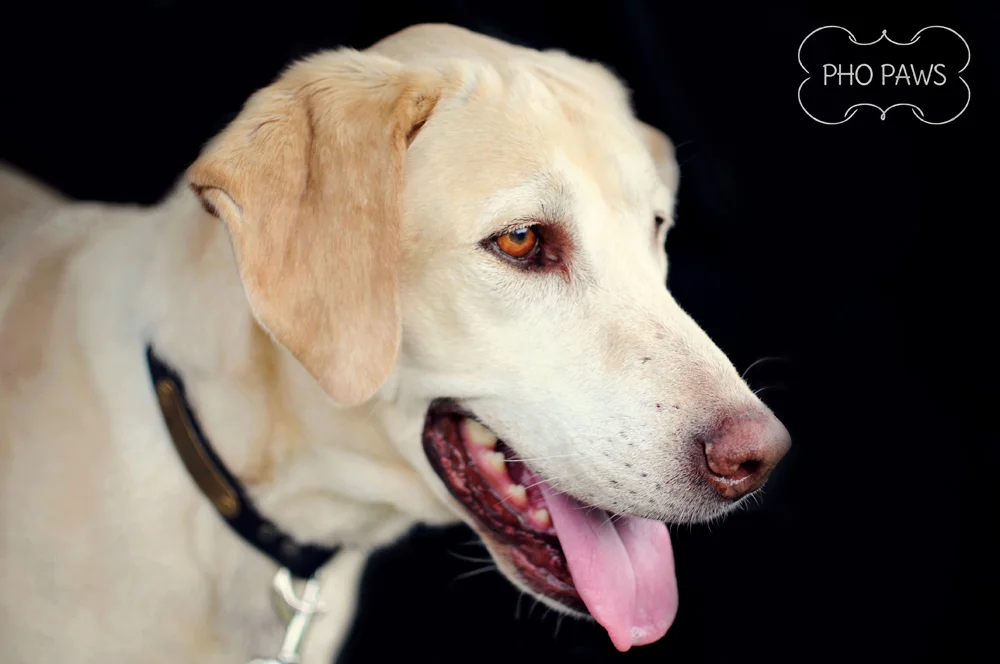
In this and second image, the dogs were both in vehicles and I was able to position the camera so as to black out all details in the background. This is a really handy trick when you know how to get the best angle of the animals face while making your post processing job much easier. This technique is best achieved when you underexpose the image slightly, so as to let the subtle details in the background fade in the pixels, which still allows you to pull out the details in your medium and light areas.
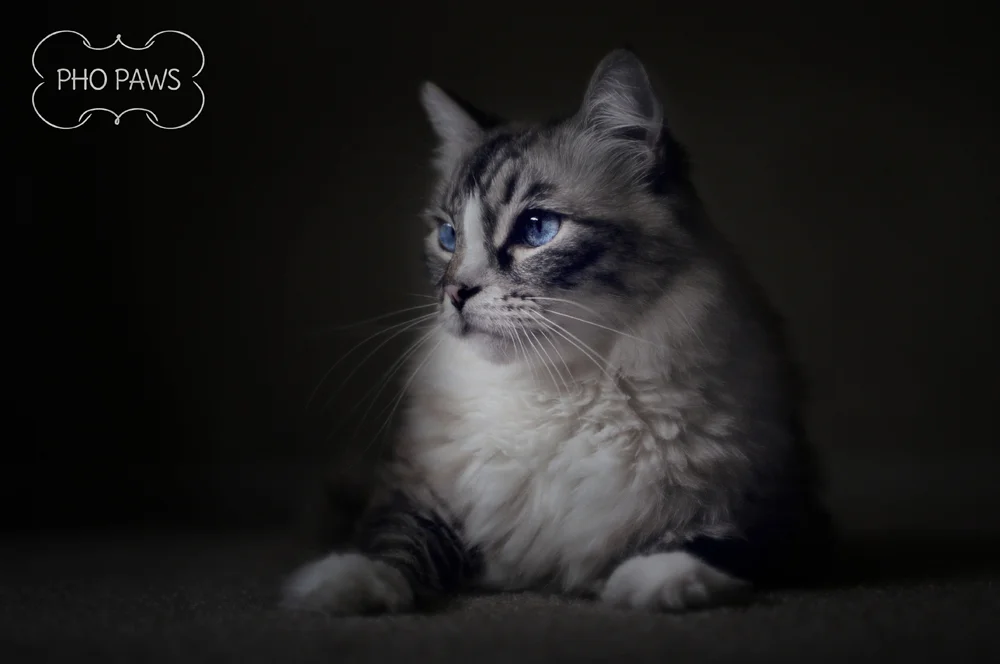
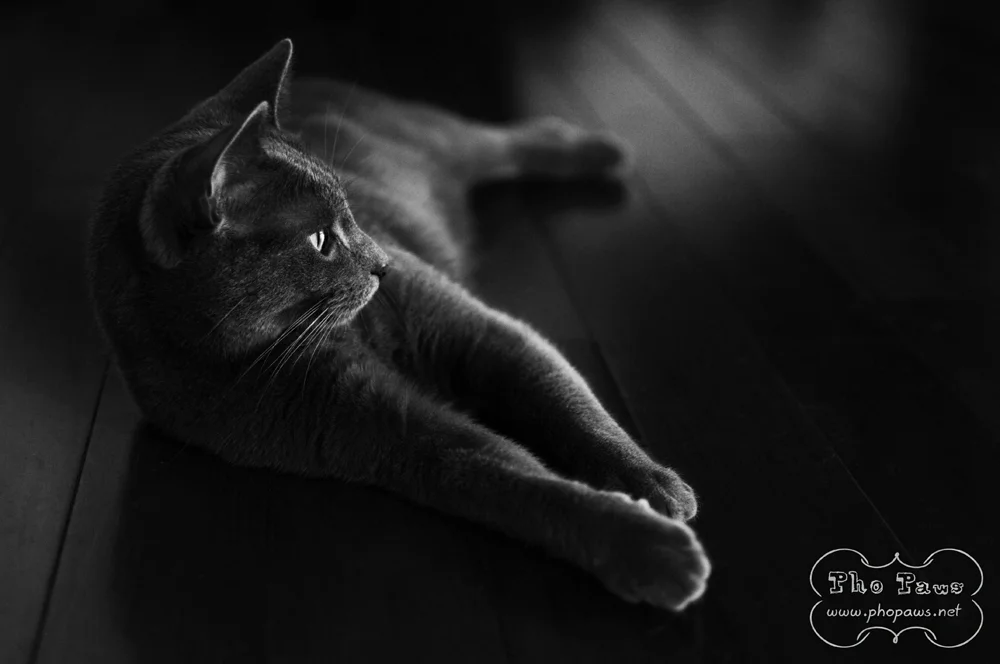
In the image of the cat, I actually used a variety of post processing techniques to achieve the studio feel, but I made sure that the lighting and exposure in camera facilitated for the most success with my post processing edit. This means that I arranged the window light to fall directly on the cat, and I exposed for the lightest areas of where that window light was falling. This image was actually taken in an empty apartment room with one window light only, even though it looks like it could be a carpeted studio.
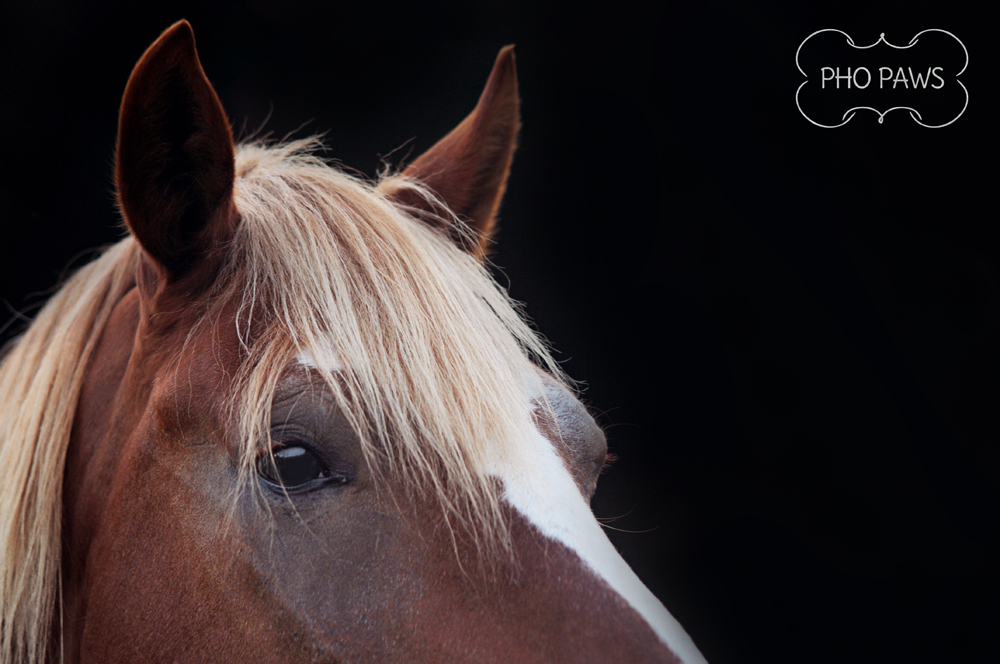
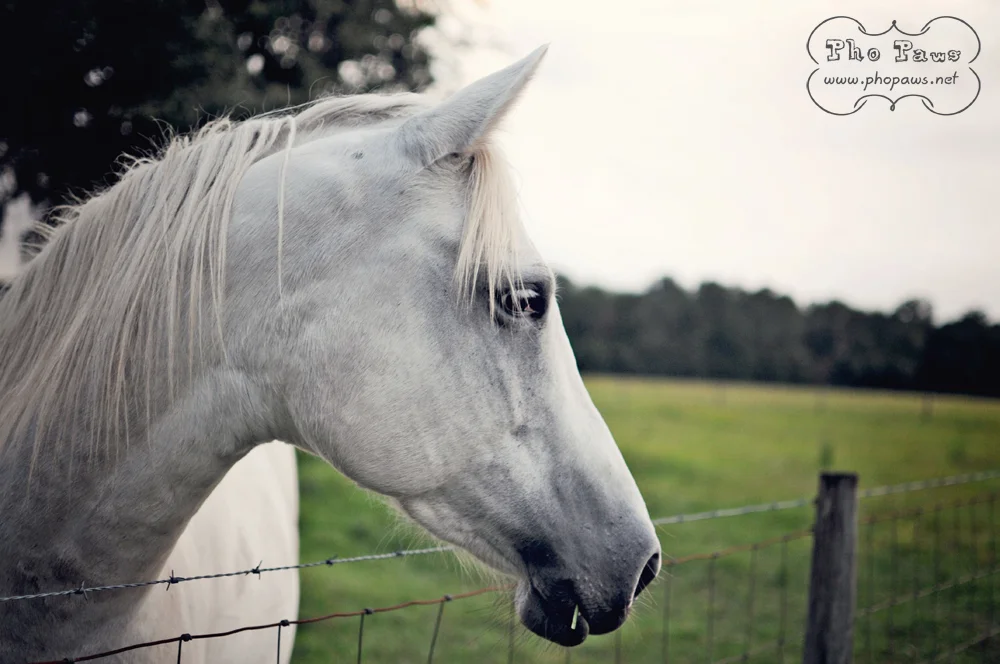
This last image was also taken with all natural light, but this time the horse was in his pasture. Because there was such a tight cluster of trees behind him, as I knelt down slightly (cropping with my feet) I could black out the details in the background and focus the light entirely on the horse. This type of technique and style of shooting always makes for extremely focused and expressive images, as there is nothing distracting or contributing in the background. As you are out in the world shooting, experiment with creating a natural backdrop using the elements you encounter outdoors!
categories: Photography
Wednesday 09.23.15
Posted by Kelsey R
 

Dog Training 411: Obedience & Service Dogs

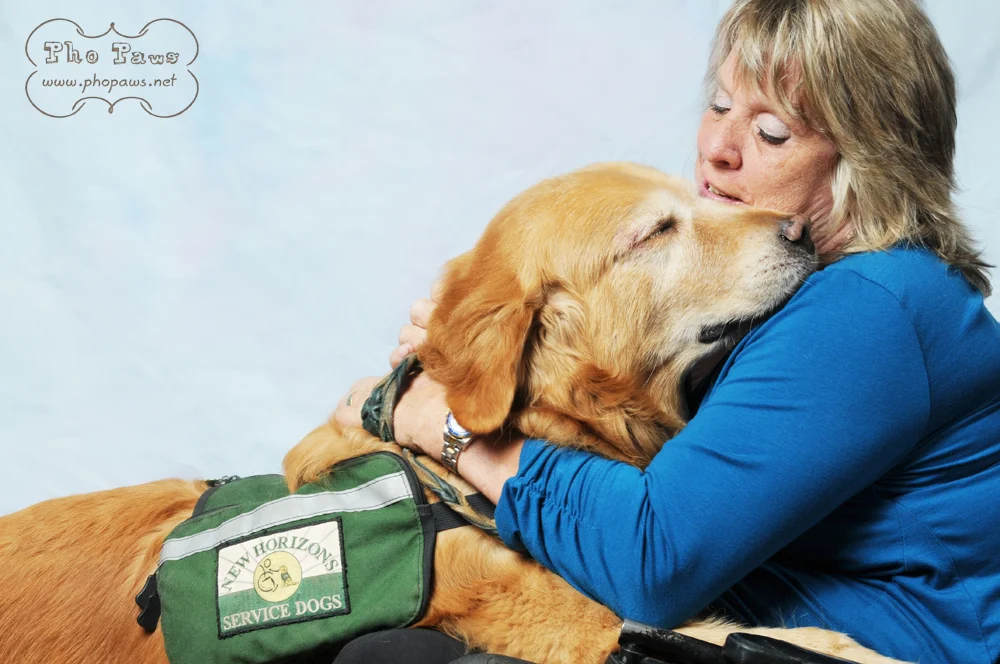
Service dogs are such a blessing to so many people. They have been taught how to perform basic and complex tasks that those who are disabled have a difficult time doing for themselves. I have learned so much from observing training sessions and teaching in my partnership with New Horizons. 

One of the major lessons I have learned is just how important it is for a dog to have a job. As I say in all of my sessions, a dog with a job is one happy dog. Obedience is a great tool for mental stimulation and relationship building with your dog, but many of us stop at the basics. 

If your dog is smart, why stop at the basics? If your dog is not so smart, why leave him that way? Sometimes dogs with a shorter attention span can actually be stretched in their attention span by being given a job that comes more naturally to their genetic disposition. 

Goldens and labs are great service dogs because we have engrained in them the desire to please their masters. Once they learn which behaviors are pleasing and which aren't, teaching them becomes like clock work combined with skilled profile pairing. 

I have seen service dogs be mind bogglingly obedient, and I've seen some struggle to keep focused. So socialization plays a huge role, too. The more a dog is trained to ignore everything that is not pertinent to pleasing it's master, the better that dog does when working with his next master.

It's so important to be able to pass off the baton to the new owner, so training sessions are done in groups and individually to ensure the best chance for success. The trainers who actually work for New Horizons have done a fabulous job and have observed what works best over many years of working with dogs and people. 

I'm grateful for what I have learned from this organization, and I continue to teach the importance of mental stimulation, physical stimulation and socialization in my one-on-one sessions with my clients.

categories: Dog Training
Friday 09.18.15
Posted by Kelsey R
 

Photography: Indoor Photography

There are so many options with photography. We can create our own lighting patterns, utilize ambient light, enhance, fill, and direct as needed. These are all situational changes, or as photographers call them, "rearranging the furniture". More popular today is creating interesting patterns and embellishments with photoshop or similar programs by "masking" or "dodging and burning". 

Why do we need to control the light, anyway? Glad you asked! 

Photography is all about lighting.  Think about it. There is no way to create an image without light. When I was in photography school, I learned about so many different lighting techniques, but one thing that stuck with me was that each professor had their favorite "sweet spot lighting". One of my professors said, "the only thing that will set you apart from everyone else in the world of photography is your unique style." As I started developing my own style, I realized that style is an entire process. 

Give five photographers the exact same camera and lens, the exact same subject, same day, hour, lighting and angle, and you end up with five identical shots, right? Well, no. First of all, exposure is a creative decision (and one that many "photographers" don't understand how to make). Secondly, the crop can make or break the image. Then we have juxtaposition, color, expression, mood, the list goes on and on. We're still "in camera" at this point. 

Post processing or "editing" can be as extensive and unique to each photographer as our finger prints are. My opinion? Learn the rules and then break them.

I was very traditionally minded when I was in photography school: if you need to photoshop it, you obviously didn't shoot it well enough. 

But then I learned the magic of enhancements. Just as I believe that beauty is derived from truth, and women wearing makeup is simply an enhancement on the natural beauty that is truthfully already there, images can be made better in post processing. Not made, but made better.

Coming full circle to how we start the creative process in camera, lighting is everything. I'm all about getting creative and breaking the rules, and I believe my images show that off well. 

When I told my professor about the creative process of this first shot, he almost fainted. 

First, I underexposed it by four stops. Then I masked the stuffing out of the highlights on the cats face and left front leg, blacked out (with the paint tool) the areas in the upper left and bottom right quarters of the image that had small light lines from the wood where the light hit it, and then I cropped it slightly. The raw image looks very similar, but I simply wanted to enhance the light and expression on Leo's face, so I used a vignetting technique to draw more attention to his face. 

This is also where cropping with your feet wins because had I been one inch higher when exposing this image, the light spot in the upper right corner would not have existed, and therefore it would have taken the brain a few extra seconds to figure out what type of surface the cat was lounging on, distracting the eye from the facial expression.

This is where ambient light with post masking wins. Expose for the highlights, and you too can create dramatic images like this one.  

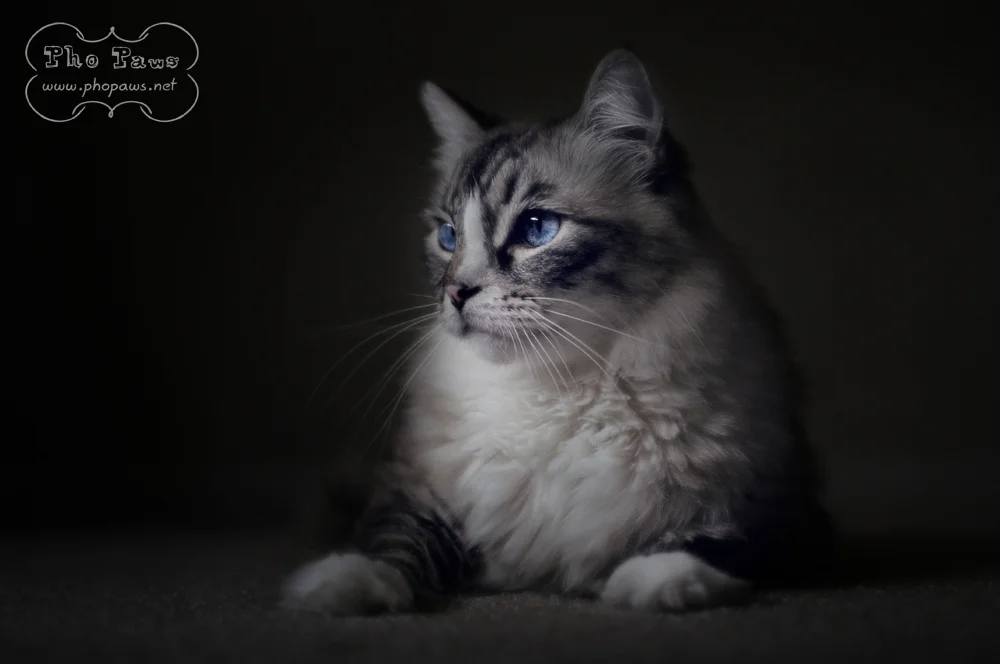
Similarly, the blue eyed cat below was photographed using window light only. I used an incredibly involved technique in photoshop to create the gentle blur and vignette in post production. If you'd like to learn it, send me a contact form and I can share my notes over coffee, because it is a very detailed process which would take a seminar's time to write out in depth. The bottom line of the technique, though, is to bring attention to where the light is falling on the subject.

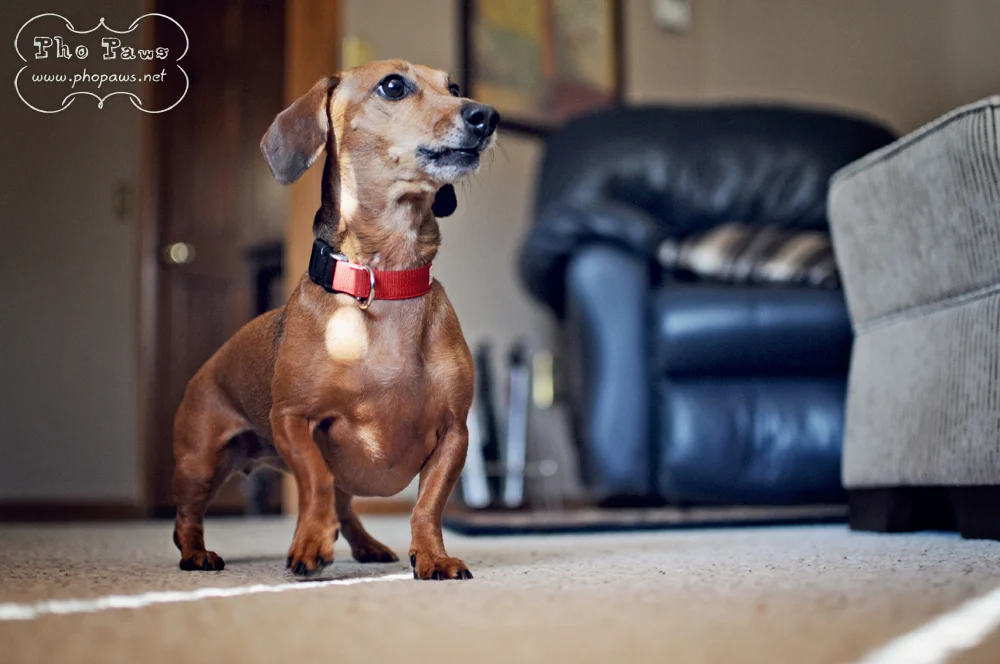
This shot was super fun to catch because I used an in camera technique that is signature to my style: I didn't look through the viewfinder to capture it. Since I photograph short beings, many times I simply put my camera on the ground, aim it somewhere around the subject's direction, and shoot when I think the expression is right. I waited for the pup to walk into the light pattern created by the shades for this shot. Very unique lighting patterns can happen involuntarily if you just wait, and this is one reason why I love photographing inside.

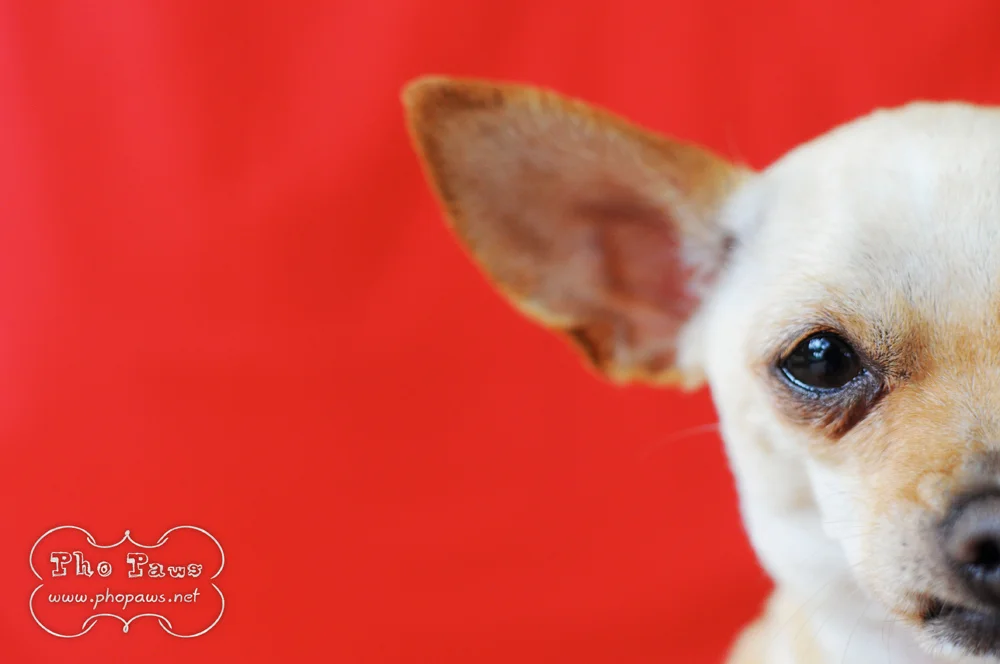
The photo below was a take off of a commercial that I once saw. I think it was for wrestling or boxing and the tv star waved his hand in front of his face and the camera had this crop for the last second of it, and the background was bright red. This dog's personality reminded me of him because she thinks she is very tough, though in reality she is a five pound pipsqueak. I used ambient light and set up a red backdrop using fabric for this shot. 

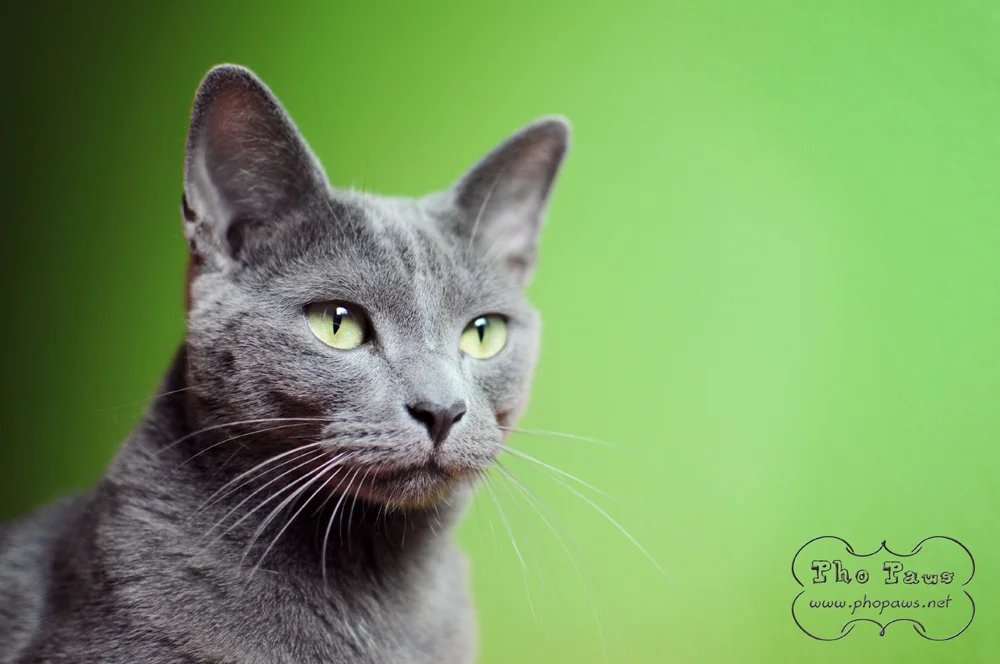
Again, color is so important when creating a mood. Leo's eyes matched this painted wall behind him, so I chose this backdrop to create that cool feel. One window, directly to my right and up about five feet created the perfect light source. However, there was also a dark blue wall directly behind Leo and a dark red wall directly behind me, and if you look closely you can see subtleties of these colors bouncing off his fur. One thing his owner expressed to me was that they love the way his fur seemed to change colors in different lighting. It seemed to change from grey to brown and certain patterns would appear sometimes. I thought that these subtleties of blue and red would tie in nicely with this element his owner loved about him.

Expression. This shot was captured with a combination of ambient light and my swivel flash bouncing light off of the white ceiling. I waited for the puppy to close her eyes before firing my flash, knowing full well that I wanted that sleepy puppy expression. I also chose a pink background because baby pink and baby blue are colors we naturally associate with puppies and babies and new fragile things. 

Sometimes you will make images that you still can't decide if you like. The shot below is one of those for me. I haven't sold myself on the crop yet, but it is a popular image and lots of people love buying it! Shot with window light only, I think it shows the best parts of the German Shorthaired Pointer breed off: focus and awareness.

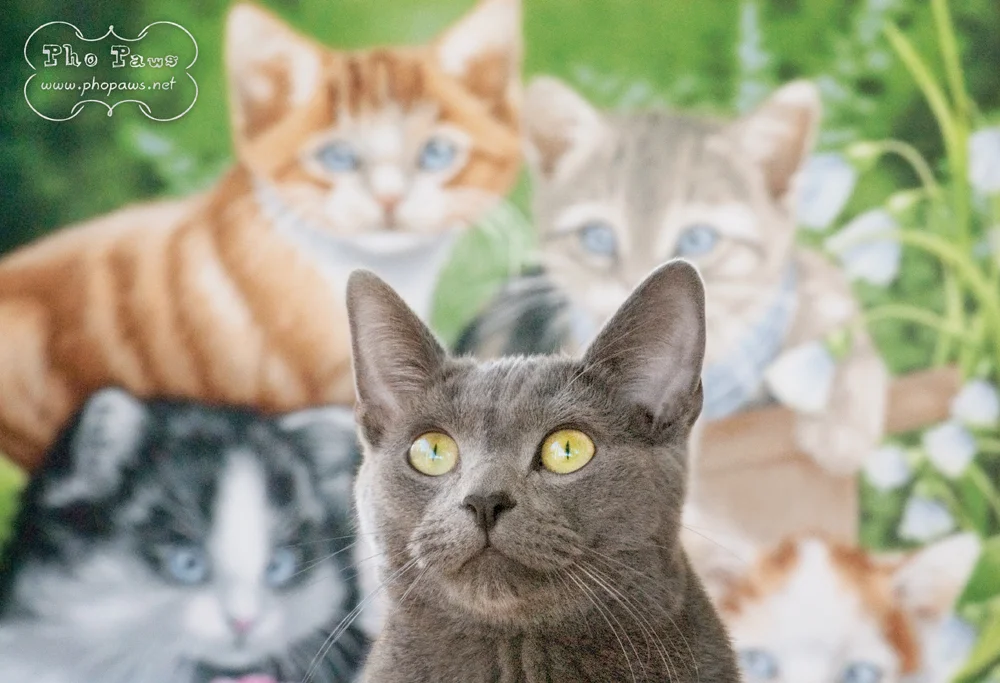
This cat was not very social, so I thought it would be fun to play off of the imaginary friends idea. Behind him is a blanket with cats on it, and he is taking the place of the center cat. Unfortunately, I used a technique that I shudder (no pun intended) at when I see other people using now, and this required me to do much image recovery in photoshop, and I'm still not completely happy with the results.

This image was shot with ambient light on a porch, one umbrella strobe, and *deep breath* telephoto on camera flash. Phew, I said it. I can't remember why my swivel flash didn't participate in the making of this image, but my in camera flash stepped in and the results clearly showed. This was a several layer and photographer effort fix, so I'm never doing that again. However, the bright side is that it continues to be a popular image and sell in pet businesses all over the place! This was also the only indoor shot that I've done of a cat that required more than two assistants. 

Pink! Again, color wins. Check out those painted toenails! The shot below was from a series of work for a local groomer, and I used window light and bounce flash. 
The below image was shot in a studio, so I had full control over the lighting. I most prefer butterfly lighting when given the option, and shooting for this event it was most ideal. It was an event of celebration, so the more high key the better. I don't normally do studio work, but the little that I've done in and out of photography school has been well worth it!
Well, there you go! There's a little peek into my mind when it comes to making decisions in the creative process given indoor situations. I am grateful for every opportunity I have to shoot more, and super thankful that I've had the six years experience I've had with photography. Whatever it is that you do, keep learning new things along the way, and implement what you learn! 

categories: Photography
Wednesday 09.16.15
Posted by Kelsey R
 

Dog Training 411: Boundaries For Success

Dogs understand rules, boundaries, and limitations as being the most important giveaway of who the leader is. Whoever sets and enforces boundaries for the packs own good is seen as the one in charge. They are constantly looking for where the boundaries are and who is reinforcing those boundaries. If you have a dog that follows all the rules you have set, they will still occasionally check to see that those rules still exist.

In my experience, the healthiest rule you can set up for your dog is for them to only receive affection when they earn it. This means that the dog must do as you ask before getting a reward. Every household is different and the set of rules that you may apply to one dog may be different in another household with another dog. This being true, I find that setting a boundary for the dog not to enter the kitchen, or sleep on the bed with the owners, or enter certain rooms uninvited are great boundaries to start with so that the dog becomes spatially aware and respectful.

Ideally, you want your dog to check in with you before going forward and entering a room, or greeting a person. This means that your dog is waiting for the green light from you. Still to this day, when I open any door to walk through, my dogs will look up at me before simply walking through. This tells me that they are looking to me first before making the decision on her own.

This is really vital in having a happy and healthy relationship with your dog because if they do not look to you before they decide their next move, then you are not seen as the decision-maker. Now, you may be thinking: why is important that my dog sees me as the decision-maker? Great question! It is important that your dog sees you as the decision-maker, because the decision-maker is seen as the pack leader. Unless you would rather have your dog tell you how you can greet your guests, I would recommend that you inform your dog of the proper way to maneuver around these boundaries.

The purpose of setting up boundaries around your household for your dog is to set them up for success. If your dog has no boundaries, rules, or limitations, they will presume the rights to do anything they want at any time that they want to do it. The danger with your dog doing whatever they feel like doing is that they will begin to enforce their own set of rules on their followers. Dogs are pack animals. They will either resort to being told what to do, or telling others what to do. There is no way around this.

At the end of the day, your dog does not really want to be in charge. They simply want a job to do and an owner to please. If they feel that they don't have either one, they will give you a job to do and have you please them instead. Which one would you prefer? I find that my clients would prefer to have their dogs listen to them than visa versa.

image.jpg
categories: Dog Training
Friday 09.11.15
Posted by Kelsey R
 

Photography: Outdoor Photography

There are so many options with photography. We can choose from a myriad of camera bodies, lenses, lighting techniques, the possibilities are quite literally endless! So why would someone choose to narrow down their selection range and shoot primarily outside? 

Glad you asked! In this post I'll be explaining my mindset and creative decisions behind photographing outside. Next week I will write about photographing inside, and explain my thought process behind my creative decisions to do so. I'm real excited to dive into this weeks post, because I love explaining why the great outdoors lends itself to my style. 

First, I want to talk about lighting and color. Yes, shooting at sunset is truly my favorite time, but let me explain why. 

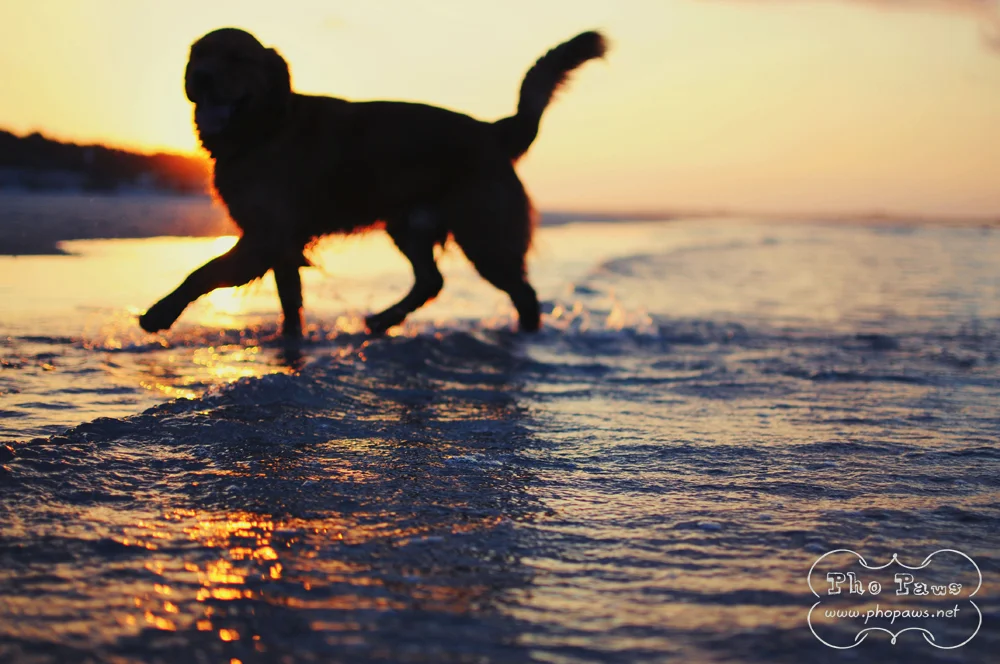
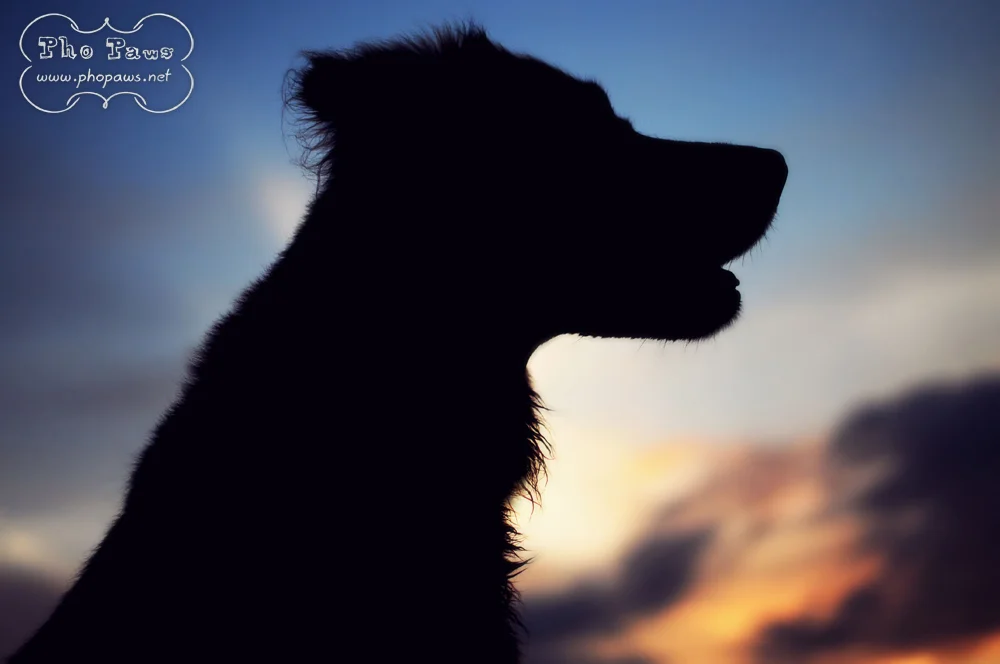
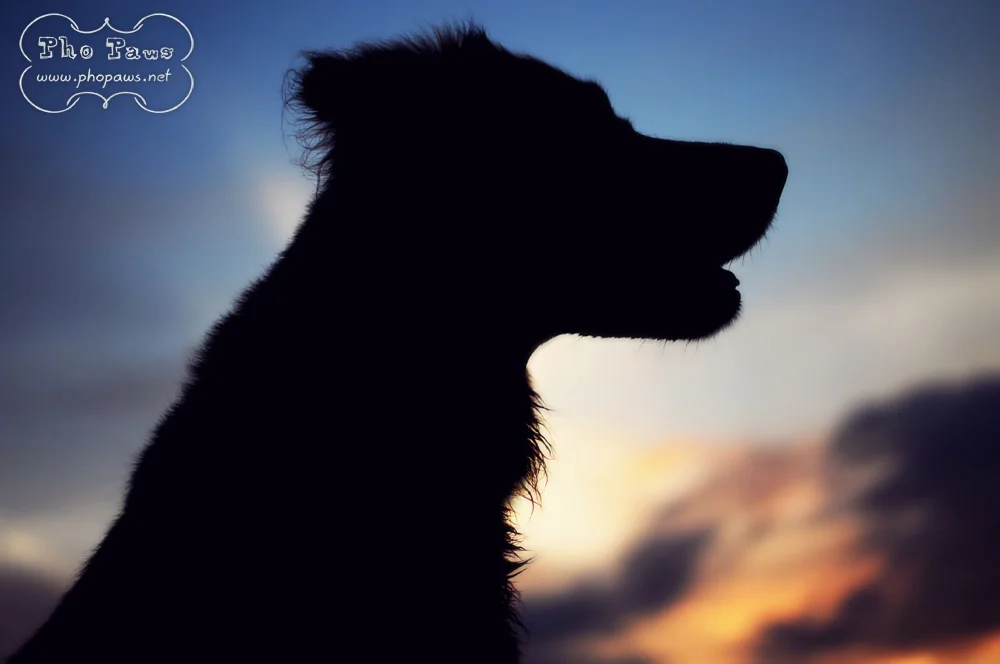
In the image above, I used the dog's body to block the sun, creating a silhouette. If the sun would have been much higher, I would not have been able to position my camera to block it with the dog. This was a creative decision, because you may have already guessed that the dog's face is probably pretty happy, and it would have been a great shot taken in noon day lighting as well. This is where the color comes into play. The feeling that you get from the dog trotting through the shallow beach shores is subliminally calmer than it would be had the shot been taken in the middle of the day. Because of the way that the brain works, we have the tendency to imagine what it would feel like and look like to be in the photo. There's a huge difference between splashing through the water at sunset vs. in the middle of the day. That feeling is what I wanted to capture.

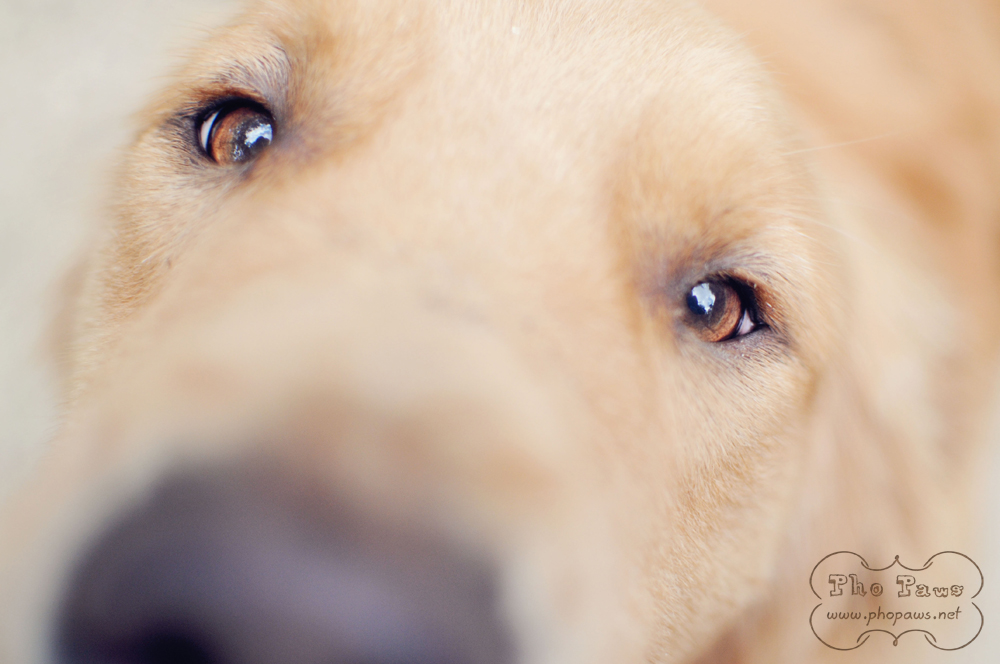
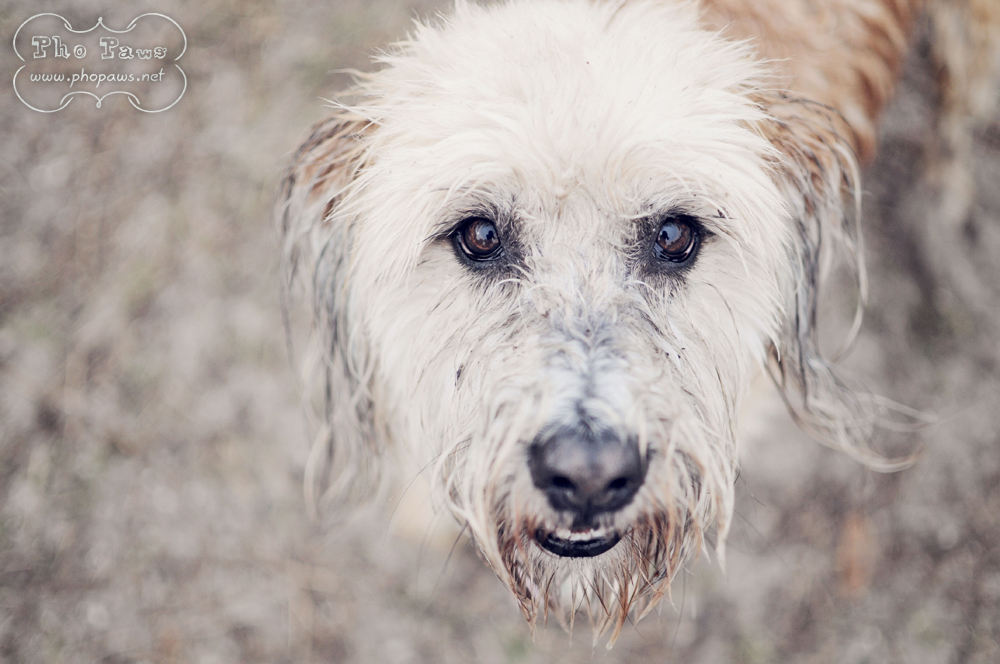
Next, I want to talk about subtleties. The fact that this dog's eyes are so close to the lens allows you to see the trees in the catch lights. Imagine if there was a ceiling and a bright flash that hit the ceiling from my swivel flash instead of these trees. While I may be able to light this image as evenly as the ambient light had I made this image inside, I probably wouldn't have gone to the effort of photoshopping trees into the catch lights. Makes a difference, doesn't it?

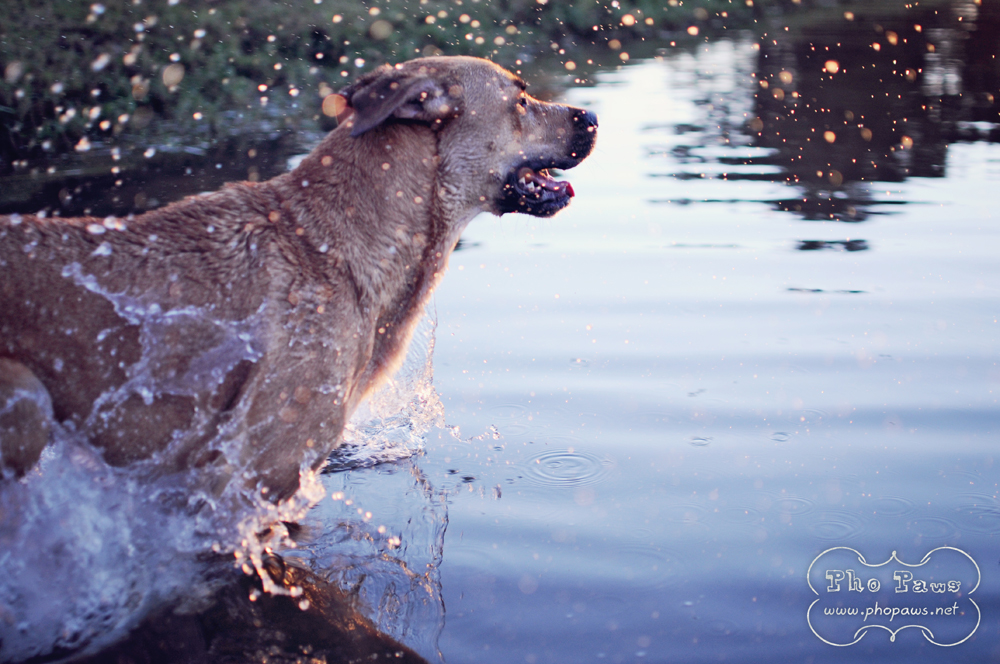
Next I want to talk about balancing the light. This shot was taken at 50mm, f/1.8 and with a shutter speed & dragged flash that balanced out the ambient backlighting. Can you see the flash on the dog? Why does this make a difference? Well, imagine that instead of a dog in this lighting, it's a bride and groom. Bride wearing white, groom wearing black and white. How important is it that you can see the details, but that the bride doesn't look like a glowing object? Because this dog is black and white, it was real important that I lit him evenly.

Next I want to talk about tricky locations. Can you guess where this photo was taken? This dogs owners were loading him into their handicapped van when I moved in and snagged this shot just before they told him to lay on the back seat. It was a minivan, and there was a golden afternoon light coming in from behind the dog. Do you think it's important to learn how to turn unusual shooting spots into easy layouts that the brain may not even recognize or be distracted by?

Context. Given the setting of this image, what do you think the dog is looking at? If you thought tennis ball, you are right! Again, this is very subliminal, but it was my intention.

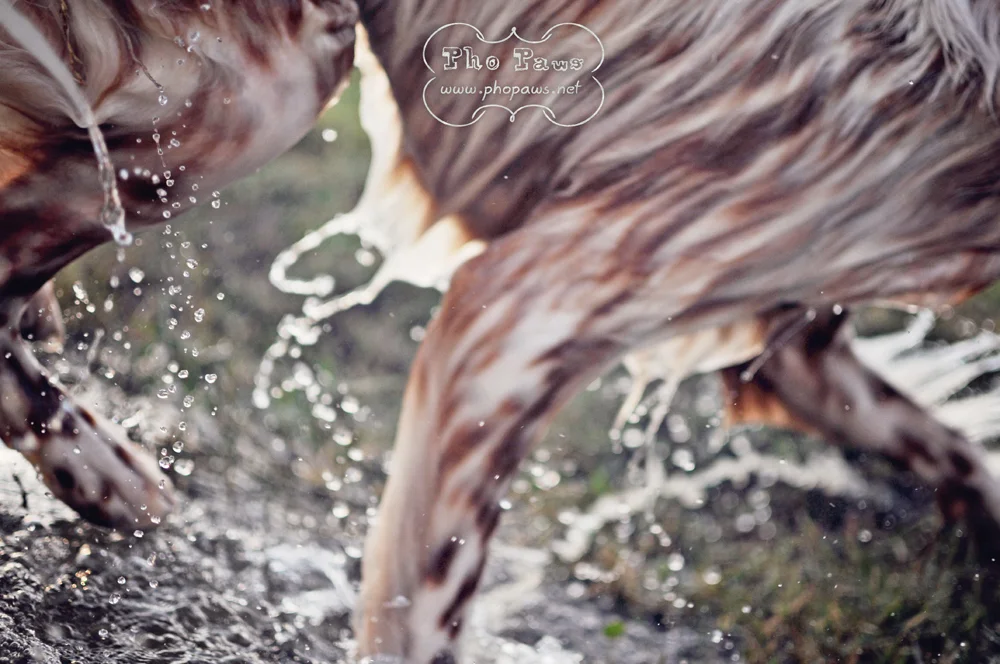
Dragged flash. Believe it or not, this dog's name is flash! This is a common technique, but it still amazes me how many people are impressed by it. Using a wide angle non-fixed lens, start with the lens zoomed in all the way, and then simultaneously take a photo and zoom out. However, you need to drag your shutter speed, and if you want the result I have here, you also need to drag your flash. This creates an instant freeze in the middle section of the image, but the blur effect around the edges. While you can accomplish this inside, the brain thinks: motion, action, sports, outside. So it was important to me to use this technique outside.

Intended ambiguity. It's pretty obvious that this image couldn't be created inside nearly as easily as outside. But I want to expand on the idea of imagination for this image. You can see that the dog is focused and possibly a little warm, due to the mouth being open. The rest is left up to your imagination. What do you think she is looking at? What do you think her expression looks like? The need that we have to create within our imagination is super important. I like to capture images that leave some things up the imagination because of this.

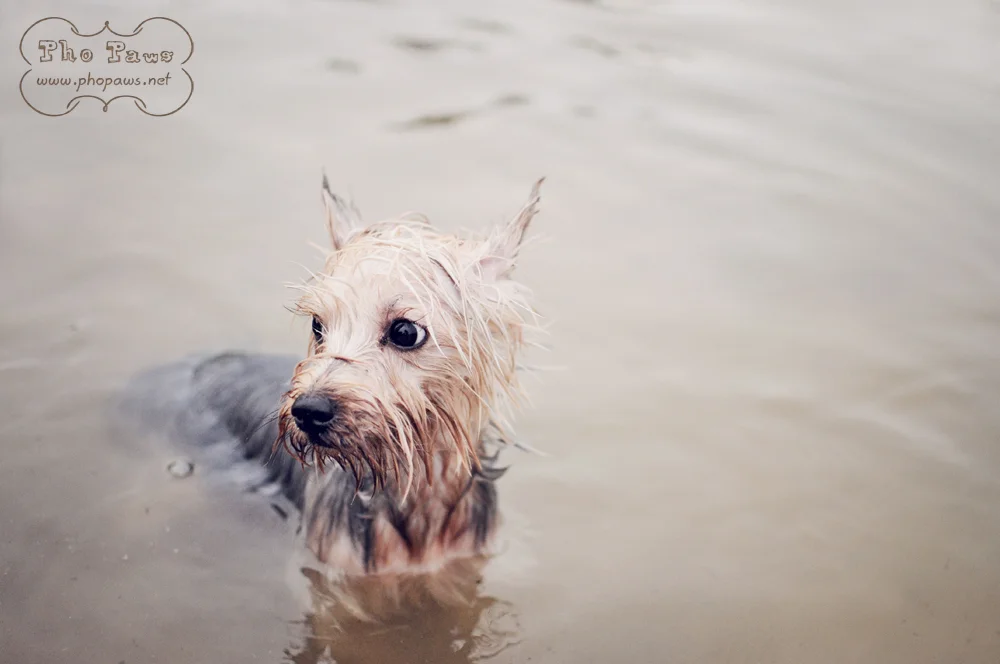
Color and association. What if this water was Bahamas baby blue? Not quite the same image, right? If you know doggie body language, you can tell that she hears something behind her, but is watching something off to her right simultaneously. Most people comment on this image by saying, "Aww! Poor little guy." The whites of her eyes make her look sad or cold, even though she was truly just distracted. The dirt in the water contributes to the "poor little guy" comment, because who wants a dirty wet little dog? Especially a dog that is normally depicted as well groomed, proper and clean: the yorkie. However, this was my intention. I like to play with the ideas we have associated with specific breeds. In my mind, they're all dogs. They just want to do the next fun thing. And swimming is this little yorkie's favorite activity!

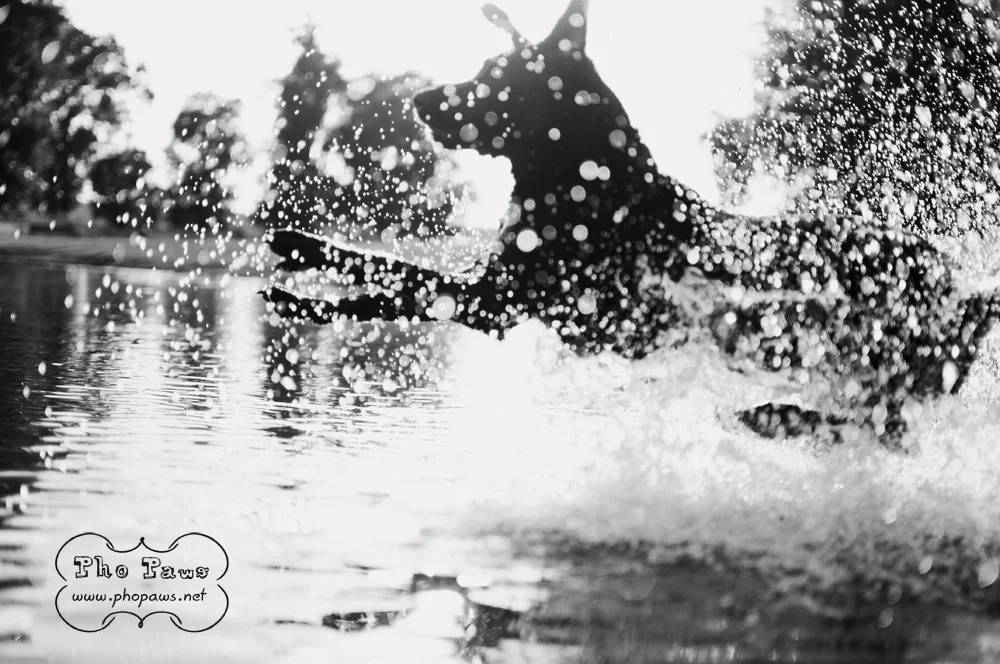
Natural elements. This photo was nowhere near as successful in color as it became in black and white. Sometimes color adds to the natural elements, and sometimes it takes away. I would recommend that if you are working with an image and simply not feeling it, try making it black and white. 

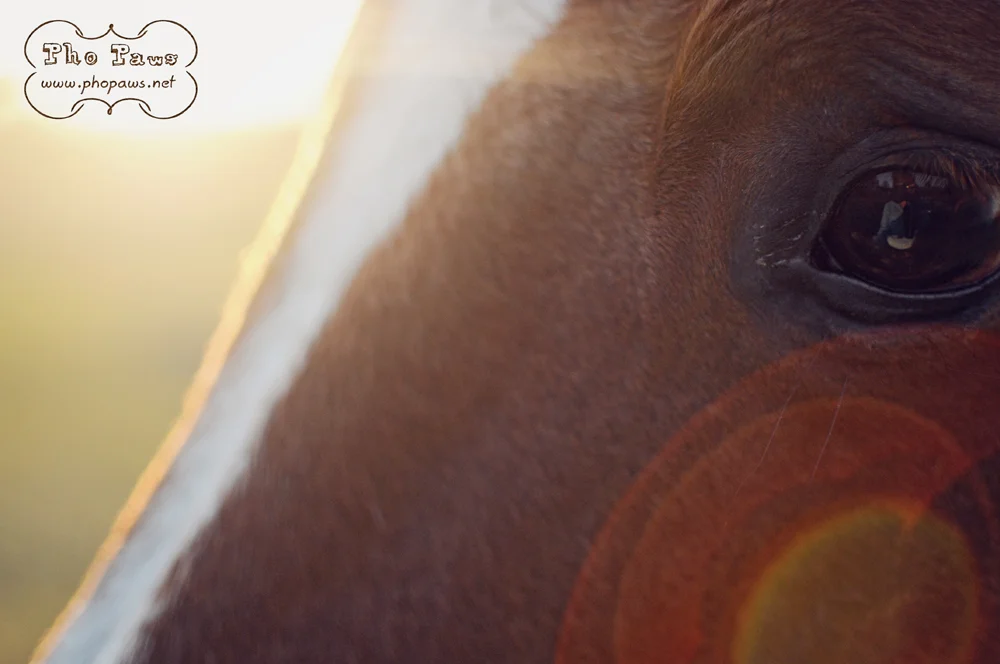
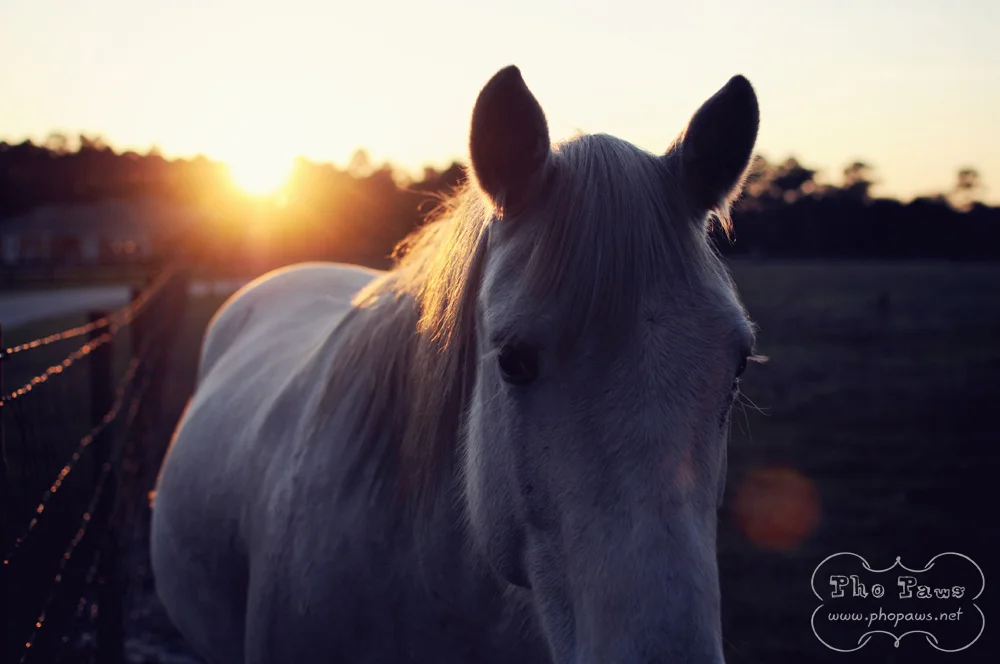
Lens flare. I love creating lens flare, but let's be honest. We all know people who abuse lens flare. There is a time and place for it, but one thing I love about it is that it creates a warm feel. I can hear a high pitched simmer noise when I look at an image with lens flare, and this makes me really happy. The warmth of the light is extremely important to create the feel you're going for in any given image. Here, I wanted to create a lot of warmth because I want you to feel like you can be friendly with this horse. 

Can you see how photographing outside can be a great decision for many reasons? What are some of your favorite reasons to shoot outdoors?

categories: Photography
Wednesday 09.09.15
Posted by Kelsey R
 

Dog Training 411: Breed & Behavior

The study of dog breeds is a very interesting topic to me. We know that genetically all dogs come from the line of wolves, however, some breeds seem stronger than others or seem to have different tendencies than others. The fascinating part about this is that every dog was bred to do a job and if they are not doing that job in a way that fulfills their breed's needs, we notice these tendencies play out in negative ways.

This could be true of a herding dog that resorts to corralling the kids around the backyard if they are not allowed to herd animals, or a mountain dog becoming bored and chews excessively because they don't have something to haul. If you look at dogs behavior objectively, none of their behaviors are inherently constructive or destructive, but rather are simply responses to what their environment is providing for them. If they feel like they have a job to do, they will fulfill on that job. If they don't feel like they have a job, then they're going to find a job one way or another.

Dogs want to please their masters. That is in their genetic coding. If they are not notified that they are displaying a behavior that is pleasing or displeasing, they have no reference point on how well of a job they are doing. If they are getting mixed signals from their master, they're going to choose the pleasing behaviors over the not pleasing behaviors. If the dog had a traumatic experience or was injured, abused or neglected, is likely that that dog will resort to a self defense mechanism such as fear-based aggression. This is often the root of what we as people see as destructive behaviors in a dog. I also notice that the "destructive behaviors" we see dogs display are rooted in our rewarding behaviors unknowingly and thereby reinforcing behaviors that we ultimately don't want.

I have seen this time and time again with dogs who jump on people or greet them in other spatially disrespectful ways. Their owner does not know what they're doing to reinforce this behavior, and therefore the owner sees it as a bad behavior but doesn't know where it came from or how to stop it.

How breed come into this picture is the dog's natural tendencies. We know that dogs are going to act first of all like animals because they are animals. Secondly, they're going to act like a dog because they are a dog. Thirdly, they have specific tendencies depending on their genetic coding and the job that they're breed was bred to do. If we are fulfilling their breeds needs based on their job in their current environment, theoretically speaking there should be no behavior issues given that they know their role in life.

Where the issue comes in is  when we remove the dog from a natural breed setting and job and leave it jobless and without a leader. So, I would encourage you to ask yourself: what breed is my dog, and what job where they bred to do? Am I filling my dog's job needs? Is the environment that I live in a bad fit for my dog's job needs? Does my dog seem to display distracted behaviors because I am not leading them, or because I am reinforcing behaviors I do not want?

You may be wondering, how could I be enforcing behaviors I do not want without knowing it? Glad you asked! Anytime a dog gets rewarding things such as food, water, petting, human attention, etc., your dog's current state of mind is what is reinforced. They learn what states of mind are most pleasing to you based on which ones you reward the most. So maybe now is a good time to ask yourself: how and when do I reward my dog? Am I aware of the states of mind I am reinforcing when I reward my dog?

image.jpg
categories: Dog Training
Friday 09.04.15
Posted by Kelsey R
 

Photography: Droopy Hound Dogs

How fun are hound dogs?! I absolutely adore them. My favorite thing about a hound dog's expression is the character that comes through their eyes and ears. I can almost hear them responding to their name, "huh?" and it cracks me up every time. 

I want to share with you a few tricks I use to catch the droopiness of hounds at the right angle. Every time I photograph a dog, I catch "expressions" and I catch "in-between expressions". An in-between expression could be them licking their mouth, half closing their eyes or half yawning. Whatever it is, there is potential for great photographs in both expressions and in-between expressions. 

When people are photographed and in-between expressions are caught, they often want those photos deleted. However, when animals are caught in an in-between expression, it's often hilarious or exemplifies how that animals owner sees them in real life. 

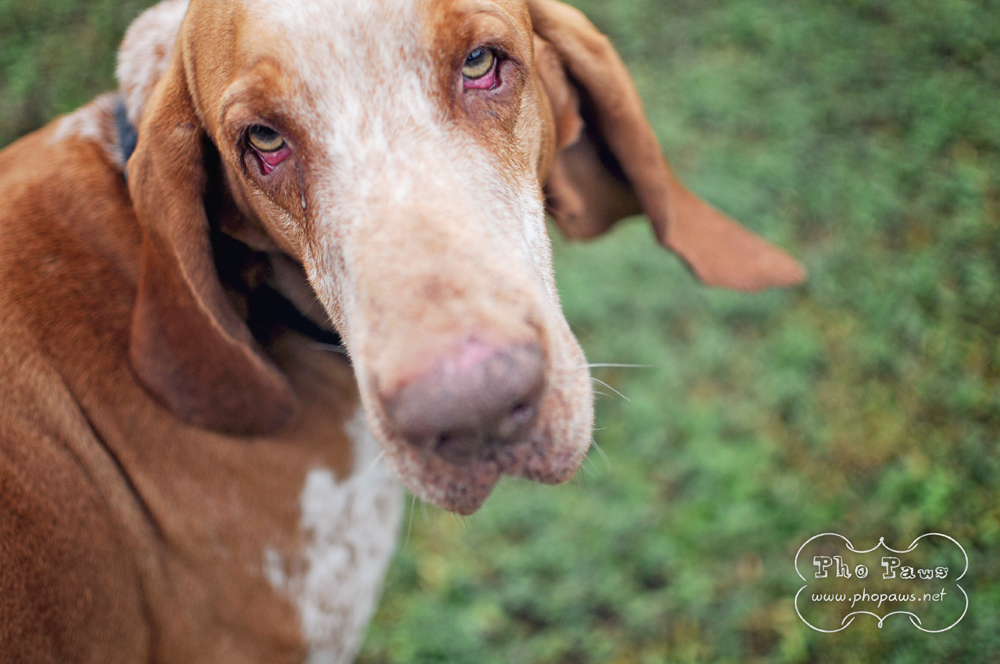
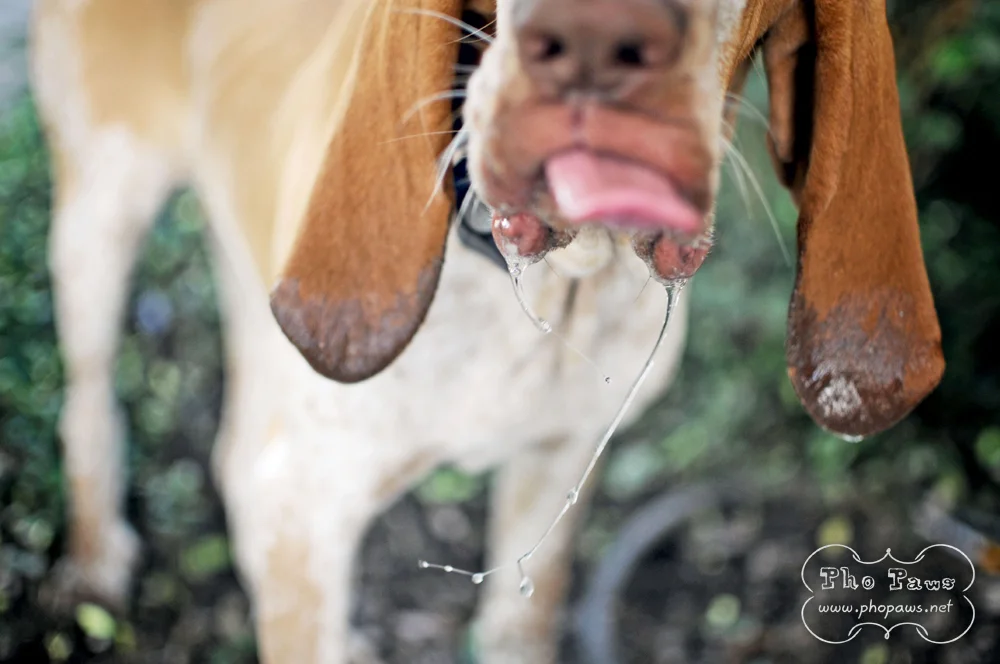
Because many hound dogs have a longer face, I prefer to catch them at an angle rather than straight on, if I'm trying to photograph their whole face. It's important that I catch the elements that the particular owner loves about the dog, which often include eye expression, coat color, ear positioning and common breed giveaways. Common breed giveaways such as the profile view of a terrier (with the slight lift in the nose), the focused look of the herding dog, or the drool of the hound. 

These nuances are so critical to catch if you're going to help your viewer understand the character of that dog. Can you guess this hound dog's breed? I'll give you a hint: he is Italian! 

Duke was a blast to photograph in his owners back yard, and these are just a few angles I caught of his beautiful droopy face. 

KRP_0829 copysmall.jpg
categories: Photography
Wednesday 09.02.15
Posted by Kelsey R
 

Dog Training 411: Spotlight on Lily

This is Lily! She was found on the side of the road where a sweet woman took her in and nursed her back to health (she was in really bad shape!) She is currently under my training and in a foster situation, but the foster parents can't keep her for much longer. We are looking for a home for her ASAP! Others have so generously been able to help her out by socializing and exercising her, and she needs a loving home who will be open to a family type dog. She is fabulous with kids and other pets.

Lily was apprehensive when I started working with her. We wanted to do a little course correcting on her growing fear of people and I am pleased to announce that she has been doing so well since she has been being walked more often and socialized more often! In the image above, you can see her curiosity because I was making a noise to get her to look at the camera that way, but in the picture to the left you can see her more natural body language stance. 

Her ears are back (listening for what is behind her and not fully in tune with what is in front of her) and her tail is at a medium height, slowly wagging (signifying a slight skepticism). The photo above was taken after my first session with her and the photo to the left was taken after my second session with her.

At this point we have done three sessions and we will continue to work on socializing and exercising her more regularly! As soon as she finds a home who can commit to these two things, it will be smooth sailing all the way to complete psychological and physical health for Lily.

Please share this blog post with anyone you know who may be interested in fostering / adopting Precoius! Contact Marion at 386-871-3956 or mimisunny@hotmail.com

categories: Dog Training
Friday 08.28.15
Posted by Kelsey R
 

Photography: Domesticated Exotic Animals

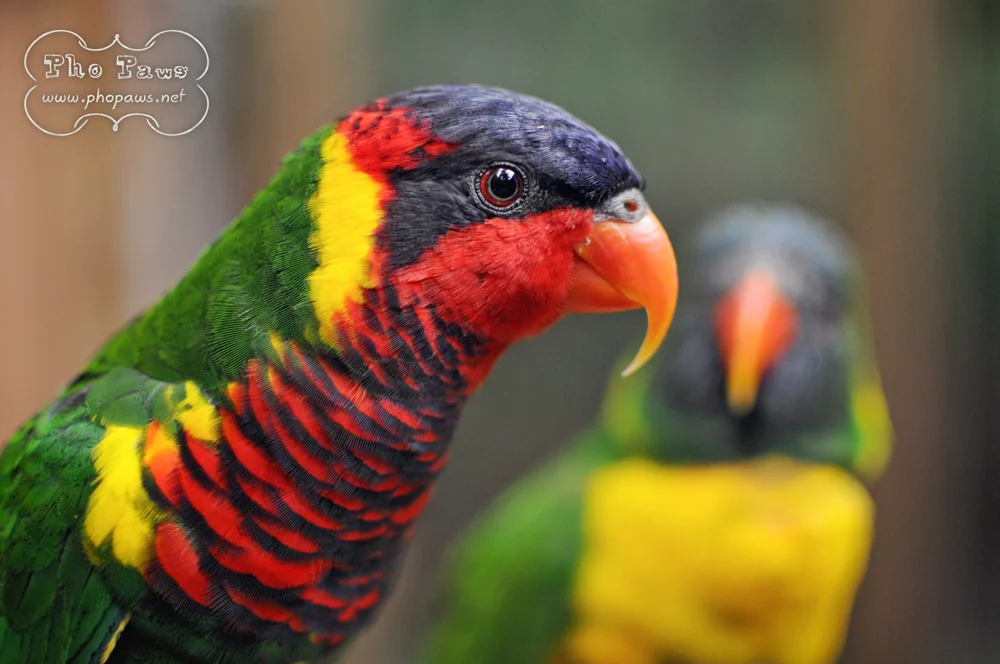
Recently I took a trip to an exotic bird viewing location where you could fee, talk to, and take pictures of these beautiful animals. I must admit, I'm much more comfortable around four-legged animals than feathered ones, but I enjoyed seeing these gorgeous creations as well. 

Sometimes it can be very difficult to get the shot you're looking to get in an enclosed environment, such as a zoo. Many times you may really want a specific photo, but lighting or caging does not permit it. I want to share a few tricks I use in these situations.

First, it can be important to ask workers who are standing by how close you can get to the animal to get a photo. This will determine which lens you choose to use. I always recommend shooting with the fastest lens that you own (the lens that has the lowest aperture). I'm all about clean backgrounds. I have worked my tail end off to achieve this look in all of my photos, and I'm still improving at it constantly. But if you're shooting with a wide angle lens simply because it's your fastest lens, and you end up with a very distracting background, you could have gotten a better shot in my opinion.

In photography school, I learned about an artistic element called: dominating foreground, contributing background. So I suppose if you juxtapose the image content correctly, you can end up with neat shots without a perfectly clean background. I believe that your images will look more natural and authentic, however, if you work to soften out that background.

One technique I use to achieve this look is to hold my camera above my head and "guess shoot". That is, if I can't get the shot I'm looking for at eye level or below. I will often use this technique if the animal I'm working with needs eye contact in order to maintain interest in me. These birds seemed to be fascinated by their image in the reflection, but they were also used to having people in their faces.

Fortunately, I was able to get within inches of these birds, making it much easier for me to get the shot I wanted. If ever you are unable to get within inches or a few feet of your exotic animal subject, I would recommend using a good telephoto lens and turn your flash off. Telephoto images with on camera flash really never work, unless you're just looking to document the event and don't care about the image quality. 

There are so many shots that I took at this location that I hoped in the moment would work out, but in my minds eye it was clear that they wouldn't because of the light, background, or expressions. So many beautiful birds, but choosing the images I wanted to display came down to best capture of simplicity and character. 

So go explore! Go to your local zoo or domesticated exotic animal location and shoot away. Learn how to not only edit and share a photo because you're excited about it. Instead, learn how to share the most quality work you can produce with the tools and techniques you have. 

categories: Photography
Wednesday 08.26.15
Posted by Kelsey R
 

Dog Training 411: Spotlight on Lucas & Danica

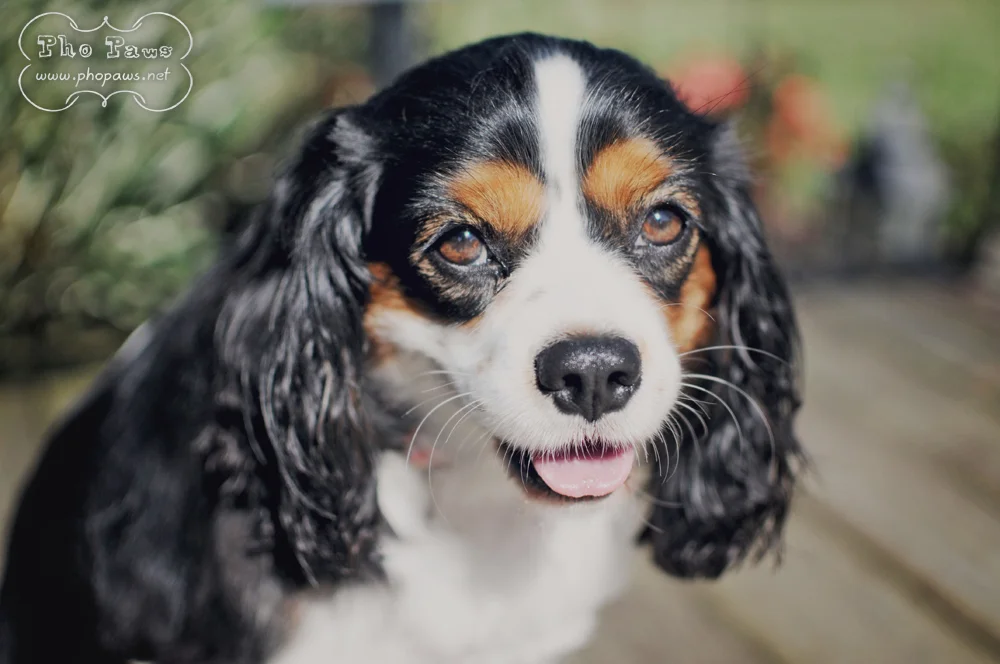
Lucas and Danica are two beautiful Caveleir King Charles Spaniels who I worked with for a breed study. I'm going to share a few key points I learned about this great breed! As a part of the toy breed, CKCS's are a small dog with a big heart. They are one of the most cooperative and loving breeds I've ever worked with, and it makes perfect sense to me why people enjoy them as part of the family. They are relatively lazy (for a dog), and therefore don't resort to bad behaviors when bored, they'd rather sleep. Because they weren't genetically bred to do a specific job, owners don't have to focus on getting their job needs met before they follow along with the owners' current activity. 

Working breeds have no sense of purpose if they are not given a job on a consistent basis, and most of the work I do is to help owners find a job for their dog because their dog has resorted to destructive behavior due to not having a job. However, most toy breeds need less exercise, don't require nearly as much focused training time, and usually like to travel with their people. I observed that these two are happy participants in any activity. They wanted to be a part of whatever their owners were doing, and they didn't need too much incentive. 

The Caveleir King Charles Spaniel is an excellent breed to choose for a first time dog owner, or someone looking for a kid friendly family dog with lower maintenance than a working or sporting category breed. I noticed that one or two hardy walks per day was enough for these two to get their physical exercise needs met. If you're looking into getting a CKCS, I would recommend having a lengthy discussion with a breeder and meeting as many of the breed (or any breed for that matter) as you can. 

Getting a dog is a huge commitment and I would recommend that you take time to research the background, tendencies and pros / cons of any particular breed you are looking at. Caveleir King Charles Spaniels are adaptable but easily distracted, so creating the right kind of incentive for obedience training is key. Lucas and Danica were happy to follow the travel itinerary and chase lizards on breaks. Watching them, I was once again reminded of the importance of choosing a dog that will go well with your lifestyle. 

Most of the work I do with dogs is redirecting misbehavior and working with problems once they already exist. This is why I would encourage you to really research the dog breed that you are hoping to get, or to the best of your ability, the mutt breed mix you would like. I often see that the specific breed someone has chosen is not necessarily a bad fit, but working through the behavior issues that the dog came to them with or developed is just a little more than they're willing to do. Sometimes it is better to research a different breed or take more time making a decision about getting a dog. 

categories: Dog Training
Friday 08.21.15
Posted by Kelsey R
 

Photography: Noon Day Light

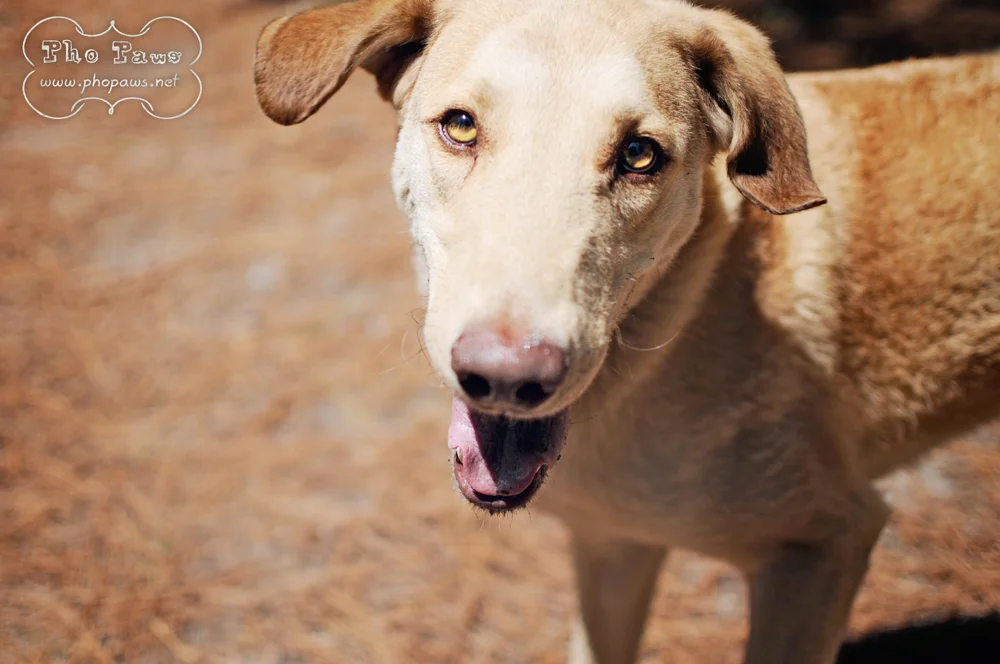
Ruger is a beautiful Chesapeake Bay Retriever who I had a blast with in his back yard while snagging a few playful shots. I want to explain to you why you don't need to be afraid to shoot in noon day light. When I went to school for photography, I was taught that the best way to photograph in noon day lighting was in the shade so as to avoid harsh shadows. 

Harsh shadows provide a dramatic quality to the overall feel of the image, and I want to share with you why this is not bad. You can actually harness this dramatic effect to your advantage to depict someone or something in its natural environment. Personally, I don't avoid shooting in noon day light because I photograph animals and animals often live outside. 

In this case, a sunny happy dog with sunny happy looking eyes and a sunny happy smile lends to the feel I wanted to create. I took another image of Ruger that had spectacle highlights and it had nowhere near the feel I wanted. It felt scattered and poorly timed, and this is not how I experienced Ruger. I experienced him as a fun, curious and friendly pup who just wanted to play in the sun all day. 

I played with him in the section of back yard that had the most highlighted pine needles in the background, so I could work off of the golden idea. Your eyes go straight to his because the colors all blend so well. 

Try shooting outside during the noon day light this week and see what you can make work. Sometimes these images turn out to be some of the best keepers.

categories: Photography
Wednesday 08.19.15
Posted by Kelsey R
 

Dog Training 411: Land Rollers

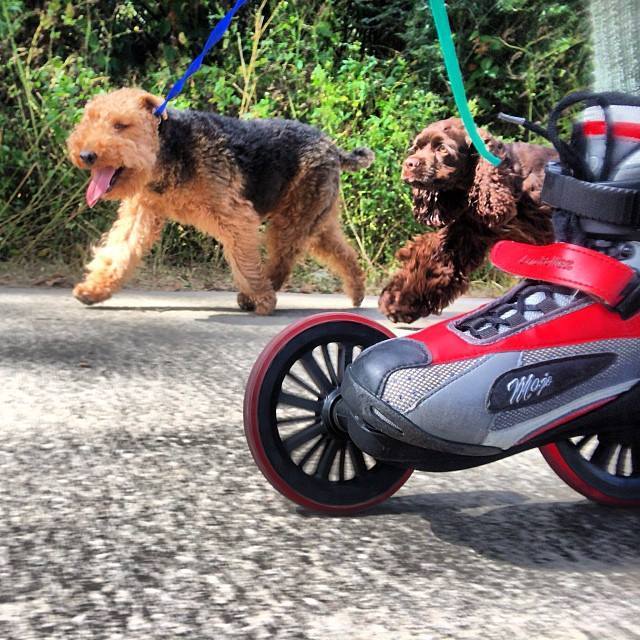
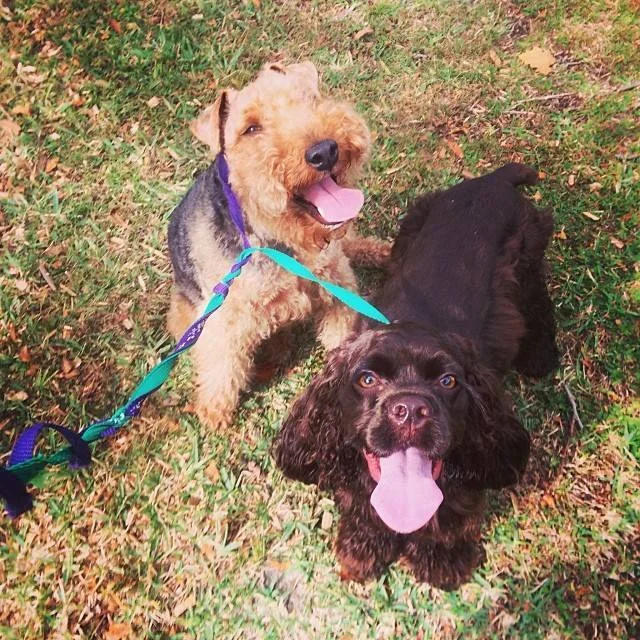
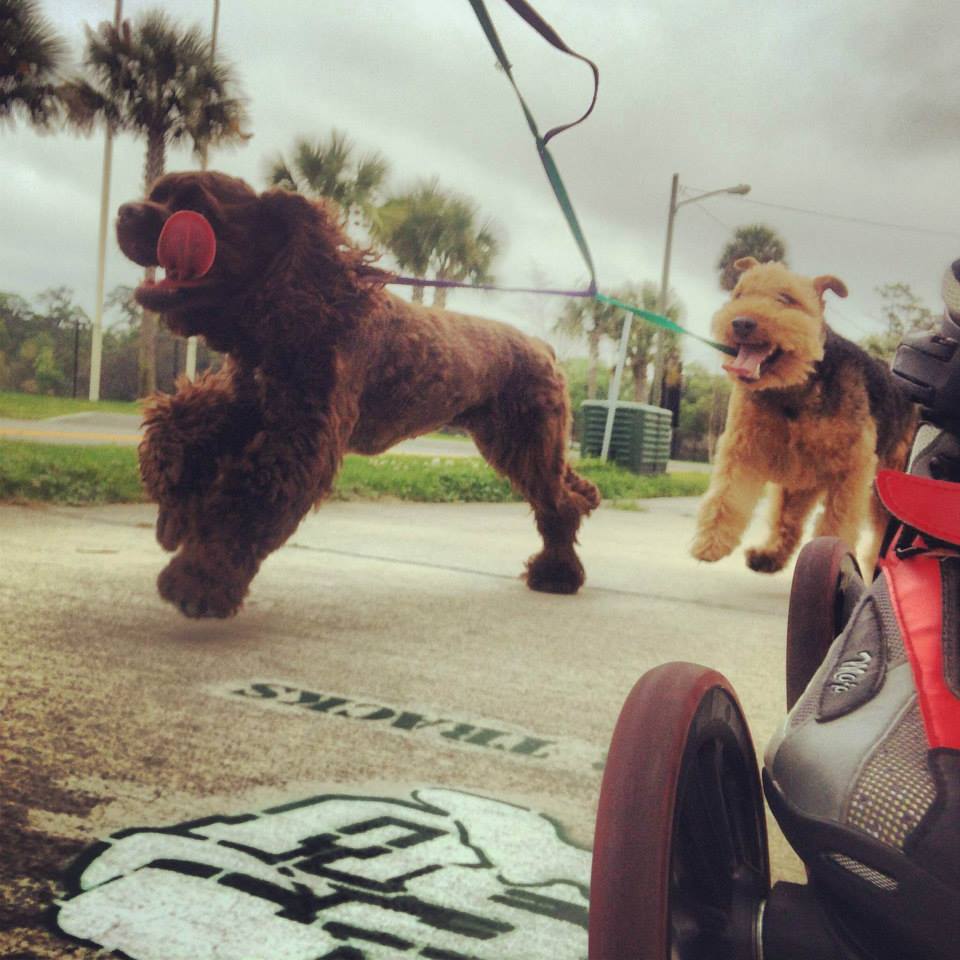
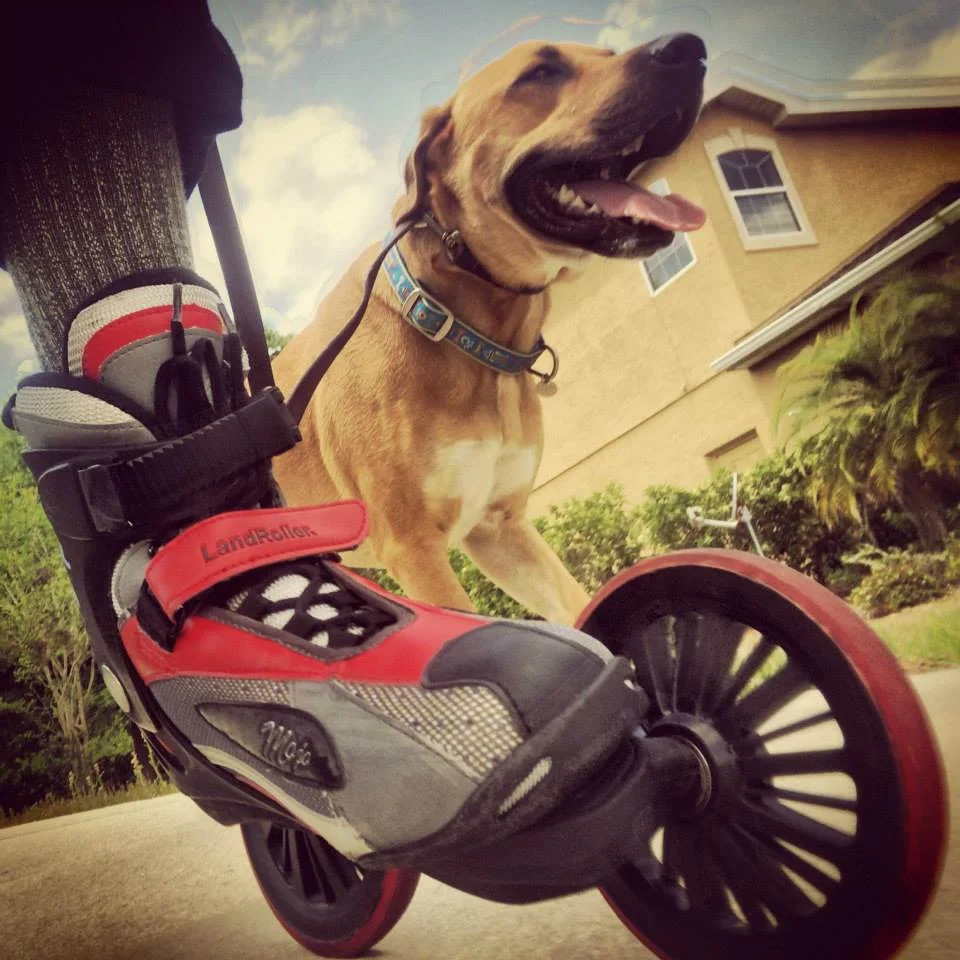
Harper and Abbey are quite the pair! Their owner asked me to exercise them, and I honestly don't know who got more exercise. I quickly noted that they have incredible stamina, so I popped on my blades and off we went rolling. Being high energy dogs, I knew they could take long and hard exercise sessions with me. The moral of Harper and Abbey's story is: exercise, exercise, exercise! All dogs need exercise, and some need more than others. Harper and Abbey need more than your average aging lap dog, but everyone who interacts with Harper and Abbey have seen improvements in their energy level based solely on the addition of exercise.

categories: Dog Training
Friday 08.14.15
Posted by Kelsey R
 

Photography: One Cat In Multiple Settings

Leo is a beautiful Russian Blue who I could hardly wait to get in front of my camera and capture his many characteristics. His owners brought me in to capture his image in the way that they see him: calm and princely. I'm going to let you in on a few tricks up my sleeve that I used in these images and that have stumped other professionals for years. 

When I first met Leo, I realized that the color of his fur varies greatly depending on the light and color properties, so I knew I wanted to capture this. Also, his eyes and gaze were so stunning, so I searched for ways to highlight them. 

In this first image, I simply followed him until he comfortably sat in front of a brightly painted wall. Most people can tell whether their cat looks natural or posed in an image, so I like to let the animal get nice and cozy. I waited for him to look to my right in order to get the light to fall on his face in a cross butterfly / 45 lighting pattern. I wanted to highlight the different shades and tones of grey that his fur had to offer. Using the gentle penumbra fade of the back wall, I wanted a sort of checkered look in contrast between his face and the wall. Otherwise there wouldn't be much depth perception, and it would almost look like his head is plastered to the wall that was a solid three feet behind him. Sometimes depth of field can accomplish this, but I prefer to create tonal depth to give the eye something else to draw from. 

KRP_0072editsmall1.jpg

In this second image, I once again waited for him to get settled in one of his favorite places to survey his kingdom, the living room floor. When I revealed the tricks I used in this image and the following image to a class of photography students, both the professor and students were equally surprised. One trick up my sleeve that I often pull out is underexposing by 2-4 stops. Yes, if you took a B&W film class in high school or college you would have learned about exposing for the middle grey, but I like to break the rules once I've learned them. Instead, I actually exposed for the light falling on his eye and did a fair bit of digital dodging / burning in post production. I wanted your eye to go straight to his expression, and secondarily to the fact that he was lounging. I brought faint hints of the floor he was laying on back in post production, just so it didn't look like he was in a black abyss. However, the background was not a focus for this image, so I tried to make it as subtle as could be. I believe this image best depicts Leo's personality: resplendent. 

In this final image, I wanted to depict Leo as the anti-social cat that he is. I disregarded a few of my preferences for this image by setting up lights and a background, but these additions definitely worked for this image. The look of surprise on Leo's face perfectly shows how he feels when he sees other real cats, let alone fake cats. I laid on my stomach and shot with a telephoto lens, lighting both Leo and the background with studio lights. The part that stumped other photographers in this image is that someone is actually holding Leo and firing my second flash for me. When I took this image, I had two flashes that fired, but one had to be tripped by the other, and the angle at which I wanted to face the lights wasn't going to accommodate for this. So I had a second shooter trip it with a telephoto distanced light. 

When photography enthusiasts chat with me these days, they are more curious about what type of equipment I use than how I shoot. I don't think the message is getting across boldly enough: the quality of the image does not depend on the camera, it depends on the person holding the camera.

I went through photography school with a Nikon D40. I still have winning shots from that camera that people still purchase from me. Sure, I don't still shoot with the equipment I had for this third image (taken at a separate time than the previous two), but I want to hit on the point that you can make the shot happen with or without fancy equipment. 

I had a great time capturing Leo's image, and I'm really thankful for the knowledge of techniques I have when it comes to photographing animals. It's always my goal to catch the sides of the animal in front of my camera that the owners most love, and I believe I captured the calm and princely characteristics that Leo so regularly exudes.

categories: Photography
Wednesday 08.12.15
Posted by Kelsey R
 

Dog Training 411: Focused Physical Activities

Dog's were born to move. From the time that we began changing their genetic coding according to jobs that we wanted them to fulfill, they've started to become man's best friend. One of the best ways we can help them fulfill the job we gave them to begin with is to provide them with sufficient exercise. Many breed categories such as the working category or sporting category often need more exercise than a non sporting or toy dog. However, I find that most dog owners are unaware of how much exercise their dog truly needs to be healthy.

A tired dog is a happy dog. Most destructive behaviors come from a lack of being able to channel energy in a healthy way. This is one of the main reasons why I recommend "extra curricular" type activities to do with your dog. Agility is one of the most popular ones, and is great for many dogs! I did agility with my mixed breed dog before there were agility trials for mutts. And though I never showed her, we grew so much closer during our lessons and practice sessions.

Frisbee and flyball are two other great sports, depending on your dog's toy drive. Some dogs love water, so swimming, dock diving, or chasing garden hose water around the back yard can be fun activities. If you have any idea as to your dog's breed, do a little research as to their man given job according to their genetics, and start to brainstorm some activities you can do with your dog. 

Of course, all of these activities are an addition to their physical exercise needs being met from walking. There is absolutely nothing that can take the place of walking your dog. Period. They were born to move, born to travel. It's in their inborn nature to travel on all fours as a pack. I find that for growing dogs, or dogs with a high drive, walking is simply not enough mental stimulation. That's where these extra activities come in. 

I would encourage you to assess your dogs energy level and current exercise regimen and get an outside perspective from a professional. If you are experiencing behavior issues or even just observing an abundance of energy in your dog, consider implementing more exercise, both physical and mental.

categories: Dog Training
Friday 08.07.15
Posted by Kelsey R
 

Photography: My Experience While Shooting

We have all heard the expression, "a picture is worth a thousand words", but why? Is it the details? The tone, mood, subtleties, or even the expressions? To me, a picture is worth a thousand words because of the way we feel when we see it. There are one thousand directions our emotions take us when we see something frozen in time and space, and we are often losing the battle to find adequate verbage. 

While this is how we experience viewing images, I am similary lost for words when I'm capturing the content filling my frame because of the many ways that I feel. My main goal in a time frame of photographing an animal is to experience who that animal is and catch snippets of my understanding based on our interaction. These freeze frames are often only a slight percentage of our inretraction together, so you can imagine that for an animal nerd like myself, I'm left with a beautifully fond memory and a few shots to express my fondness. 

When I'm photographing, I'm fully focused on what I feel the environment telling me and how I sense the animal in that environment responding. Many times this expression is playful, many times quizzical, also calmness and gentleness are often present. Whatever I sense is what I try to capture. This is why I don't pose animals in a position that they didn't voluntarily go into, because I want to catch who that animal is in that environment for that interaction period. 

quarter horse
mustang
mustang
mustang

When the animals I'm photographing are curious, I often can't tell if they are more curious or if I am. Curious to get the light spilling in from that angle, curious to catch that expression, curious what happens if I move two inches over or don't look through the viewfinder for that shot. 

I'm grateful to have the ability and passion to capture animals' personalities like I do. When my clients tell me, "that's exactly how I see their character expressed everyday!" It makes me smile, because somehow I see what they see, and it's never forced. 

categories: Photography
Wednesday 08.05.15
Posted by Kelsey R
 

Dog Training 411: Spotlight on Lula

Lula is a Chihuahua fit for combat. Extremely muscular and a constant vibration of motion and dominance, we had many issues to work out. She was incredibly possessive of her own personal space, so she would nip at any dogs who came near her. One thing that is not so obvious about working with small dogs is that the behaviors that most people would dismiss as "cute" or "acceptable" because of their size, a great dane would never get away with. When we let them slide on behaviors such as jumping on people, possessing their own space or even people, constantly pacing, etc., we allow them to escalate in a bad frame of mind. 

A dog's state of mind is written all over his or her body language, so it's important to pay attention to what their body language is telling us. I worked through all of these issues with Lula by bringing her around as many other dogs and people as possible, always followed closely on the heels of exercise. Many small dog breeds are stunningly fast and need a lot more exercise than we give them, so once I kicked up the pace with Lula, she behaved much better because she was getting that need met. Once she had a reward and consequence system in place with her owner, she realized that these bad behaviors were actually not pleasing to her owner. 

Dogs who are more dominant don't always have that much incentive to work for and please their owners, but mainly this is because they don't understand that their owners are in charge. Most people don't know how to gauge whether they are more dominant or whether their dog is, and so most of my work is in coaching people on how to be more dominant than their dog in their dog's eyes. When dogs understand that they have a job and someone to please, they work hard to protect that, but if they don't feel that they have either, they make it their job to please themselves and reprimand everyone who doesn't please them.

I learned so much from working with Lula. The most important thing that I learned was the importance of consistency when working with a dominant dog. I teach on consistency with all dogs, but dogs who challenge your boundaries need to be told more often that they are, in fact, not in charge here. Lula successfully transformed through the application of my training methods and behaves how her owner wants her to now. 

categories: Dog Training
Friday 07.31.15
Posted by Kelsey R
 

Photography: Low Light Shooting

Tiger is a beautiful outside domestic cat that I had the joy of shooting briefly during a dog agility shoot. This photo was taken at the last light of day and there is no artificial light.

Photographing in low light situations can be sticky, so I want to share a few things that I do. My camera exposure decisions are based on preference rather than necessity most times, so depending on which photographer you ask, the answer will vary. 

Personally, I like to avoid grain as much as possible, unless it lends itself over artistically to the shot I want. So the last exposure decision I make is to crank up the ISO. I most prefer to shoot with fast lenses, f/1.8 or less, so the first thing I change in low light is my aperture.

It's worth practicing holding your camera very still in the event that you want or need to shoot with a slow stutter speed. This shot was taken with a slower shutter speed and a wide open aperture, so I held my camera very still in order to make it sharp. 

If you are shooting in low light and using natural light only, I recommend lighting your subject well and letting the background light fade whenever possible. This draws the attention to the subject while still providing details that create context in the background. 

As the evening light changes, so do the color values, and therefore exposing correctly is key. If you underexpose, you risk losing details in the darkness. If you overexpose, you risk not being able to color correct well. In post production, I chose to lean a little to the blues and magentas for this shot because I felt that it hinted at that prime "just after sunset" light. 

Experiment with lighting and exposing your images in low light using natural light only and share what you've discovered! Send me a contact form with your findings, I'd love to hear what works for you.

jungle cat
categories: Photography
Wednesday 07.29.15
Posted by Kelsey R
 

Dog Training 411: Spotlight on Cane

Cane is a Kelpie mix who I had the pleasure of working with in order to teach his owner about leash effectiveness. I always learn something new from every dog that I work with, so I wanted to share a few things I learned from working with Cane.

I have found that working with dogs looks a lot like working with people and teaching them how to work with their dogs. At the end of the day, that dog sleeps at their house and I sleep at mine, so less important is how I get results with the dog and more important is how well my client can work with their own dog.

Cane's owner reached out to me after watching my "Ask A Dog Trainer" video about leashes, so I set up a session with him to coach him in how to walk Cane in a more relaxed manor. All dogs are sensitive to both physical and auditory movement to varying degrees. The ability to gauge those degrees and time your rewards and consequences is in a nutshell, dog training. 

If you've ever read about dog training, you've probably heard about compulsion methods vs. positive methods. In my opinion, the reason why there is such heavy emphasis on positive methods is because most people who are trying to work with a dog without a professional don't know how to use their energy to their advantage. This means that when we as humans get frustrated, we are sometimes unaware of just how strongly that is communicated to a dog through energy. Same thing when we are calm.

Because it's hard to train energy through writing, it's often safer to teach capturing a behavior and only reinforcing the positive behaviors. This is truly where I believe that bringing in a professional wins, because positive only training may not be effective if your dog has already developed bad habits and has malfunctioning behavior. A professional with balanced methods can explain what needs correcting, how, when and why.

This is why I am so glad that Cane's owner reached out to me. He was doing a great job walking with Cane, but was using a choke collar and Cane was pulling. Long term, this can cause serious damage to a dogs phasic. I helped them walk peacefully and with no pulling using a nylon slip, the first collar / leash that I turn to in most situations. 

Working with Cane, I was once again reminded that so much can be learned over the internet through many different outlets of education, but when it comes to energy and body language, it really is best to bring in an educated perspective, even if it is just walking on a leash.

categories: Dog Training
Friday 07.24.15
Posted by Kelsey R
 

Photography: Happy Accidents

Capturing animals' personalities is absolutely my passion. They are constantly thinking, and once you learn animal body language, what they are acting out is blatant according to their thoughts. Many times, pet owners come to me after our photo session and tell me, "I thought I was the only one who could read my pet's mind!" Expression is timeless. It is not bound according to a circle of influence, and every animal puts off a specific vibe. 

I've learned how to gel into that vibe and capture it simultaneously, which is why my photos are so playful. After photographing for a certain number of hours, it's easy to learn a system and process for creating images that lend themselves to my style.

"Happy accidents" describe my style very well, though while my happy accidents are always happy, they don't happen by accident. Amateurs will create a happy accident and expect to create another one upon happenstance. As I've been growing in my professional approach, I've learned that it's smarter to hone a style and be able to replicate it upon request. 

One of my defining style marks is that I don't often look through my viewfinder when creating images. The reason I do this is because I need to be able to interact eye ball to eye ball with my subject (particularly dogs), and I've learned how to move my camera and put it in positions that would not be possible were it to be looking through the viewfinder. 

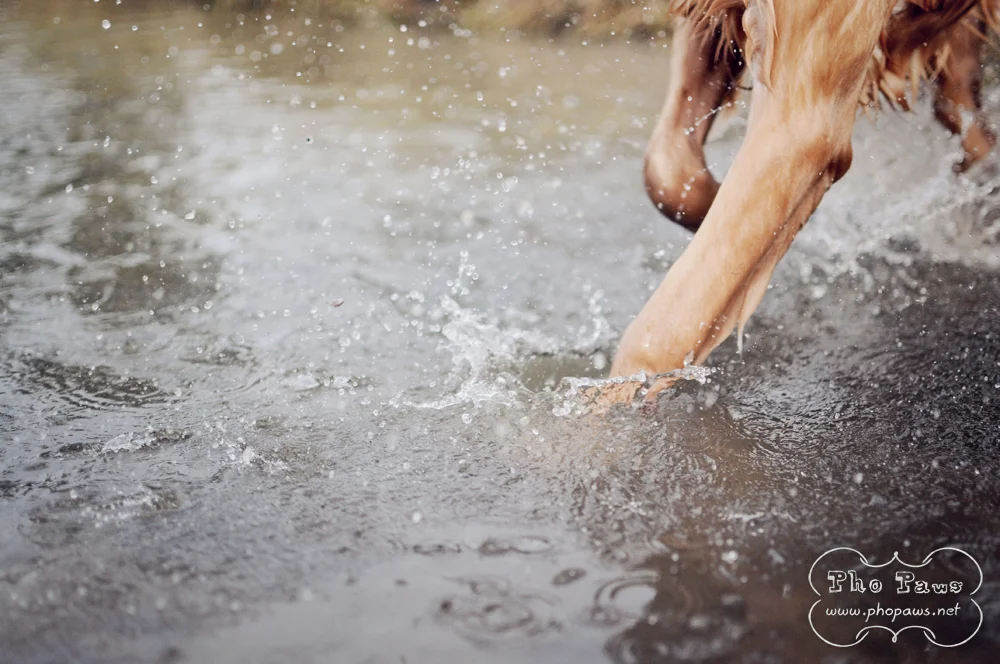
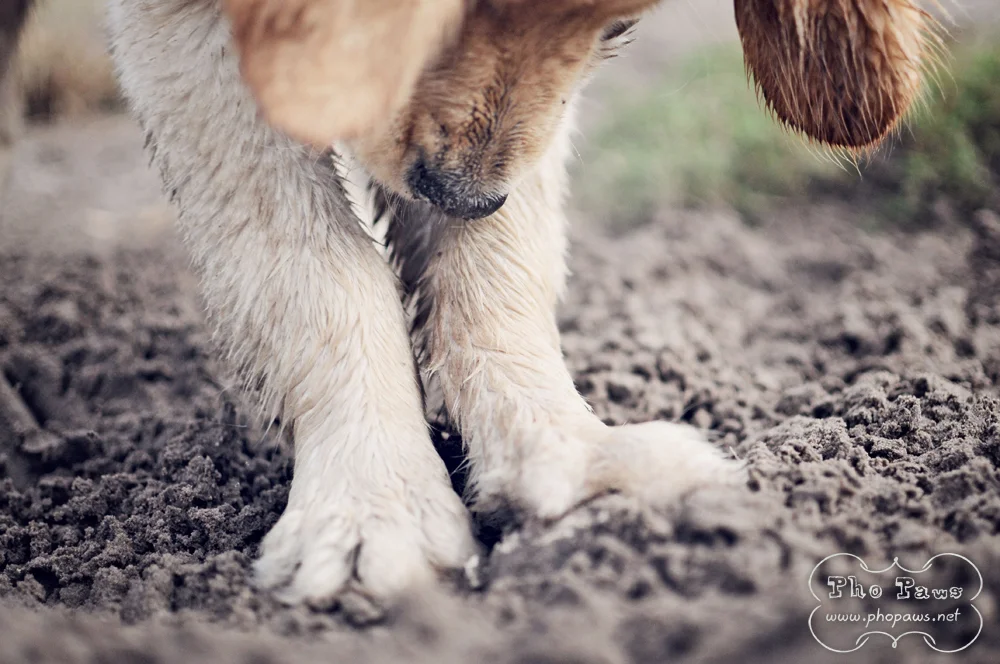
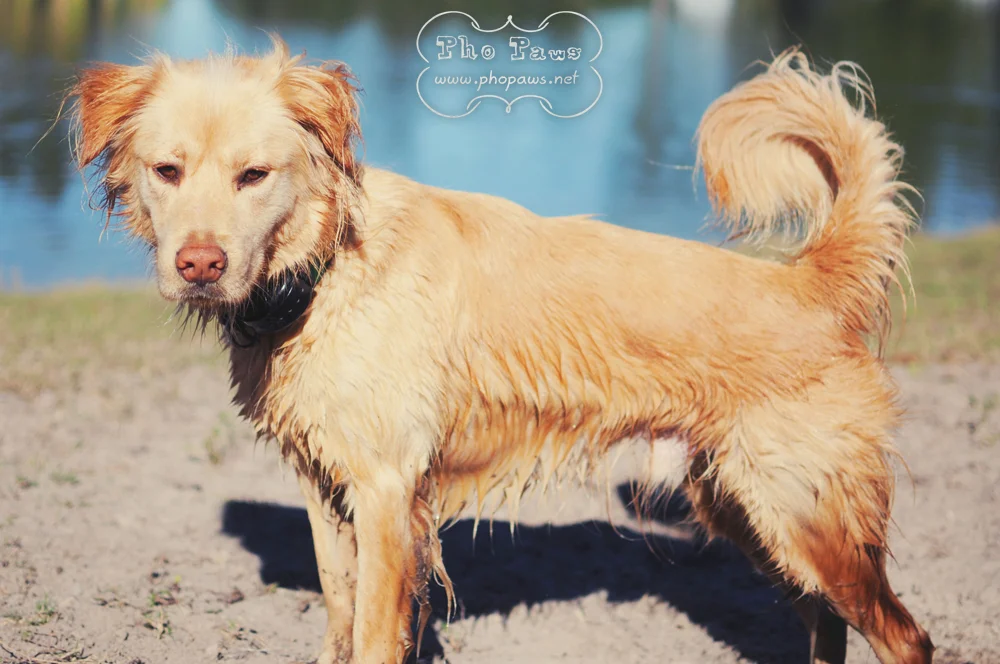
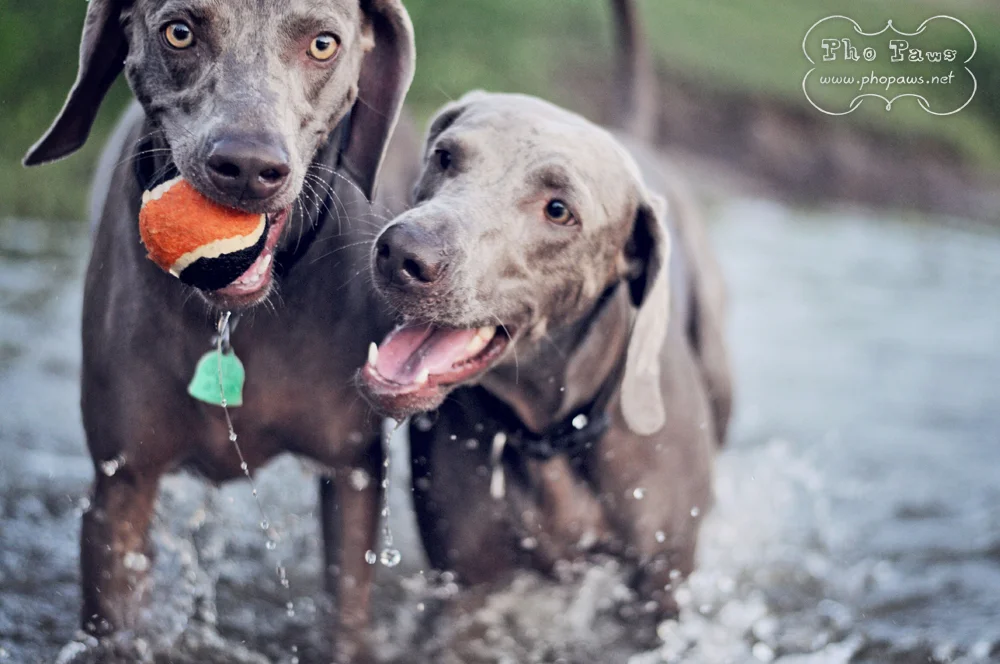
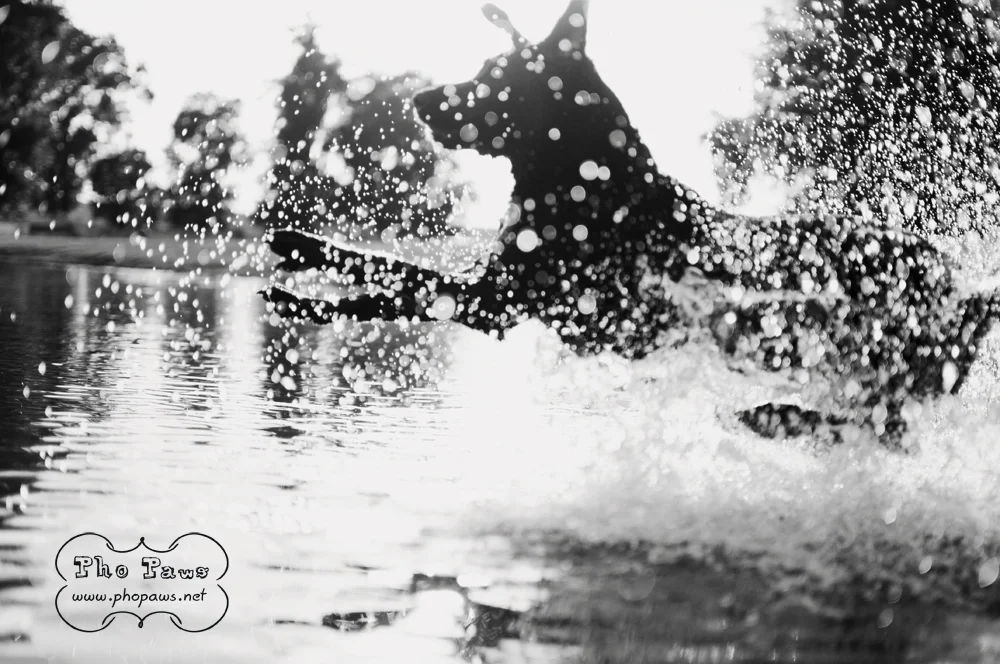
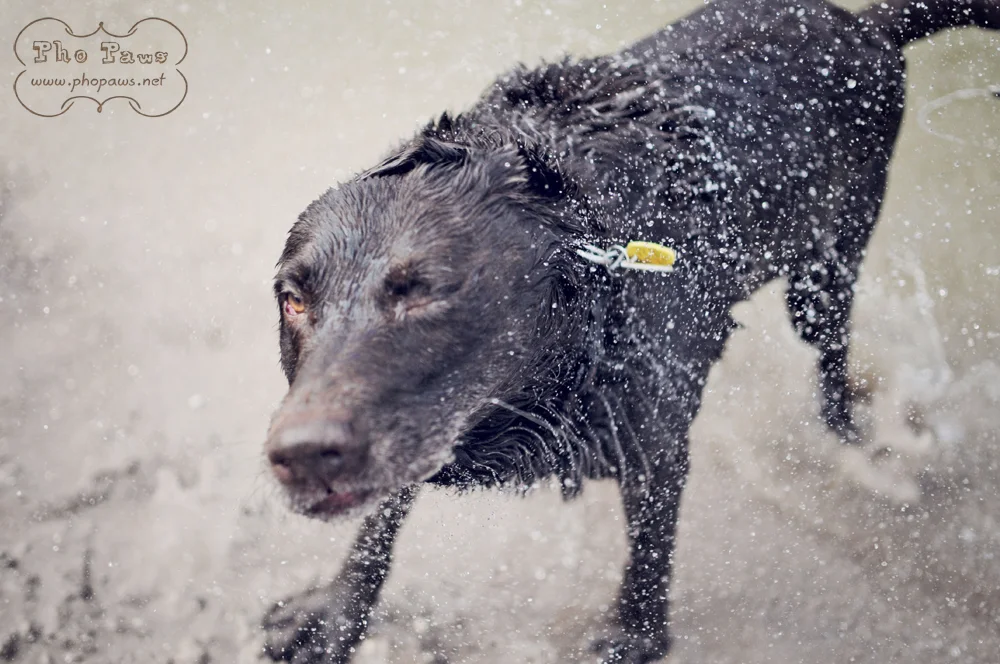
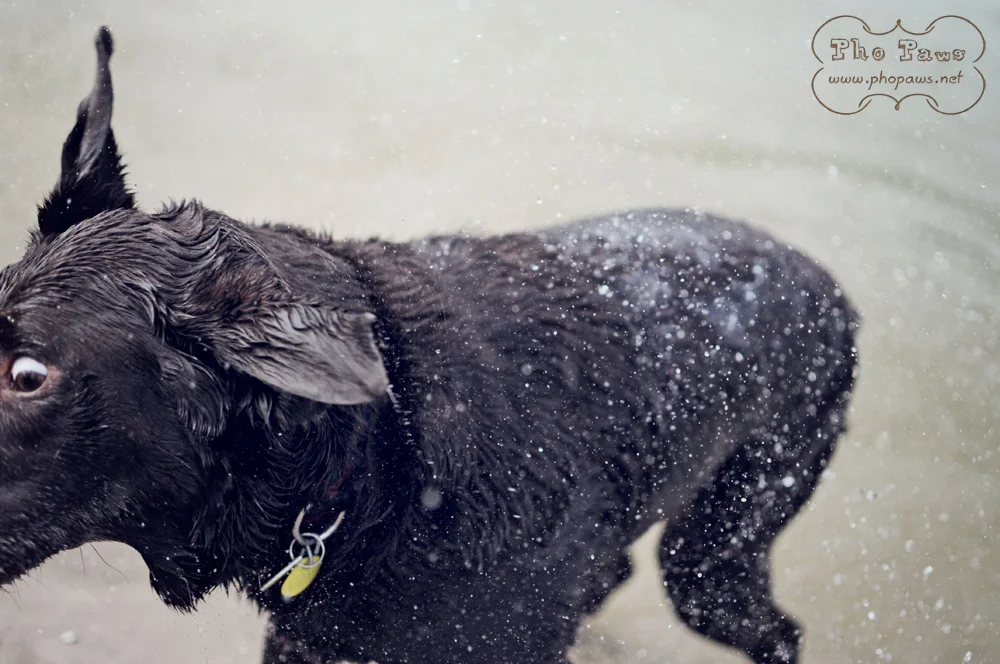
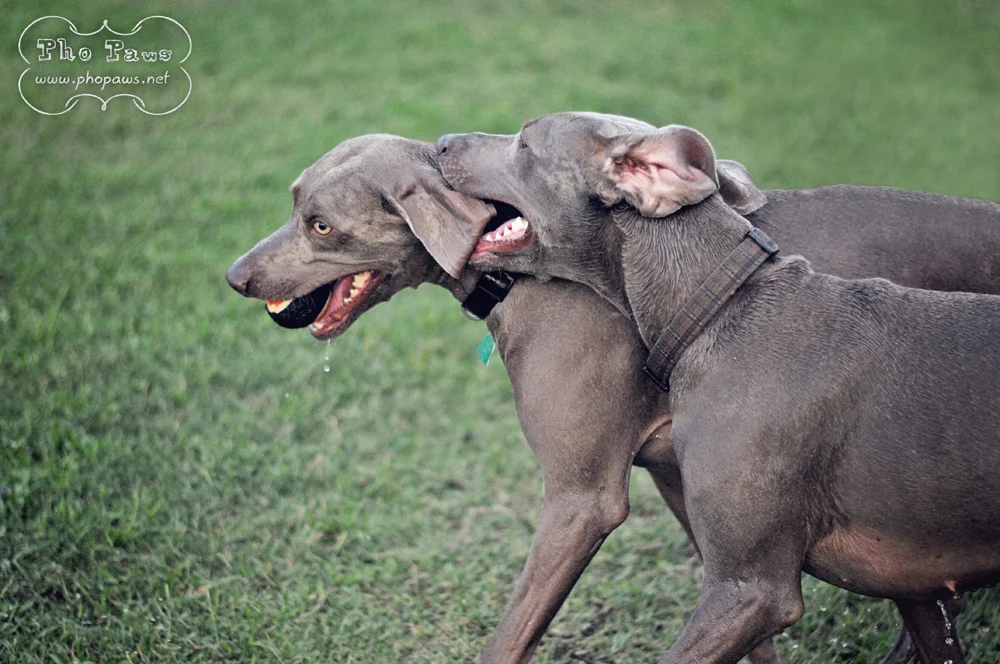
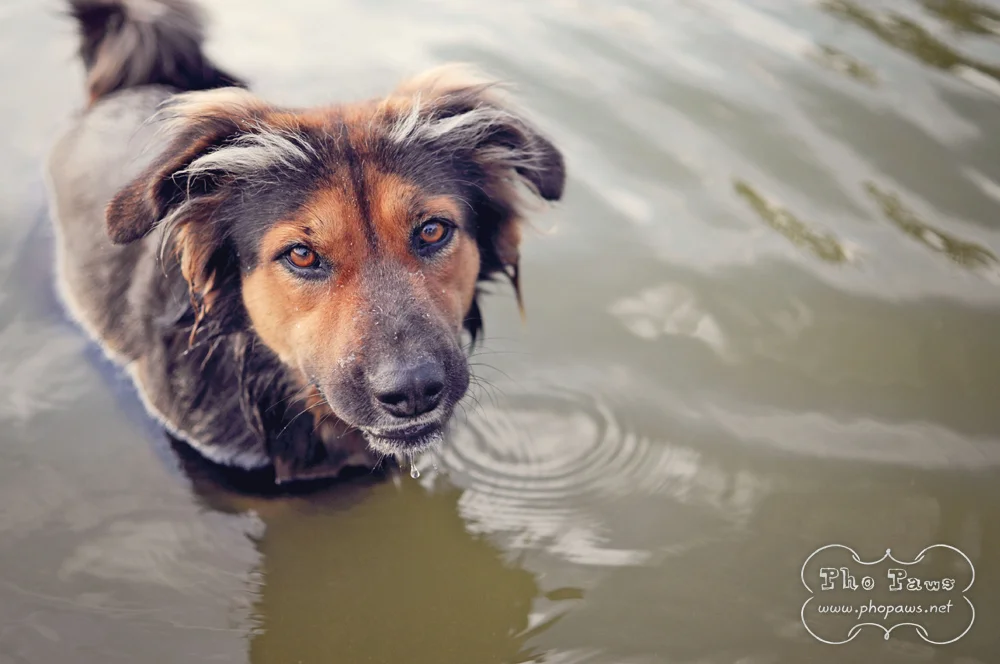
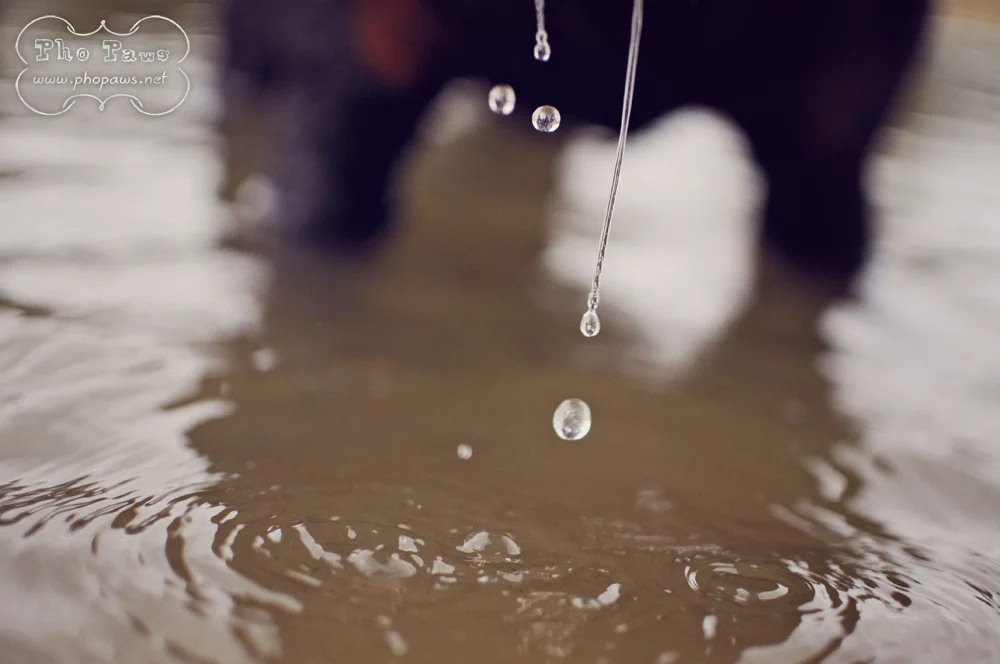
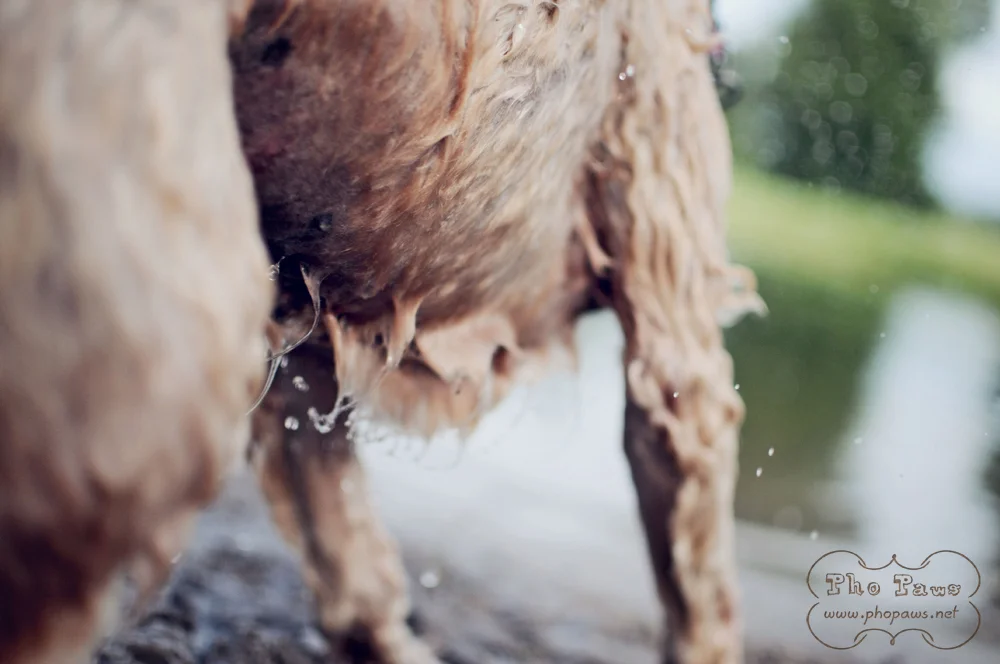
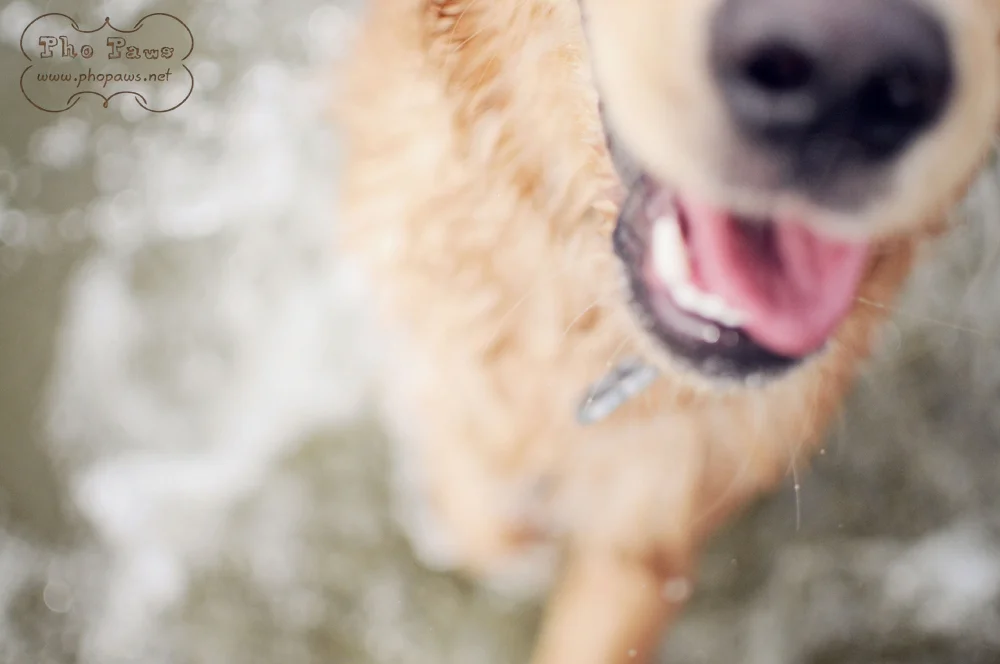
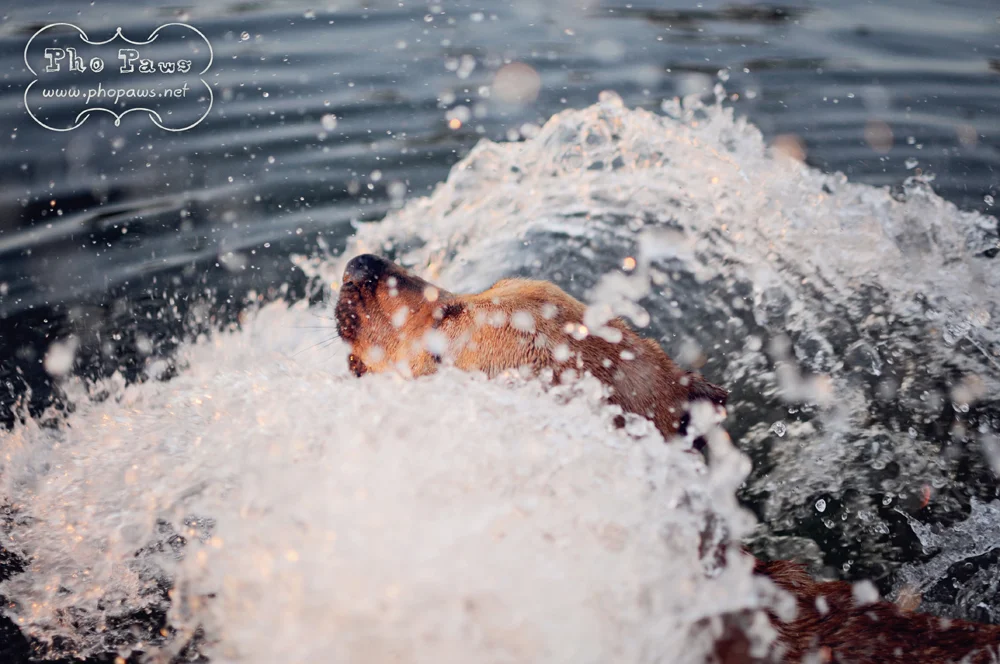
Natural elements are always apart of my images, especially when I photograph dogs. Water, drool, dirt, these are all apart of the dogs interaction with the world around it, so why would I exclude them from my depiction of their experience?

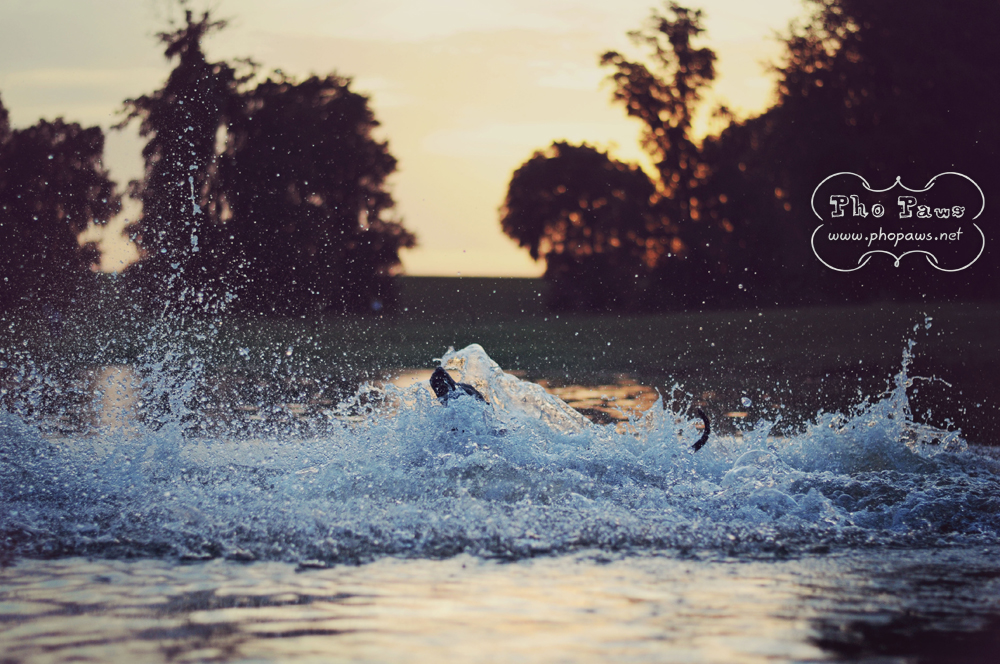
Happy accidents like this are not hard for me to duplicate, I just need to be in position. When I'm photographing a dog, I do everything I know how based on my animal behavior training to become a friend to that dog, that way they like having me in their space. I don't mind getting waist high in water if it means getting the shot.

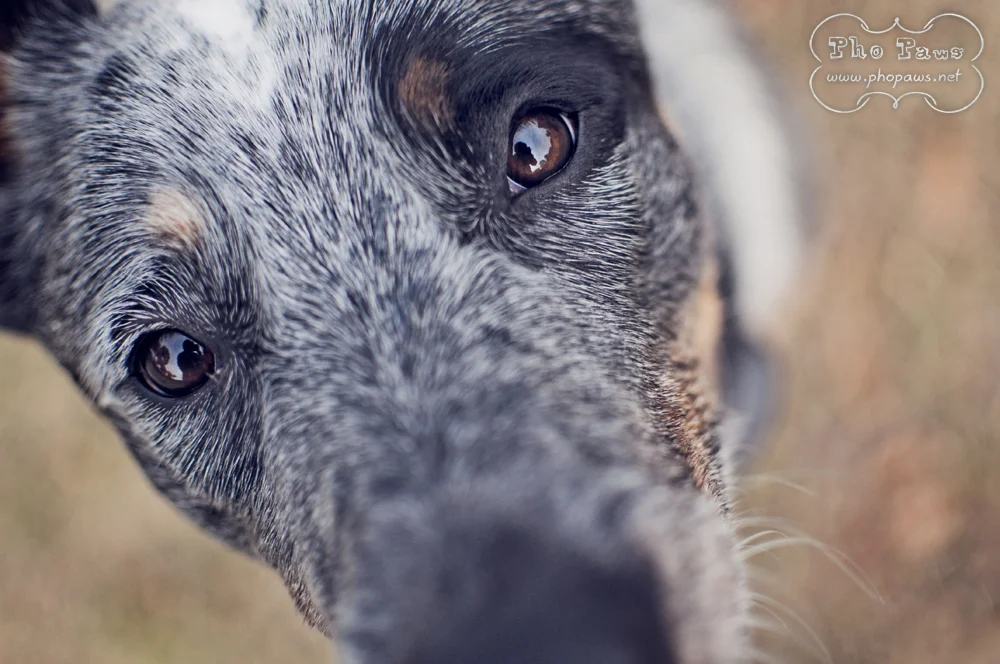
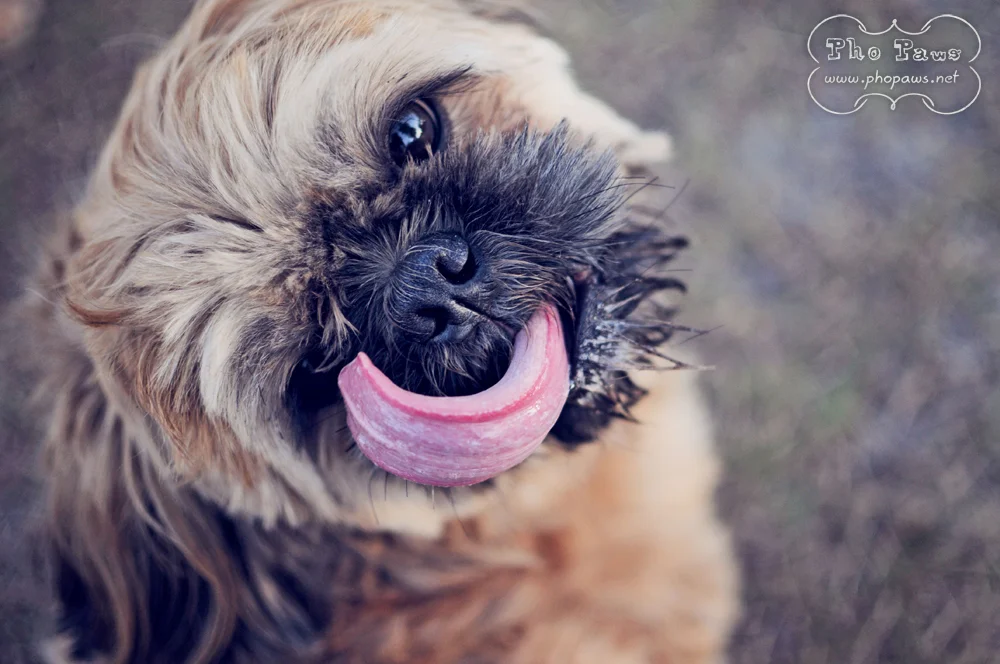
I'm constantly looking for elements of design that lend themselves over the the dog's personality. Here, the colors are all on a basic pallet, making the eyes and eyebrows stand out.

One of my favorite things to do is run backwards to get the dog to chase me. I'll then position my camera right between my face and theirs, so as to get the view that no one would ever see unless they were literally running backwards with their face jammed in their dog's space. I call this my "sweet spot".

And, of course, it is very helpful if the dog knows basic commands and cues. This last image is actually my dog, Belle. I asked her to sit and stay, I got down on the ground and waited for her to look away at a squirrel. 

My happy accidents are always happy but never accidental.

categories: Photography
Wednesday 07.22.15
Posted by Kelsey R
 

Dog Training 411: Spotlight on Jax

Jax is a boxer / lab mix who belongs to a good friend of mine. He is extremely smart and playful, and I want to share a few things I've learned from watching and working with him. His owner has done so many things right in order to encourage him to be a loyal and hard working dog, and one of those things is mental stimulation. Jax is a high energy dog who is more dominant around other dogs than submissive, but because his owner has made it clear that certain commands and cues please her, he isn't busy trying to assert his dominance in every situation as a dog would do who doesn't have guidance and leadership. 

I have watched them work hard on mental exercise and also stay consistent with physical exercise, and these two things are the solid foundation for a healthy and happy dog. Whenever I'm working with a high energy dog, I recognize that it may take a little extra work to wear that dog out, but it will be ten times more worth it than if the dog never gets his needs met in that way. Dogs will find a way to channel their energy, whether that be in a destructive or constructive way, so it's our job as their owners to direct the energy being channeled. Sometimes they have an outer layer of excess energy that needs to be shed over a period of time in order to discover how much of what type of exercise they really need, and that is why working with them from a young age (if possible) is key. 

Jax's owner acquainted him with several forms of physical exercise in order to learn what worked best for him. I worked with him with my Land Rollers, and he did great with them! He has been exercised with a bike and by jogging, and he has taken to all of these forms very well. Physical exercise is absolutely vital to a dog's life and health, which is why I put a heavy emphasis on it during my training sessions. Once the right amount and type of exercise is in place, everything else can come right. Great job, Jax! 

categories: Dog Training
Friday 07.17.15
Posted by Kelsey R
 
Newer / Older

 Stay in the loop. I'll send you immediate access to this free guide!  

You will also receive my best advice for raising a healthy dog, along with updates on new collectible items in my shop.  

Check your inbox!

Come. Sit. Stay. Follow Me.


@PHOPAWS